-
 Vietnam signs free trade deal with four European nations
-
Dozens of orangutans saved from Indonesia blazes

-
 One million migrating raptors dodge illegal hunters above Georgia's Black Sea coast
-
Ordinary day, extraordinary times: Kyiv under Russian attack

-
 Rays defeat Guardians to level MLB playoff series
-
What is holding up the US-India trade deal?

-
 Western brands under pressure as 'pre-owned' luxury booms in China
-
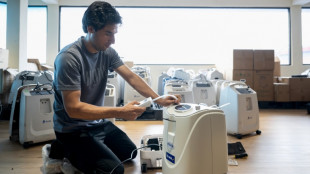
Oxygen tanks, purifier sales spike as haze crisis hits Southeast Asia
-
 'Never seen anything like it': mass looting grips Paris
-
Messi brace lifts Inter Miami to 3-1 win in Atlanta

-
 All Blacks back on track after South Africa wake-up
-
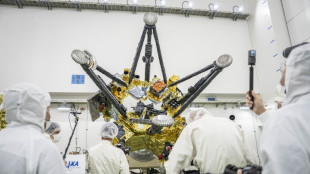
Japan to launch historic round-trip mission to Mars moon
-
 Met Opera goes for big and bold, despite shaky finances
-
Musk back in the spotlight, but politics dims the awe

-
 Hollywood's fresh take on tech titans: from heroes to villains
-
England Rugby League World Cup hopes hang by a thread

-
 St. Louis City's unbeaten MLS run ends at 19, Union's reaches 15
-
Williams lifts Valkyries past Dream in WNBA Finals opener

-
 NFL Eagles bench Hurts at least a month with blood clot
-
Dubois destroys Wardley to retain WBO heavyweight crown

-
 Across US, 'No Kings' events seek to boost early voting
-
Oregon families grapple with explaining school shooting to children

-
 Tents spring up in Lisbon as Portugal housing protests spread
-
Israeli settlers attack European diplomats, beat French mayor

-
 'Best in world' Yamal powers Barca to Betis rout, Atletico strike late
-
Town hall in Limoges 'largely lost' to blaze set during French protests

-
 El Salvador's Bukele puts conditions on early release of gang prisoners
-
US goes on the offensive in central Asia

-
 Fire rages at town hall in France's Limoges after protests: authorities
-
Emotional Lions come up short in Champions Cup as tributes paid to Andrews

-
 Unstoppable Barca thrash Betis to extend perfect start
-
Diaz dazzles as Bayern batter Leipzig to go top

-
 Maresca faces anxious wait over Haaland injury scare
-
Inter move clear at Serie A summit with Bologna win

-
 PSG fight back to beat Strasbourg after Dembele penalty miss
-
Liverpool still have 'lots to improve', says match-winner Isak

-
 Looting, blazes and clashes in France amid nationwide protests
-
Looters ransack shops during France cost-of-living protests

-
 Walsh breaks her own 50 free world short course record
-
Leinster thump Clermont as grieving Lions set for Champions Cup debut

-
 Haaland brace extends Man City's winning start in Premier League
-
Haaland stars in Man City win, Liverpool beat Brentford

-
 'Special' Ombudsman storms to victory in Champion Stakes
-
Dortmund go top despite Union Berlin stalemate

-
 Brazil's right embraces election betting odds amid polls skepticism
-
Venezia upset Napoli for first Serie A win of season

-
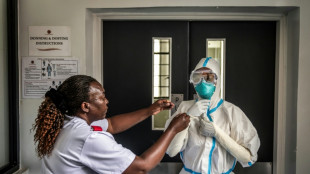 Four more Ebola cases detected in Kenya, bringing total to seven
-
Glasgow and Bulls win as grieving Lions set for Champions Cup debut

-
 Clashes erupt in France as protesters vow to make government 'tremble'
-
Smiling pope returns to Vatican after cancer surgery

In first, SpaceX's megarocket Starship succeeds in ocean splashdown
SpaceX's massive Starship rocket achieved its first ever splashdown during a test flight Thursday, in a major milestone for the prototype system that may one day send humans to Mars.
Sparks and debris flew off the spaceship as it came down over the Indian Ocean northwest of Australia, dramatic video captured by an onboard camera showed, even as it succeeded in its goal of surviving atmospheric re-entry.
"Despite loss of many tiles and a damaged flap, Starship made it all the way to a soft landing in the ocean!" tweeted SpaceX CEO Elon Musk. "Congratulations SpaceX team on an epic achievement!!"
The most powerful rocket ever built blasted off from the company's Starbase in Boca Chica, Texas at 7:50 am (1250 GMT), before entering orbit and soaring halfway across the globe, in a journey that lasted around an hour and five minutes.
Starship is key to Musk's vision of colonizing the Red Planet and making humanity an interplanetary species, while NASA has contracted a modified version to act as the final vehicle that will take astronauts down to the surface of the Moon under the Artemis program later this decade.
Three previous attempts have ended in its fiery destruction, all part of what the company says is an acceptable cost in its rapid trial-and-error approach to development.
"The payload for these flight tests is data," SpaceX said on X, a mantra repeated throughout the flight by the commentary team.
During the last test in March, the spaceship managed to fly for 49 minutes before it was lost as it careened into the atmosphere at around 27,000 kilometers per hour (nearly 17,000 mph).
Since then SpaceX made several software and hardware upgrades.
On Thursday it also succeeded in the first soft splashdown for the first stage booster called Super Heavy, in the Gulf of Mexico, to massive applause from engineers at mission control in Hawthorne in California.
The cheers grew even louder in the flight's final minutes. Ground teams whooped and hollered as the upper stage glowed a fiery red during its descent, in footage relayed by SpaceX's Starlink satellite network.
A piece of flying debris even cracked the camera lens, but the ship ultimately stuck the landing.
"Congratulations SpaceX on Starship's successful test flight this morning!" NASA chief Bill Nelson wrote on X. "We are another step closer to returning humanity to the Moon through #Artemis — then looking onward to Mars."
- Twice as powerful as Saturn V -
Designed to eventually be fully reusable, Starship stands 397 feet (121 meters) tall with both stages combined -- 90 feet taller than the Statue of Liberty.
Its Super Heavy booster produces 16.7 million pounds (74.3 Meganewtons) of thrust, about twice as powerful as the Saturn V rockets used during the Apollo missions -- though later versions should be more powerful still.
SpaceX's strategy of carrying out tests in the real world rather than in labs has paid off in the past.
Its Falcon 9 rockets have come to be workhorses for NASA and the commercial sector, its Dragon capsule sends astronauts and cargo to the International Space Station, and its Starlink internet satellite constellation now covers dozens of countries.
But the clock is ticking for SpaceX to be ready for NASA's planned return of astronauts to the Moon in 2026, using a modified Starship as the final vehicle to take astronauts from orbit down to the surface.
To accomplish this, SpaceX will need to first place a primary Starship in orbit, then use multiple "Starship tankers" to fill it up with supercooled fuel for the onward journey -- a complex engineering feat that has never before been accomplished.
At least one SpaceX fan has grown tired of waiting. Japanese billionaire Yusaku Maezawa announced this week he has canceled a planned trip around the Moon on Starship with a crew of artists, because he has no idea when it might actually happen.
A.Williams--AT