Hubble trouble: Veteran space telescope forced to take it easy / Photo: NASA - NASA/AFP/File

 Vietnam signs free trade deal with four European nations

 One million migrating raptors dodge illegal hunters above Georgia's Black Sea coast
 Rays defeat Guardians to level MLB playoff series
 Western brands under pressure as 'pre-owned' luxury booms in China
 'Never seen anything like it': mass looting grips Paris

 All Blacks back on track after South Africa wake-up
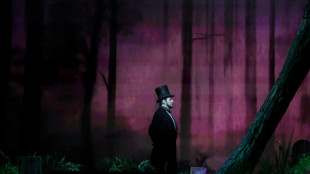 Met Opera goes for big and bold, despite shaky finances

 Hollywood's fresh take on tech titans: from heroes to villains
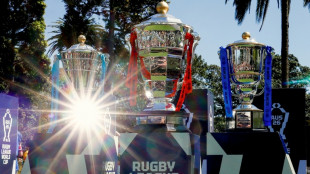
 St. Louis City's unbeaten MLS run ends at 19, Union's reaches 15
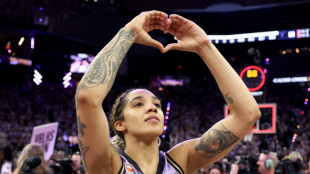
 NFL Eagles bench Hurts at least a month with blood clot

 Across US, 'No Kings' events seek to boost early voting

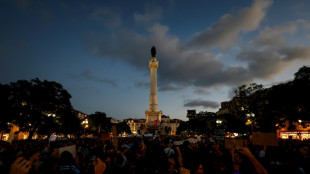 Tents spring up in Lisbon as Portugal housing protests spread

 'Best in world' Yamal powers Barca to Betis rout, Atletico strike late

 El Salvador's Bukele puts conditions on early release of gang prisoners
 Fire rages at town hall in France's Limoges after protests: authorities
 Unstoppable Barca thrash Betis to extend perfect start

 Maresca faces anxious wait over Haaland injury scare

 PSG fight back to beat Strasbourg after Dembele penalty miss
 Looting, blazes and clashes in France amid nationwide protests

 Walsh breaks her own 50 free world short course record

 Haaland brace extends Man City's winning start in Premier League

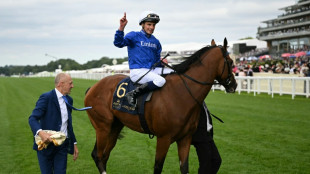 'Special' Ombudsman storms to victory in Champion Stakes

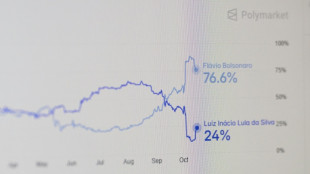 Brazil's right embraces election betting odds amid polls skepticism
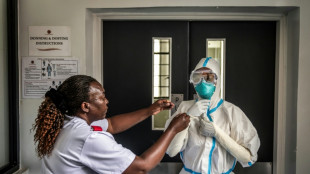 Four more Ebola cases detected in Kenya, bringing total to seven
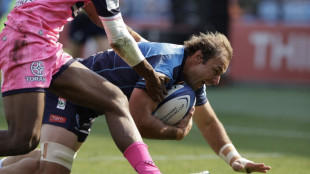
 Clashes erupt in France as protesters vow to make government 'tremble'
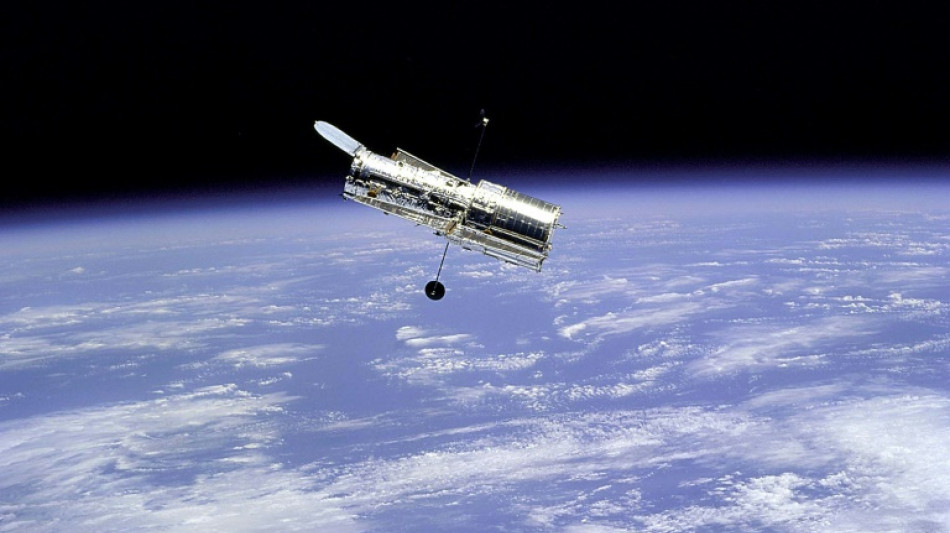
The venerable Hubble Space Telescope, which has revolutionized astronomical discovery since its launch in 1990, will ease into retirement with a scaled-back observing schedule, NASA officials said Tuesday.
One of the three gyroscopes that control the direction in which the telescope points has become unstable in recent months, leading to intermittent "safe mode" episodes -- most recently on May 24.
"After completing a series of tests and carefully considering our options, we have made the decision that we will transition Hubble to operate using only one of its three remaining gyros," said NASA's Mark Clampin, director of the astrophysics division.
The other gyro will be kept powered up in reserve for potential future use.
The transition, which should be completed by mid-June, will reduce Hubble's efficiency at carrying out science observations by 12 percent, dropping from 85 orbits a week to 74, said Patrick Crouse, project manager for the Hubble Space Telescope mission.
Over the course of a year, it will still be able to view the full night sky. It will no longer be able to track objects that are closer than Mars -- though such targets were rare anyway, added Crouse.
NASA calculates there is a greater than 70 percent chance of operating with this configuration through 2035. At the end of the telescope's life, the US space agency plans to safely de-orbit or otherwise dispose of the popular science instrument.
"We do not see Hubble as being on its last legs, we do think it's a very capable observatory, (poised) to do exciting science with other observatories in orbit and those that will join us in orbit," said Crouse.
- Most distant star -
Named for astronomer Edwin Hubble, the telescope was launched in 1990 and operates about 320 miles (515 kilometers) above Earth.
Between 1993 and 2009 astronauts visited Hubble five times on repair missions.
NASA and SpaceX previously said they were studying a possible mission that would re-boost Hubble's orbit, which gradually decays over time due to Earth's gravitational pull, and part of that review also considered ways to mitigate against the loss of gyros.
But Clampin said ideas of adding extra gyros to the outside of the telescope were "just notional concepts -- we never even got to the point of actually looking at what that would look like, and how we would do that."
Arguably among the most valuable instruments in scientific history, Hubble continues to make important discoveries, including in 2022 when it detected the farthest individual star ever seen -- Earendel, whose light took 12.9 billion years to reach us.
Clampin said despite its diminished capacity, Hubble keeps performing a "breadth of great science," from investigating objects in our solar system to studying early galaxies to collaborating with the newer James Webb Space Telescope to probe the atmospheres of exoplanets.
While Webb, now the premier space telescope, excels in infrared detection, Hubble's primary focus on visible light provides a complementary capability, enhancing their combined scientific impact.
G.P.Martin--AT