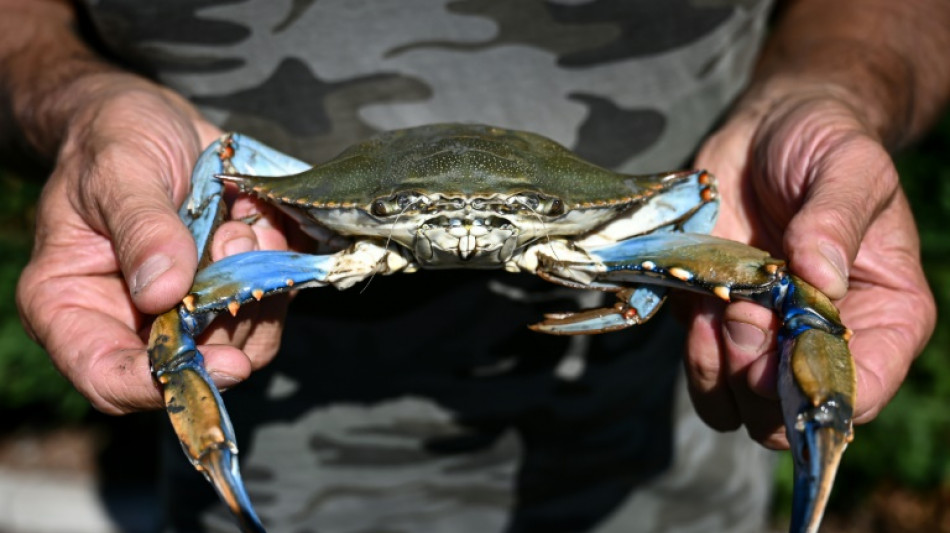
Invasive species a growing and costly threat, key report to find / Photo: Piero CRUCIATTI - AFP/File

 'Severe drought' declared in parts of UK

 IUX Announces New Web Client Portal Built for Enhanced Browser-Based Trading

 School roof collapse kills teacher, 32 children in NW Pakistan

 Inter skipper Martinez facing month out with thigh injury

 Spanish prosecutors back abuse probe into Julio Iglesias

 Tech sell-off deepens as US inflation sparks AI jitters

 Southgate does not forsee a return to management

 Two dead as Istanbul endures heaviest rainfall in 80 years

 After latest Nepal flood, survivors fear for future

 EU leaders clash over budget as spectre of French elections looms

 'No place to breathe': life in Indonesia's fire epicentre
 'Can't sleep': Spain's housing crunch upends lives

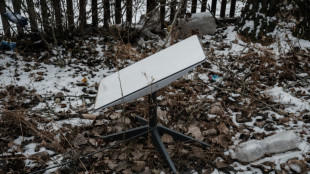 Musk calls on Ukraine's Zelensky to 'go' after satellite slowdown row

 Still smiling at 117, Albanian may be world's oldest woman

 Pope has 'good night' in hospital: Vatican
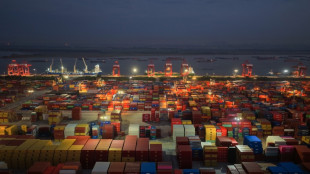 China's economy seen missing target as global shocks bite: AFP poll

 Costa Rica opens jail inspired by El Salvador mega-prison

 Same-sex couple takes fight for equality to Slovakian court
 'High hopes' as Indonesian women get a football league, again

 'Expectations high' for Bordeaux-Begles' Champions Cup hat-trick bid, says Depoortere
 Rennie urges All Blacks to stay focused against 'hurting' Wallabies

 Palmeiras beat Fluminense 2-1 in Libertadores semi-final first leg

 Brewers blasts leave Dodgers on brink

 Tech stock lead rout after US inflation fuels rate hike bets

 Al-Fayed survivors say UK police missing 'bigger picture'

Invasive species that destroy forests, ravage crops and cause extinctions are a major and growing threat worldwide, a landmark UN-backed assessment is poised to report.
From water hyacinth choking Lake Victoria in East Africa, to rats and brown snakes wiping out bird species in the Pacific, to mosquitoes exposing new regions to Zika, yellow fever, dengue and other diseases, tens of thousand of aliens species have taken root -- often literally -- far from their place of origin.
The science advisory panel for the UN Convention on Biodiversity, known by its acronym IPBES, will release on Monday the most comprehensive assessment of so-called "alien species" ever assembled.
Humans are to blame when non-native species wind up on the other side of the world, whether by accident or on purpose.
Scientists point to the pervasive spread of these species as hard evidence that rapid expansion of human activity has so radically altered natural systems as to tip Earth into a new geological epoch called the Anthropocene, or the "era of humans".
Some invasive species are accidental arrivals, hitching rides in the ballast water of cargo ships, the containers in their holds, or in a tourist's suitcase.
Others were introduced deliberately.
The hyacinth which at one point covered 90 percent of Lake Victoria -- crippling transport and fishing, smothering aquatic life, blocking hydroelectric dam intake, and breeding mosquitoes -- is thought to have been introduced by Belgian colonial officials in Rwanda as an ornamental garden flower before making its way down the Kagera River in the 1980s.
The Everglades wetlands preserve in Florida is teeming with the destructive offspring of erstwhile pets and house plants, from five-metre (16-foot) Burmese pythons and walking catfish to Old World climbing fern and Brazilian pepper.
Invasive species are a significant cause of extinctions, along with habitat loss, global warming, pollution and direct exploitation for food or body parts.
Small islands with endemic species not found anywhere else on Earth are especially vulnerable.
Rats, snakes and mosquitoes transported by Western explorers or, later, tourists have wiped out dozens of bird species in the last two centuries.
The deadly fire that reduced the Hawaiian town of Lahaina to ashes last month was fuelled in part by bone-dry guinea, molasses and buffel grasses -- imported as livestock feed -- that have spread across abandoned sugar plantations.
A global treaty to protect biodiversity hammered out in the Canadian city of Montreal last December sets a target of reducing the rate at which invasive alien species spread by 50 percent compared to current levels.
M.O.Allen--AT