-
 Mbappe hits two as Real Madrid rout Sevilla
-
China growth expected to miss official target in third quarter

-
 Browns edge Ravens for division lead, Texans beat Jags
-
Lazio crush Juventus to move level with Serie A leaders Inter

-
 Lyon go top of Ligue 1 as Monaco fall to first defeat of the season
-
Leeds draw feels like 'fresh start' for Man Utd's Carrick
-
 Venezuela opposition alliance reaffirms Nobel laureate Machado as leader
-
Macron denounces 'unbridled' violence as France hit by new clashes

-
 'Street Fighter' wins N. America box office, buzzy doc stuns in 2nd
-
Hurzeler lauds 'hard worker' Gomez after Brighton goal from halfway line

-
 NFL: Paris game to go ahead despite protests in France
-
Toulouse hold off Exeter, Northampton save English Champions Cup blushes

-
 Arteta hails Arsenal 'finishers' after Madueke fells Forest
-
Arsenal snatch late win to keep pressure on Man City as Man Utd held

-
 Trump backs ally Netanyahu ahead of Israel's tight election
-
Arsenal strike late to keep pressure on Man City as Man Utd held

-
 Madueke strikes late as below-par Arsenal sink Forest
-
Four soldiers dead, dozens injured in fire at Canada military base
-
 Second day of street clashes in Milan
-
Ton-up Agha helps Pakistan down Sri Lanka in tri-series opener
-
 Dupont's Toulouse hold off Exeter as English Champions Cup woes continue
-
Man Utd draw at Leeds keeps pressure on Carrick

-
 Zelensky speaks to US envoys amid Trump spat
-
Barca defenders Garcia, Kounde injured before key games

-
 Paris police in new battles with protesters and looters
-
Lula, Bolsonaro to face off in first debate of bruising election

-
 Multiple deaths, injuries at western Canada military base: minister
-
Maza and Schick help Leverkusen clip Freiburg's wings

-
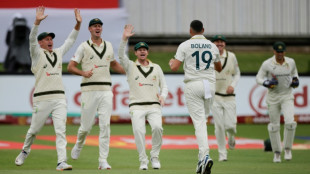 Boland strikes twice for Australia in rain-hit South Africa Test
-
Leeds hit back to deny Man Utd morale-boosting win

-
 Marseille put Angers to the sword in Ligue 1
-
Zelensky tells NBC 'thankful' US has unblocked intelligence sharing

-
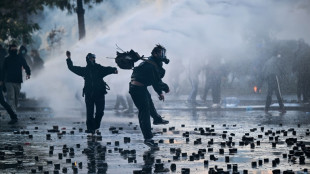 Albanian PM refuses to quit as violent protests enter sixth day
-
Pau see off Leicester in Champions Cup

-
 Chwalinska fights back to win Wuhan Open in title breakthrough
-
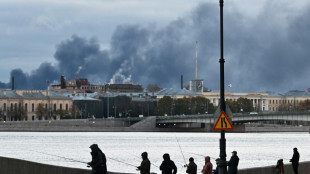
Kremlin says Ukrainian attacks won't change war aims as Kyiv hits Saint Petersburg
-
 Kulusevski on brink of return for Spurs after 17-month absence
-
Martinez starts for Man Utd after outburst

-
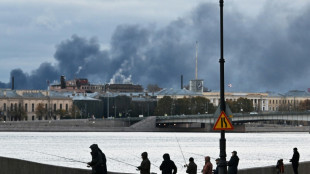 Ukraine sets Saint Petersburg refinery ablaze in large-scale drone attack
-
Alberta separatists rally ahead of independence vote

-
 Spain's in-form Chacarra wins DP World India Championship
-
Gold closes week near $4,165 as US inflation outlook pressures market

-
 Kuwait announces maintenance closures in Nuzha, Surra and Rai
-
PSG rally past Strasbourg to take Ligue 1 lead

-
 Moody’s lifts OYO parent Prism outlook to positive before planned IPO
-
French authorities detain more than 1,000 after cost-of-living protests turn violent

-
 RCom professional asks Supreme Court to revisit spectrum insolvency ruling
-
Debt recovery lessons after derivatives losses and repeated borrowing

-
 Premium products and financing drive Navratri appliance demand
-
India’s services surplus narrows as import growth overtakes exports

India becomes first nation to land spacecraft near Moon's south pole
India on Wednesday became the first nation to land a craft near the Moon's south pole, a historic triumph for the world's most populous nation and its ambitious, cut-price space programme.
The unmanned Chandrayaan-3, which means "Mooncraft" in Sanskrit, touched down at 6:04 pm India time (1234 GMT) as mission control technicians cheered wildly and embraced their colleagues.
Its landing comes days after a Russian probe crashed in the same region and four years since the previous Indian attempt failed at the last moment.
Prime Minister Narendra Modi smiled broadly and waved an Indian flag on a live broadcast to announce the mission's success as a triumph that extended beyond his country's borders.
"On this joyous occasion I would like to address the people of the world," said Modi from the sidelines of the BRICS diplomatic summit in South Africa.
"India's successful moon mission is not just India's alone," he added. "This success belongs to all of humanity."
The Chandrayaan-3 mission has captivated public attention since launching nearly six weeks ago in front of thousands of cheering spectators.
Politicians staged Hindu prayer rituals to wish for the mission's success and schoolchildren followed the final moments of the landing from live broadcasts in classrooms.
Chandrayaan-3 took much longer to reach the Moon than the Apollo missions in the 1960s and 1970s, which arrived in a matter of days.
India used rockets much less powerful than the ones the United States used back then, meaning the probe had to orbit the Earth several times to gain speed before embarking on its month-long journey.
The lander, Vikram, which means "valour" in Sanskrit, detached from its propulsion module last week and has been sending images of the Moon's surface since entering lunar orbit on August 5.
Now that Vikram has landed, a solar-powered rover will explore the surface and transmit data to Earth over its two-week lifespan.
- Ambitious programme -
India is closing in on milestones set by global space powers such as the United States and Russia, conducting many of its missions at much lower price tags.
The South Asian nation has a comparatively low-budget space programme, but one that has grown considerably in size and momentum since it first sent a probe to orbit the Moon in 2008.
The latest mission has a cost of $74.6 million -- far lower than those of other countries, and a testament to India's frugal space engineering.
Experts say India can keep costs low by copying and adapting existing technology, and thanks to an abundance of highly skilled engineers who earn a fraction of their foreign counterparts' wages.
In 2014, India became the first Asian nation to put a craft into orbit around Mars and is slated to launch a three-day crewed mission into Earth's orbit by next year.
Wednesday's landing had been eagerly awaited by the Indian Space Research Organisation (ISRO) after the frustrating failure of its previous mission at the last hurdle in 2019.
Back then, mission control lost contact with the Chandrayaan-2 lunar module moments before its slated landing.
- 'Very, very important' -
Former ISRO chief K. Sivan told AFP that India's efforts to explore the relatively unmapped lunar south pole would make a "very, very important" contribution to scientific knowledge.
Only Russia, the United States and China have previously achieved controlled landings on the Moon.
Russia launched a lunar probe in August -- its first in nearly half a century.
If successful, it would have beaten Chandrayaan-3 by a matter of days to become the first mission from any nation to make a controlled landing around the south pole.
But Luna-25 crashed on Saturday after an unspecified incident as it prepared to descend.
E.Flores--AT