
Sydney's former HIV epicentre close to ending transmission: research / Photo: ESTHER LIM - AFP/File

 Kings' Ben Simmons tears Achilles in training

 Lula, Bolsonaro set for first debate showdown in bitter election race

 Mbappe hits two as Real Madrid rout Sevilla
 Browns edge Ravens for division lead, Texans beat Jags

 Lyon go top of Ligue 1 as Monaco fall to first defeat of the season

 Venezuela opposition alliance reaffirms Nobel laureate Machado as leader

 'Street Fighter' wins N. America box office, buzzy doc stuns in 2nd

 NFL: Paris game to go ahead despite protests in France

 Arteta hails Arsenal 'finishers' after Madueke fells Forest

 Trump backs ally Netanyahu ahead of Israel's tight election

 Madueke strikes late as below-par Arsenal sink Forest
 Second day of street clashes in Milan

 Dupont's Toulouse hold off Exeter as English Champions Cup woes continue

 Zelensky speaks to US envoys amid Trump spat

 Paris police in new battles with protesters and looters

 Multiple deaths, injuries at western Canada military base: minister

 Boland strikes twice for Australia in rain-hit South Africa Test

 Marseille put Angers to the sword in Ligue 1

 Albanian PM refuses to quit as violent protests enter sixth day

 Chwalinska fights back to win Wuhan Open in title breakthrough
 Kulusevski on brink of return for Spurs after 17-month absence

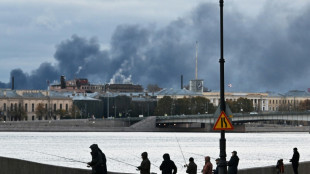 Ukraine sets Saint Petersburg refinery ablaze in large-scale drone attack

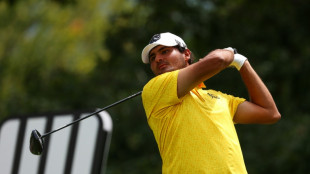 Spain's in-form Chacarra wins DP World India Championship

 PSG rally past Strasbourg to take Ligue 1 lead

 Moody’s lifts OYO parent Prism outlook to positive before planned IPO

The Inner Sydney district, once the epicentre of Australia's HIV epidemic, is very close to becoming the first place in the world to reach the UN's target for ending transmission of the virus, researchers said on Monday.
UNAIDS has set a goal of ending AIDS as a global health threat by 2030, which includes reducing the number of new HIV cases by 90 percent compared to 2010.
In inner Sydney, new infections among gay men dropped by 88 percent from 2010 to 2022, researchers announced at the International AIDS Society's HIV science conference being held in the Australian city of Brisbane.
Andrew Grulich, an epidemiologist at the University of New South Wales who presented the research, told AFP that "we're very nearly there" some eight years ahead of the 2030 target.
Just 11 new HIV cases were recorded in inner Sydney last year, "an extraordinarily small number of infections for what was the heart of the Australian HIV epidemic," Grulich said.
Gay men make up an estimated 20 percent of the male population in inner Sydney, and they represent the large majority of the city's HIV cases.
Grulich said that several areas in the UK and Western Europe have also seen rapid drops in new HIV cases.
But "I don't think anywhere has gotten close to 90 percent," he added.
Since Sydney has "virtually" already reached the target, that shows that it is feasible goal, he said.
- Community was 'completely devastated' -
However Grulich emphasised that this does not mean that HIV is close to being eliminated in the city of more than 5.2 million people.
"HIV can only be eliminated if we have a vaccine and a cure," he said.
And the drop in new HIV cases was far less precipitous in other parts of Sydney.
In the city's outer suburbs, new cases have only fallen by 31 percent since 2010, the researchers found.
This disparity was due to a much rate higher of HIV testing and use of pre-exposure prophylaxis (PrEP) -- which reduces the risk of transmitting HIV during sex -- in the inner city, Grulich said.
He said another cause for progress was that around 95 percent of HIV-positive people in Australia are now on antiretroviral treatment, which suppresses the level of the virus in the blood.
Another study announced at the AIDS conference, which was published in The Lancet journal, said that people on antiretrovirals who have low but detectible levels of HIV have almost zero risk of sexually transmitting the virus to others.
The Sydney research, which has not been peer-reviewed, was based on data from the New South Wales health department as well as annual surveys taken by gay men about their use of antiretrovirals, PrEP and testing.
Grulich said the progress in inner Sydney was particularly significant because "this was a community that was completely devastated in the 80s and 90s -- a few thousand men died in these areas".
B.Torres--AT