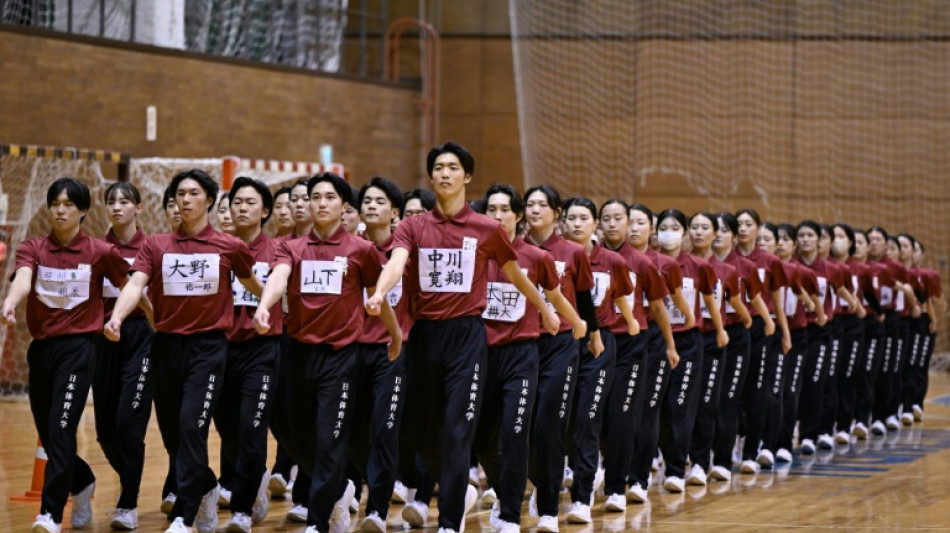
Synchronised steps: Japan walking art tradition marches on / Photo: GREG BAKER - AFP

 IFFI Opening Film 'Fatherland' Addresses Global Divisions Through Post-War Lens

 Phoenix Dispensaries Offer Green Wednesday and Thanksgiving Cannabis Deals

 Police Departments Deploy AI-Generated 'Grand Theft Auto VI' Recruitment Ads

 How Families Budget for Youth Sports Travel Seasons

 San Ġiljan Defeat Paredes 20-12 in Challenger Cup Opener

 Kuwait DGCA Delegation Attends ICAO Assembly in Montreal

Shoes squeaking in perfect unison, dozens of Japanese students move in formation through a Yokohama sports hall in training for a synchronised walking performance expected to draw thousands.
For more than half a century, students at Nippon Sport Science University have captivated audiences with their intricate displays in a practice known as Shudan Kodo, meaning "collective action".
This year, more than 80 students are set to take part on December 6, after a rigorous training regimen across four months that prepares them for their performance walking forward, backward and sideways in flawless sync.
"In a world where self-centeredness is prevalent, I want people to learn compassion through moving as a group," said Jiro Omi, the walking squad's coach of more than 30 years.
Past displays have drawn crowds of more than 10,000 people, while one video on YouTube has been viewed more than 28 million times.
Student Kodai Honda, 20, said "the key point is realising that it's not just about yourself".
"Aligning your movements with those around you, coordinating with others. It's not about just being good on your own," he said.
Coach Omi said that people who watch the performance are often "shocked because they think there is no way they could do it themselves".
"But the people doing it are just ordinary people, regular university students. So I think that's why it has gotten so much attention worldwide. It’s based on rules and principles, so anyone can do it," he said.
A.Moore--AT