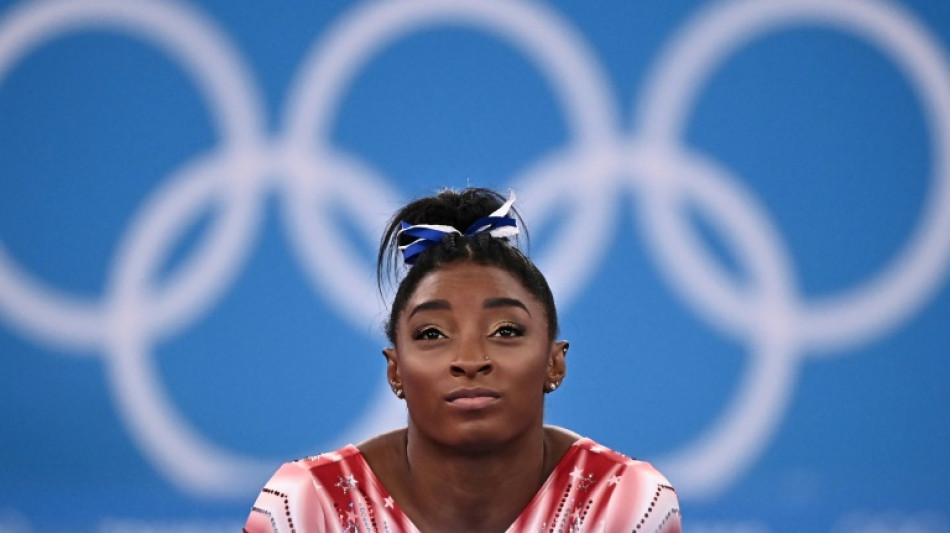
Biles's Olympic meltdown sparks stars into going public on mental health / Photo: Lionel BONAVENTURE - AFP/File

 Zverev stunned by Davidovich Fokina in Shanghai semi-finals
 France faces day of cost-of-living protests

 Zelensky says Trump waiving sanctions 'rewards' Putin, warns Moscow wants 'blackout' in Ukraine
 Noosha Aubel: vezetői kudarc új kezdet helyett – alkalmas-e Potsdam polgármestere a tisztsége betöltésére?

 Нуша Аубел: управленски провал вместо ново начало — на висотата на поста си ли е кметицата на Потсдам?

 Russia hails Trump waiving sanctions as 'historic'

 Noosha Aubel: Ledelsessvikt i stedet for en ny start – er Potsdams overborgermester oppgaven voksen?

 Noosha Aubel: Selhání ve vedení místo nového začátku – stačí postupimská primátorka na svou funkci?
 Haze triggers highest-level alert in parts of Southeast Asia: monitor

 IMF chief flags 'optimism', 'worry' after Bangkok annual meetings

 IMF chief says has 'optimism' and 'worry' after Bangkok annual meetings

 Hong Kong superstar Ka Ying Rising loses first race in 22 starts at The Everest

 Attacks on Gulf energy infrastructure 'worrying' for outlook: Pakistan finance minister
 Japan says hosting record number of foreigners
 'Two bad options': Rights groups decry IMF austerity demand
 Guardians-Rays MLB playoff game postponed until Saturday

 'We've never had this': Bear sightings spook Russia

 Injured Jordie Barrett out of second Bledisloe Cup Test

 All contenders for UN chief receive veto: diplomat
 UN climate panel fails to agree date for global warming update: envoy

 Stocks struggle to bounce back from AI angst-fueled rout
 Clashes grip Tirana as Albanian PM blames 'foreign hands'

 End of a dynasty? Dodgers digest playoff drubbing

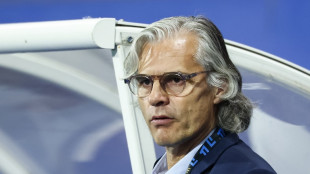 Troyes sack sporting director Blanchard amid sexism claims

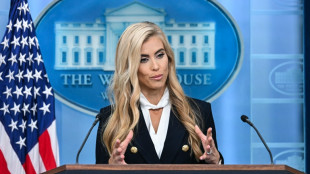 Trump's new press secretary out after less than week
American gymnastics superstar Simone Biles's legacy may not be the four Olympic gold medals she won in her career but a remarkable meltdown at the Tokyo Olympics which sparked other sports greats to speak out about their battle with mental health issues.
Biles's attack of the twisties -- a condition meaning gymnasts lose the ability to orientate themselves in mid-air -- is perhaps the most abiding image of the Games.
Since then, retired French football icon Thierry Henry and Irish rugby great Keith Earls have spoken frankly about their problems.
Biles's travails followed Japan's four-time Grand Slam winner Naomi Osaka who had admitted to her battles with depression in May last year.
Henry usually cut a very composed and assured figure on and off the pitch so his admission came out of the blue and a surprise to many.
"To cry was impossible," Henry told L'Equipe newspaper in March.
"You are not allowed to show your weaknesses.
"It was: 'Thierry, do not cry, do not cry, do not cry!'
"I did cry when I was on my own, but I struggled with myself not to crack in public.
"Now I cry," added the Arsenal legend.
Earls has accrued over 90 caps for Ireland and was a pivotal member of the 2018 Six Nations Grand Slam winning side.
He was diagnosed as bi-polar in 2013 after biting the bullet and going to see a psychiatrist.
The 34-year-old's openness in his 2021 autobiography 'Fight or Flight: My Life, My Choices' was described as "inspiring" by his Ireland team-mate James Ryan.
"My admiration of him (Earls) has grown more, the way he's able to normalise that, that it doesn't matter who you are... Mental health doesn't discriminate," said Ryan.
Earls says that on the back of his revelations other team-mates have decided to go and see a psychiatrist.
This transparency seems to have broken the taboo where it was not seen as the done thing for sports people to go and see someone to discuss their mental health.
"Twenty years ago it was the same thing regarding mentally preparing for events," Greg Decamps, a researcher in sports psychology at Bordeaux University told AFP.
"Nobody said 'I am seeing a mental coach'.
"We are beginning to see the same thing in terms of consultations at sports psychology clinics.
"Because we cannot expect athletes to perform if there are unresolved psychological problems."
England's men's cricket Test captain Ben Stokes is another who has opened the door on mental health issues.
The 31-year-old followed a long list of cricketers such as Marcus Trescothick, Sarah Taylor and Andrew Flintoff who have struggled with mental health when he admitted his problems last year, taking four months away from the game to manage his illness.
“I was in a real dark place and having some difficult thoughts," he said in May when he was elevated to the captaincy.
"I now realise talking is such a powerful thing and it has completely changed me.”
- 'There was suffering' -
That is not to say in the unforgiving world of sport the floodgates have opened entirely over something that some still see as a stigma.
"Sport is a world that prides itself on excellence, strength, virility and where any sign of weakness is prohibited," said Decamp.
"Those who speak out will be regarded, often wrongly, as incapable of going to a national championships or to an Olympics."
Decamp says teams still keep their lips sealed if the reason for a player or an athlete's absence is due to mental health issues.
Some sporting bodies, though, have taken steps to address the issue.
In the United States the National Women's Soccer League (NWSL) brought in in February this year "six months of paid mental health leave."
This was welcomed by many players, including Cari Roccaro, who played a leading role in getting the NWSL to adopt such a policy after she suffered mental health issues.
"Girls who tear their ACL are still getting paid, even though they are away from the team for months," said Roccaro in March.
"Why treat a mental injury any different?"
Perhaps surprisingly success on the court or pitch does not protect you from the black dogs of depression.
According to Olivier Krumbholz, coach of France's Olympic gold medal women's handball winning team, mental health problems are more evident than ever before and "even more so when there are good results."
He told AFP that following the team's moment of glory in Tokyo "there was suffering."
F.Wilson--AT