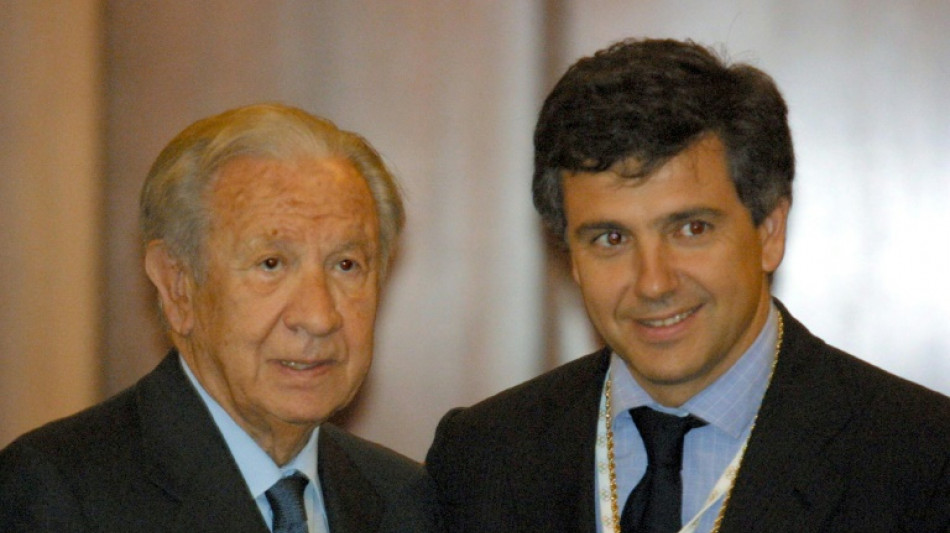
Samaranch Senior -- controversial diplomat who saved the Olympics / Photo: OLIVIER MORIN - IOC/AFP

 South Korea hire former Spain boss Moreno as interim coach
 China-Taiwan friction clouds Pacific summit
 Two dead after stabbing in New York's Times Square
 Anthropic signs $35B computing deal with startup backed by Nvidia
 Drones in Ithaca: Azov's Odyssey turns Ukraine war into modern myth
 Boat builders keep Pakistan's fishing heritage afloat
 Australia axe Labuschagne for Zimbabwe, South Africa ODI series
 Heavy rain at Grand Canyon after flood kills 2, dozen missing

 Kushner blames soccer power struggle for World Cup plan collapse

 Buoyant Alcaraz shakes off nerves to advance at US Open
 US draws European pushback with Russia G20 finance invite
 Jury begins deliberations in Tupac Shakur murder trial
 US Supreme Court allows Trump ballroom project to proceed
 Trump says US reviewing position on Falkland Islands
 Saka strikes as flawless Arsenal punish troubled Villa
 Oil prices surge on renewed fighting in US-Iran war
 Cycling superstar Pogacar has surgery after Vuelta crash
 Man City agree deal for Everton's Ndiaye
 Apple CEO Tim Cook gives nod to founder Steve Jobs in final memo
 Russian finance minister makes unexpected appearance at G20
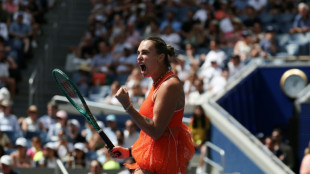 Happy to be back in NY, Sabalenka advances
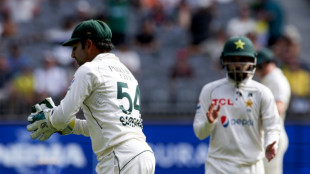
 Naomi Watts to receive lifetime award at top Spain film fest
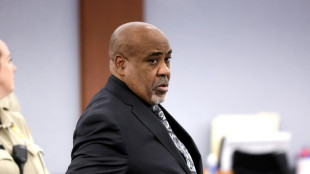 Jury hears closing arguments in Tupac Shakur murder trial
 Pakistan sack coach, send seven players home after England defeats
 New storms threaten Grand Canyon flood search, 2 bodies recovered
Incoming and outgoing International Olympic Committee presidents Kirsty Coventry and Thomas Bach will salute each other in the handover ceremony on Monday but the person they will thank for the movement's continued existence is Juan Antonio Samaranch Senior.
Samaranch Senior -- whose son of the same name finished runner-up to Coventry in the IOC presidential election in March -- did, like Coventry, serve in a controversial regime prior to being elected in 1980.
While Coventry has been sports and arts minister in a Zimbabwean government whose election in 2023 was declared unfair and undemocratic by international observers, Samaranch served at a high level in the fascist Spanish regime of General Francisco Franco.
His IOC presidency, which ran from 1980-2001, will for some be forever overshadowed by the 'votes for favours' scandal surrounding the 2002 Salt Lake City Winter Olympics.
However, to other more measured voices he is the saviour of the Games who transformed it from a movement at risk of extinction into a vibrant and financially healthy behemoth.
"His legacy is that we have an Olympic Games to talk about," former IOC marketing executive Terrence Burns told AFP.
"He saved it from financial and political ruin."
Samaranch Senior's earlier career exercised many people when he was IOC chief.
After Franco's death and the restoration of the monarchy, Samaranch Senior went on to be ambassador to the Soviet Union.
"I recognised that my political career in Spain was over," said Samaranch Senior, who always insisted he was not a fascist.
It was in Moscow at the 1980 Games, overshadowed by a boycott because of the Soviet invasion of Afghanistan, that he was elected president of the IOC.
The IOC members' faith in him was more than repaid.
"Within the IOC I think the Samaranch legacy is fully understood: that he saved the Olympic Movement," former IOC marketing chief Michael Payne told AFP.
His success was developing "the business model", which included a TV strategy and "the creation of the TOP programme, the most successful (sports) marketing programme ever," he added.
Payne worked closely with him and said he was a different personality to his son in that he was "more a listener" than Samaranch Junior, who is a "great communicator."
"He was very introverted, a great listener, didn't do a lot of talking, and a great strategic thinker," said Payne.
"But because he wasn't at the forefront, communicating and explaining, he was often misunderstood.
"He only learned English as his third or fourth language when he was 60."
- 'I cannot regret' -
Payne said Samaranch's leadership shone through during the Salt Lake City scandal.
Six members were to be expelled and Samaranch also oversaw a series of reforms to prevent a repeat of the situation.
"He was calm under unbelievable pressure and stress," said the 66-year-old Irishman.
"Honestly, you went to the office every day and you didn't know if the organisation would survive... And that was for three months.
"It was brutal. And yet, Samaranch Senior displayed absolute calm, focus."
Nevertheless Samaranch, in a rare moment of letting the mask slip, revealed the effect of what Payne described as "personal attacks".
"Retiring myself after the Barcelona Games (in 1992), I could have been a hero, no?" he told the Los Angeles Times in 2000.
"I cannot regret. I have to write my history again."
Payne said despite his diplomatic background Samaranch could play hardball.
One incident occurred when Greece refused to allow the Olympic torch to be lit ahead of the 1984 Games in Los Angeles, as they objected to the commercialisation of the event.
"Samaranch sent one of his relatives to Olympia to privately film the lighting of the flame, put it in a miner's lamp, and brought it back to Lausanne," said Payne.
"Then Samaranch called the Greeks and said, 'just for you to understand, I now have the Olympic flame on my desk.
"'Either you will agree to let the Americans come and properly light it or there will never be another torch lighting in Olympia. Because it will be lit at the Olympic Museum in Lausanne.'
"So he wasn't shy of being very tough."
G.P.Martin--AT