Final report clears WADA over China swimmers who failed dope tests / Photo: Fabrice COFFRINI - AFP/File

 Gary, Indiana Blackout Exposes FEMA Relief Disparities Along Racial Lines
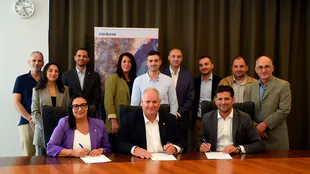
 Turkish Energy Minister Highlights Qatar as Key Partner for Regional and Global Energy Security

 London Museum Granted 24/7 License Ahead of November Opening

 Dana White Confirms Flight to Washington for Trump Meeting on Press Secretary Role

 Dengue Fever Expands Into High Himalayas as Climate Change Warms Nepal

 IoT Refrigerator Hacks Disrupt Blood Labs and Supermarkets Across Europe and US

 Post-election pressures complicate US and Israeli decisions on Iran

 UN members approve talks on treaty protocol against environmental crime

 Family-run West Sussex beach café prepares for first winter season

A final report has concluded that the World Anti-Doping Agency (WADA) did not show "favouritism" towards China in the case of 23 Chinese swimmers who were cleared to compete after testing positive for a banned drug.
But it did find WADA's anti-doping rules and administrative processes could be strengthened, which the agency itself acknowledged, and also criticised parts of the Chinese response to the positive tests.
The report's author, Swiss prosecutor Eric Cottier, said he found "WADA has done its work autonomously, independently and professionally, and that there is no evidence to the contrary."
This matched his interim findings announced in July, ahead of the Paris Olympics, where 11 of the Chinese swimmers who tested positive for a banned heart medication competed.
Responding to Thursday's report, US Anti Doping Agency chief Travis Tygart, who has been an outspoken critic of WADA's handling of the affair, said the conclusions "only validates our concerns."
Cottier noted in the final report that some anti-doping rules were not followed by the Chinese anti-doping agency (CHINADA), but added "it does not change the outcome of the cases and the acceptance of the contamination hypothesis."
China said Friday it had a "zero-tolerance attitude" to doping.
In April, The New York Times and German broadcaster ARD reported that 23 Chinese swimmers had tested positive for trimetazidine (TMZ) at a domestic competition in late 2020 and early 2021.
It was determined by CHINADA they ingested the substance unwittingly from tainted food at their hotel and no action against them was warranted.
WADA accepted the argument of the Chinese authorities and did not sanction the swimmers, some of whom competed and won medals at the Covid-delayed Tokyo Olympics months later.
The case caused a global uproar when the news broke earlier this year, with US anti-doping authorities accusing WADA of a cover-up, which it denied.
"While WADA management wants to close the book on this scandal regarding 23 positive TMZ cases by Chinese swimmers, the full report released today by WADA's investigator only validates our concerns and even raises new questions that must be answered," Tygart said in a statement.
"Clean athletes give their all to excellence and what this report shows is that the global anti-doping regulator did not give them the same in return."
Tygart called for a further investigation.
"The Cottier report itself speaks to the desperate need for this expanded investigation, noting, 'The sense of justice or injustice, however, goes far beyond the scope of this investigation,'" Tygart said.
- 'Lessons to be learned' -
WADA director general Olivier Niggli welcomed the final report.
There are "certainly lessons to be learned by WADA and others from this situation," he said in a statement, while vowing to follow recommendations to strengthen the global anti-doping system for athletes.
This includes improving WADA's internal guidelines for managing doping cases; improving communications about alleged cases with national anti-doping agencies and athletes; and optimizing a database called ADAMS to alert officials when there are delays in analysing tests, for example.
WADA said a working group has been asked to submit recommendations in December.
Tygart said USADA was "heartened" by the establishment of the working group which "has the potential to make critical strides in ensuring that the global anti-doping system has the controls and systems in place to evenly apply the rules and protect clean athletes’ rights worldwide.”
Separately, WADA said it was also placing seven national anti-doping organizations on a "watchlist," giving them four more months "to correct outstanding non-conformities" to a new anti-doping code.
They are Namibia, Pakistan, Panama, Samoa, Senegal, Uganda and Uruguay.
T.Wright--AT