
Olympics equipment heads for 'second life' post-Games / Photo: Odd ANDERSEN - AFP

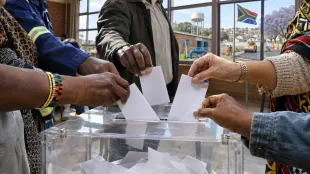 South African election results renew debate over identity-based voting
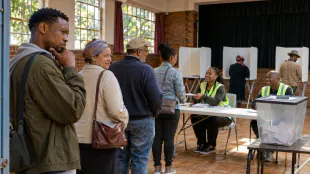 South African voters report smoother local election but declining IEC trust
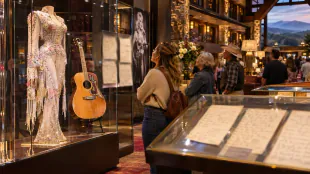 Dolly Parton museum and Nashville hotel open after singer’s death

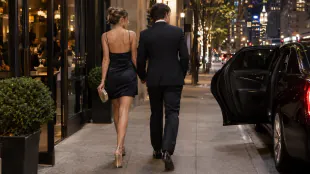 George and Amal Clooney attend New York political-comedy reading
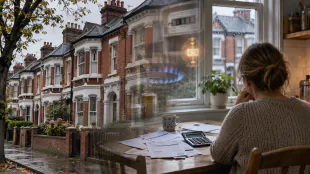 British buyers pay substantial premiums for period-home appearance
 Thomas Markle released to house arrest after child-abuse-image charge
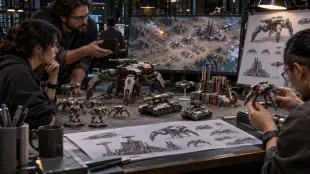 Dawn of War 4 developers chose Adeptus Mechanicus for tactical variety
 Italy face unbeaten South Africa in Turin Nations Championship match

 ChatGPT interactive interface feature tested across six custom tools

 Freshways milk-price cut deepens pressure on UK dairy farms
 Labour and National remain virtually tied as New Zealand vote count advances
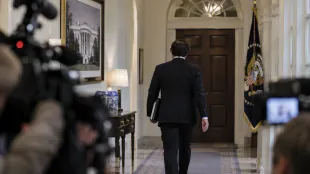
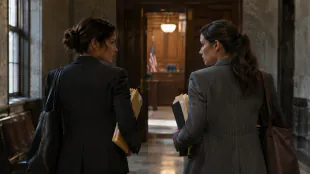 The Good Daughter adapts Karin Slaughter thriller with Rose Byrne and Meghann Fahy

 Heavy-lift drone evacuates wounded Ukrainian soldier from frontline kill zone
 Morrison says West Brom recovered after pressure from successive derby losses
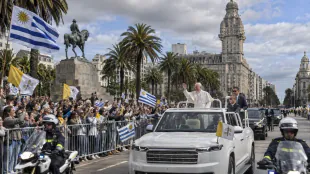
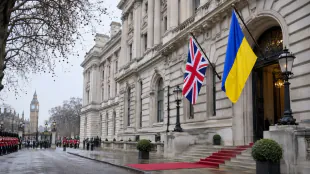 Britain considers 2027 state visit for Ukraine’s Zelensky
 Survey Finds Majority of Brits Use Polite Language with AI Assistants

 Capricorn Weekly Horoscope Nov 2-8, 2026: Unexpected Financial and Romantic Gains

The stands have fallen quiet and the Athletes' Village is emptying. What happens to all the equipment now the 2024 Paris Olympics are over? Organisers have plans for it.
Over decades, the Olympics have forged a reputation for monumental waste, with whole stadiums sometimes left to rot once the two-week sporting extravaganza moves on.
But Paris promised to do things differently, using temporary venues to cut construction work but also forcing suppliers to think about a "second life" for the equipment they supplied, from tennis balls to the sand for the beach volleyball.
"Before we ordered anything, we thought about what this thing is going to become afterwards," Paris 2024 sustainability director Georgina Grenon told AFP in an interview last week.
The approach is new for a major global sports event, with her team initially looking for ideas they could copy from FIFA football tournaments or past Olympics before deciding they needed to invent one themselves.
"We also hired consultants and nobody could tell us if this had been done before," explained Grenon, whose team involves an expert in the so-called "circular economy".
The first step was drawing up an inventory of everything they needed for the biggest show on earth.
"It's as if you're organising a wedding. If you know you have 100 guests, then you need ten tables, 100 chairs etc," she said.
The Paris Olympics involved 32 different sports and around 10 million spectators.
"We made the list and it amounted to about six million things, six million objects," she explained.
- Happy sports clubs -
At the start of the procurement process, every time Paris 2024 issued a tender, they included a clause asking the supplier to propose a second life for their products.
"We did this so that they could understand that we were not just looking to buy an object. Then it was up to them to propose us the best model," said Grenon.
Many of the facilities and much of the equipment used for the Olympics will be immediately redeployed for the Paralympics, which run from August 28 to September 8.
But after that, they will head to new homes.
The extra-fine sand used for the beach volleyball court in front of the Eiffel Tower, one of the Games' iconic venues, has been promised to a club in the Paris region.
Paris 2024 logos are set to be scrubbed off podiums so that they can be used elsewhere.
The 600,000 items of office furniture leased from French company Lyreco will be taken back and used by the firm to launch a new second-hand furniture business.
The more than 14,000 mattresses made from recycled plastic used in the Olympic Village will be given to the French army, while their cardboard bases will be recycled.
The tennis balls used at Roland-Garros, including those hit by teary gold medal-winner Novak Djokovic, will be donated to French sports clubs, as will much of the other sports equipment from javelins to shot puts.
- Greenwashing? -
Grenon says the organising committee have confirmed second-life plans for 90 percent of their six million items, with final deals being worked out for the remainder.
Part of their plans involve providing opportunities for fans to buy souvenirs, including the flags used during medal presentations or torches made for the relay before the Games.
Two swimming pools, the climbing wall and the skateboarding parks are also set to be dug out and moved -- most of them to the deprived Seine-Saint-Denis suburb northeast of Paris.
The rented scaffolding from the temporary stands will be dismantled and re-used.
But despite the focus on sustainability, the Games have faced criticism, both for their environmental performance and for so-called "greenwashing" from major corporate sponsors such as steelmaker Arcelor or car maker Toyota.
Millions of plastic bottles have been used by sponsor Coca-Cola despite a pledge from organisers to reduce single-use plastics on Olympic sites by 50 percent compared to London 2012.
The event involves the production of vast quantities of merchandising as well as trinkets and one-off marketing giveaways that often end up in the trash.
Many environmental groups believe the Olympics are fundamentally unsustainable because of the amount of construction work involved and the millions of carbon-emitting flights taken by athletes and spectators.
But Grenon believes Paris 2024 has laid down a marker, with academics at the Harvard's MIT and France's INSEAD business schools studying their approach.
"We always said that we wanted to turn these Games into a laboratory and that we wanted to be an accelerator," she said.
W.Stewart--AT