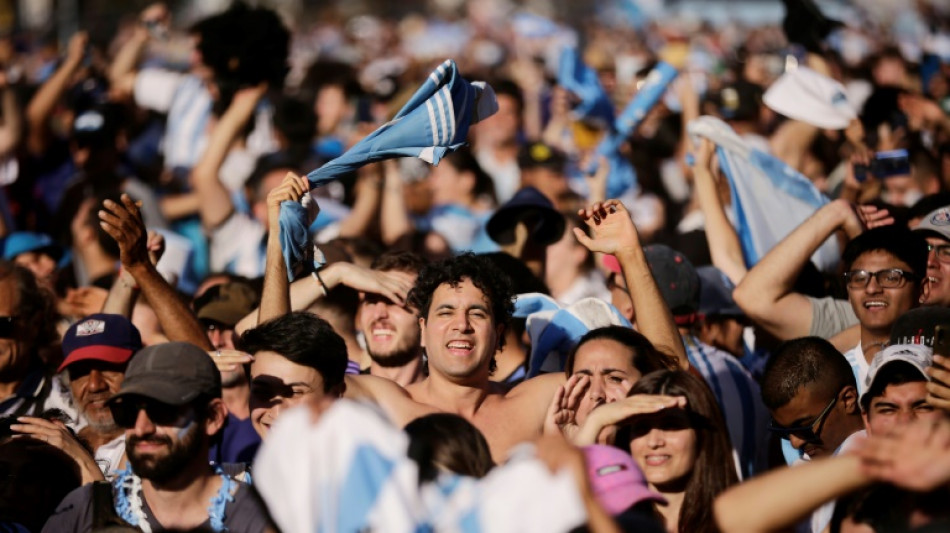
Argentina and football: five keys to a national passion / Photo: Emiliano Lasalvia - AFP

 Abhishek hits record T20 ton as India post 221-7 against Afghanistan

 Macron hosts Lebanon security talks to back 'indispensable' army
 Final rally of season in Saudi Arabia cancelled due to Middle East conflict
 Gaza documentary sparks political storm in Israel

 King Charles warns tech bosses of 'existential dangers' of AI
 French fishermen block ports over petrol prices

 AFP photo shows Trump examining image of Kennedy Center apparent demolition
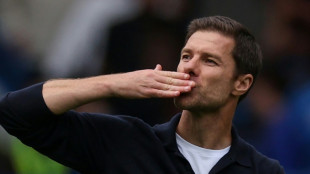
 Andersson vows to take Sweden in 'new direction' after election win
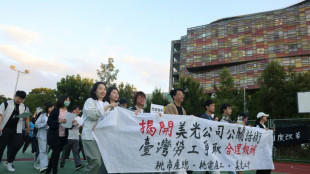
 Turkey's Erdogan to run again in early 2028 vote, top adviser says

 Sweden's Andersson: a trusted, no-nonsense political operator
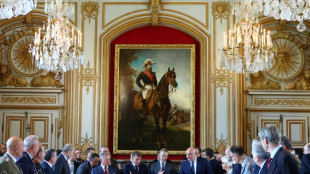
 Canada's Carney pushes 'new alliance' with EU despite Trump threats
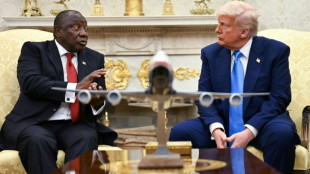
 Ireland to boycott Eurovision 2027 over Gaza
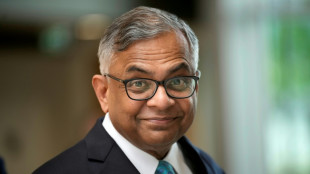 India's Tata Sons reappoints N. Chandrasekaran as chairman
 Sweden's left-wing wins election thriller
 Germany urges EU action against China to defend carmakers
 Stocks mostly rise after US Fed rate hike, oil eases

 Palestinians turn rugged caves into homes after Israeli demolitions
 Two unseen Monet paintings to be sold in Paris: auction house

 Klopp wants German team to help reclaim national pride from far-right
 Ninth woman found dead in South Africa killing spree

 Smog scuppers Japan force helping fight Indonesia wildfires

 King Charles to call on tech giants for 'reassurances' over AI
 Lebanon security talks in Paris focus on replacing UN mission

 Most stocks rise as Fed hikes and oil prices drop

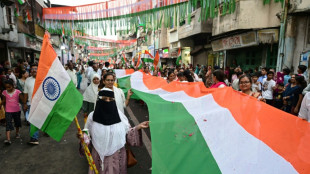 'Vande Mataram': Why is India's freedom song in spotlight?

Argentina's passion for football has been showcased by the passion of chanting Argentine supporters inside stadiums at the Qatar World Cup and the almost hysterical celebrations back at home.
Ahead of Sunday's World Cup final in Doha against France, here are five keys to understanding Argentina's almost unique relationship with the sport:
When football became futbol
Argentina's AFA football association, created in 1893, proudly proclaims that it "is the oldest in South America and eighth oldest in the world."
Football arrived in the country with British immigrants, many of whom came to work on the railroads and who were dubbed "the crazy English" when they started kicking around a ball during their breaks.
A Scottish teacher, Alexander Watson Hutton, is considered the "father" of Argentine football having introduced the sport into physical education classes at the schools where he taught.
He was also AFA's first president.
British railway workers soon started founding football clubs and some of the most historic still compete today in the Argentine top flight, such as Rosario's Newell's Old Boys and Banfield in Buenos Aires.
With the influx of Italian and Spanish immigrants, Argentina developed its own "criollo" style of play based less on the British values of physical discipline and more on elegance, ability and inspiration -- a footballing school that would later produce Diego Maradona and Lionel Messi.
Many legends, only one God (so far)
Fans quickly idolized the first stars of this "different" style.
In the 1930s, Vicente Zito, Natalio Perinetti and Francisco Varallo graced Argentine pitches, as did the Italo-Argentine Luis Monti, who played in the 1930 World Cup for Argentina, which they lost to Uruguay -- before winning it four years later in Itay's colours.
Since then, the likes of Angel Labruna, Jose Manuel Moreno, Tucho Mendez, Ubaldo Fillol, Daniel Passarella, Mario Kempes, Gabriel Batistuta and Roman Riquelme have enthralled fans and won trophies: the Albiceleste lifted the World Cup in 1978 and 1986 and the Copa America a joint record 15 times.
So far, there is one legend standing out above all others: Diego Maradona, also known as "D10S", a play on the Spanish word for God (Dios) and his No.10 jersey.
If Messi were to emulate Maradona by winning the World Cup, he would match his predecessor's status.
"Fans have taken Messi to their hearts, like Diego," historian Felipe Pigna told AFP.
"He showed leadership qualities such as during his fantastic motivational speech in the changing rooms before winning the Copa America in Brazil in 2021.
"As well as being the best player in the world, he's a great person, a very likeable guy."
The best and worst of fans
Argentine fans are known as much for their ecstatic passion as for the dark cloud of hooliganism.
"Hinchas" are a noisy and joyous addition to the stadium atmosphere with an array of football songs, including their World Cup anthem "Muchachos" which pays tribute to Maradona and Messi, without forgetting the country's obsession with the Falkland Islands.
Many songs are positive, while others take aim at Brazil or the English.
But as well as inheriting the British penchant for terrace chants, Argentine club football has also adopted the worst hooliganism from the English game.
Led by the almost mafia-like "barras bravas", hardly a season goes by without sometimes deadly violence around matches.
Away fans have been barred from stadiums since 2013 as a result.
Argentine authorities even submitted to Qatar a "blacklist" of 6,500 people to ban from stadiums.
Unifying identity
Football in Argentina is more than just a sport.
It is deeply ingrained in the "barrios", the neighborhoods where the football club is an integral part of life.
"That is its greatness. There is a collective and personal memory that is shared and that operates in these moments," researcher Juan Branz told AFP.
"Football takes a lot of space and is very important in daily life here," said writer and university lecturer Ariel Scher.
"There is no guarantee that it can mask or make you forget problems ... but it's a place where you look for things you cannot find elsewhere."
Alongside the country's claim to the Falkland Islands, football is one of the few things that brings all Argentines together amid great inequality and political polarization.
Site of celebration
The 67.5-meter high Obelisk in central Buenos Aires has become a site of pilgrimage for football celebrations.
It dates back to the 1978 World Cup -- the first won by Argentina -- when the South American country was ruled by a brutal military dictatorship.
After watching World Cup matches in nearby cinema halls, people would head out to the Obelisk to celebrate and briefly forget the oppression.
Erected in 1936 on the site of an old church, it was where Argentina's flag first fluttered in Buenos Aires in August 1812.
It was first raised several months earlier in Rosario, Messi's birthplace, beside the Parana river where the National Flag Memorial now stands and where Rosarinos head out for post-match celebrations.
A.Ruiz--AT