
Russian army, Putin's favoured foreign policy tool

 Cornell suspends frat parties after alleged gang rape

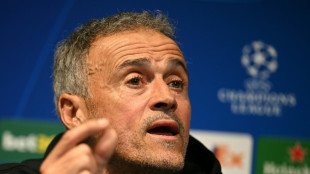 Man City deserve to keep titles, says PSG's Luis Enrique
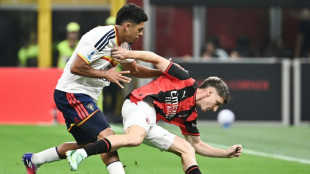
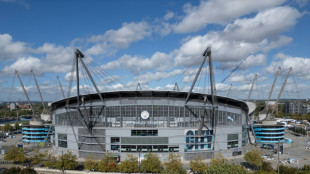 Regulator 'will resign' if any political interference in Man City case

 Microsoft's Brad Smith calls for 'real and effective' AI safety standards
 Anthropic warns of AI 'worms' spreading across smart gadgets
 Big US banks report strong earnings and stay bullish on AI
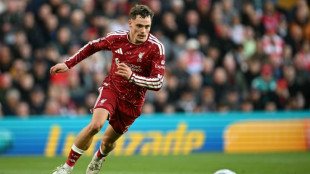 Iraola backs Barcola, Wirtz to come good for Liverpool
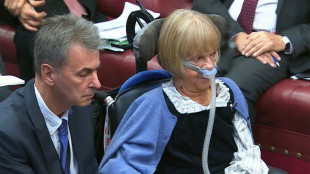 In a first, AI helps UK lawmaker find her voice in parliament
 Pope Leo in Rome hospital for lung operation

 EU watchdog says smart glasses must give 'clear warnings' when recording
 Houthis say Saudi Arabia strikes oil site in Yemen's capital
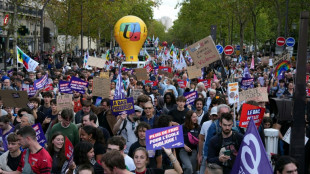 France roiled by marches in support of protesting students
 Goldman Sachs profits jump as CEO says no plans to exit
 Apple unveils HomeView smart display in renewed home push
 Novelist Thelyson Orelien denies AI use, admits plagiarism 'mistakes'
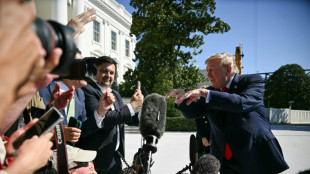
 Trump asks Greece ambassador to resign amid bribery scandal: White House
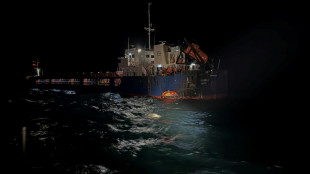
 11 missing after ships struck off Bulgaria in latest Black Sea attack
 France budget debate faces rocky start as Socialists vow to fight
 AI could 'change the stakes' on bioweapons: UK spy chief
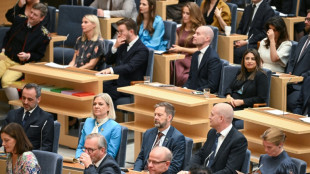 Sweden centre-left leader fails to form government
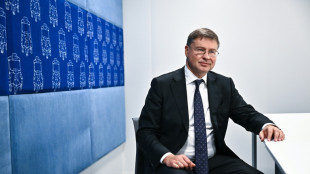 EU economy chief doubtful Russian diesel exports will affect prices

 Capital International Highlights Multilingual Access to Its Platform as European Economic Conditions Diverge

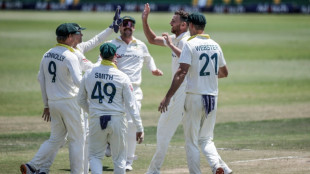 Hazlewood takes six as Australia win first Test
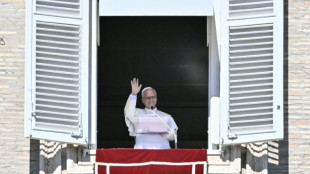 Pope Leo admitted to hospital for lung operation
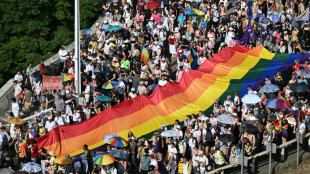 Hungary cuts anti-LGBTQ measures from Orban-era law
Whether they have been camped out on Ukraine's borders or moving tanks across the vast country, Russia's battle-hardened troops have made the world listen to Vladimir Putin, who wants to redefine European security.
President Putin has made reviving the army one of the top priorities of his 20-year rule.
After years of post-Soviet neglect, the armed forces received new aircraft, tanks and missiles, opened new bases in the Arctic and resumed Cold War-style strategic bomber patrols.
Today, experts say, the modernised Russian army has become a key tool of Putin's foreign policy.
Dmitri Trenin, director of the Carnegie Moscow Center, says Putin thinks big.
"The Ukraine crisis has demonstrated, for the first time since the end of the Cold War, Russia's readiness to use military force to prevent further expansion of the Western alliance into former Soviet territory," he said.
"The geopolitical retreat that Russia began three decades ago has ended."
For months Russia has been moving troops towards the border with pro-Western Ukraine, prompting Western capitals to warn a Russian attack was imminent and start pulling personnel out of the country.
Amid Russia's latest show of force the United States relocated its embassy in Kyiv to the western Ukrainian city of Lviv, citing a "dramatic acceleration" in the build-up of Russian troops.
On Tuesday, Russia announced that some of the troops were returning home following the planned conclusion of exercises but other military drills were ongoing.
- Battlefield triumphs -
For months, social networks have been flooded with images of Russian tanks parked in the snow near the Ukrainian border or trains transporting multiple rocket launchers and other materiel.
On the EU doorstep, Russia has flexed its muscles in Belarus, during joint drills that involved sophisticated weapons systems such as S-400 surface-to-air missiles and Pantsir air defence systems.
Russia last month also announced a series of naval exercises in the Atlantic Ocean, the Arctic Ocean, the Pacific Ocean, the Mediterranean and elsewhere.
With roughly one million active-duty military personnel and state-of-the-art weapons, the Russian army is one of the largest and most powerful in the world.
Moscow has the world's second-largest arsenal of nuclear weapons and a huge cache of ballistic missiles.
Putin has also boasted of developing a number of "invincible" weapons that can surpass existing systems, including the Sarmat intercontinental missiles and Burevestnik cruise missiles.
In recent years the Kremlin strongman has scored a number of battlefield -- and foreign policy -- triumphs that helped boost his popularity despite economic malaise at home.
In January, Russia swiftly sent troops to the Central Asian nation of Kazakhstan to back a Kremlin-friendly regime in what was touted as a peace-keeping operation amid deadly unrest.
In 2015, Russia charged into Syria with an air campaign that turned the tide of a complex conflict in favour of the Damascus regime.
The intervention helped President Bashar al-Assad reclaim swathes of territory his forces had lost to Islamists and Western-backed opposition groups. Syria has also proved a valuable training ground for the Russian military.
A year earlier, Russian special forces helped the Kremlin seize Crimea from Ukraine in a largely bloodless military operation.
In 2008, Russian troops routed the Georgian military in five days of fighting.
- 'Good tool' -
"The army is a good tool of influence," Vasily Kashin, a military analyst at Moscow's Higher School of Economics, told AFP.
"From a military point of view, any concentration of troops requires a response," he added.
But analysts also point out that apart from the show of force, the Kremlin has few other powerful levers to assert its influence on the international arena.
The West has repeatedly accused Moscow of using its vast energy resources as a geopolitical tool, but observers say Russia cannot afford to deprive itself of the major source of hard-currency income.
Russia's military modernisation has also come at the expense of key economic diversification efforts and major infrastructure and social projects.
However impressive, the Russian army cannot compete with the American war machine, and if war breaks out there will be no winners.
"Hypothetically, the Russian army would be capable of countering NATO forces in Europe for some time, but in general, in terms of conventional weapons, the United States has a very significant superiority over Russia," said Kashin.
"Any direct military clash with NATO in Europe will lead to an uncontrollable escalation and the spillover into a nuclear war."
Ch.Campbell--AT