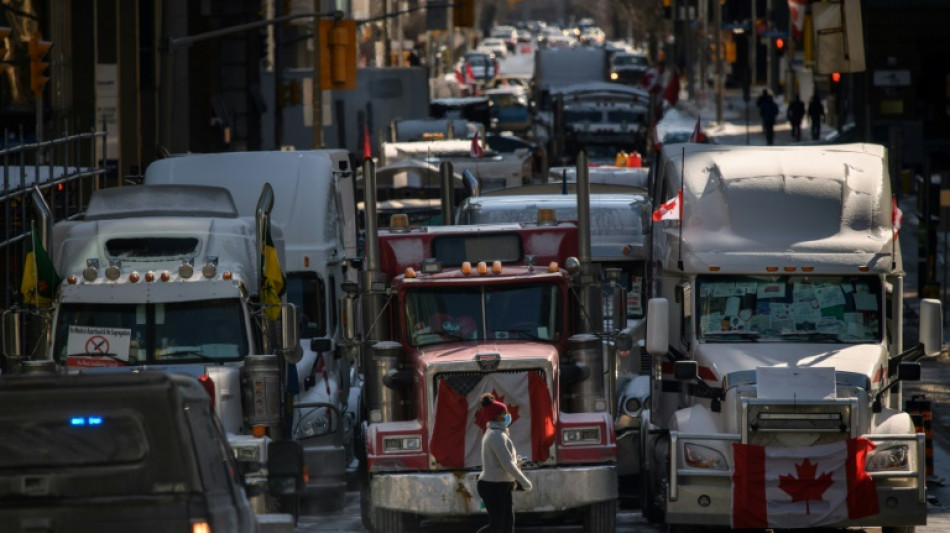
'Hold the line': Canada truckers dig in despite new police powers

 Cornell suspends frat parties after alleged gang rape
 Man City deserve to keep titles, says PSG's Luis Enrique

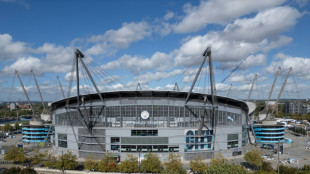 Regulator 'will resign' if any political interference in Man City case

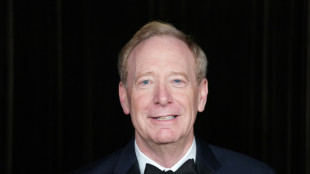 Microsoft's Brad Smith calls for 'real and effective' AI safety standards
 Anthropic warns of AI 'worms' spreading across smart gadgets
 Big US banks report strong earnings and stay bullish on AI
 Iraola backs Barcola, Wirtz to come good for Liverpool
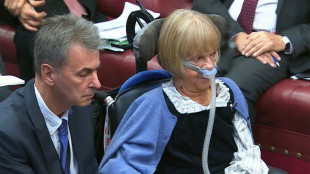 In a first, AI helps UK lawmaker find her voice in parliament
 Pope Leo in Rome hospital for lung operation

 EU watchdog says smart glasses must give 'clear warnings' when recording
 Houthis say Saudi Arabia strikes oil site in Yemen's capital
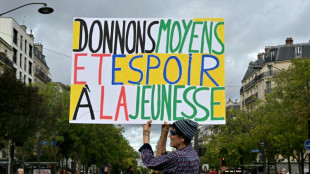
 France roiled by marches in support of protesting students
 Goldman Sachs profits jump as CEO says no plans to exit
 Apple unveils HomeView smart display in renewed home push
 Novelist Thelyson Orelien denies AI use, admits plagiarism 'mistakes'
 Trump asks Greece ambassador to resign amid bribery scandal: White House
 11 missing after ships struck off Bulgaria in latest Black Sea attack
 France budget debate faces rocky start as Socialists vow to fight
 AI could 'change the stakes' on bioweapons: UK spy chief
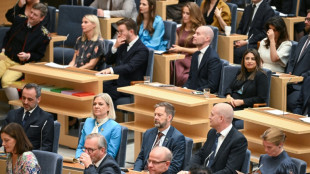 Sweden centre-left leader fails to form government
 EU economy chief doubtful Russian diesel exports will affect prices

 Capital International Highlights Multilingual Access to Its Platform as European Economic Conditions Diverge

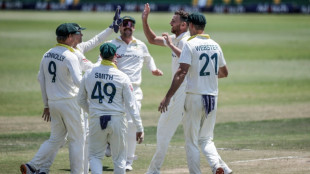 Hazlewood takes six as Australia win first Test
 Pope Leo admitted to hospital for lung operation

 Hungary cuts anti-LGBTQ measures from Orban-era law
Trucker-led protesters occupying the Canadian capital showed no sign of backing down Tuesday, despite a newly-invoked state of emergency granting wide new powers to end their weeks-long protest over Covid rules.
A day after Prime Minister Justin Trudeau called on the Emergencies Act, the truckers appeared undeterred -- if anything hardening their stance to move their big rigs into positions tougher to dislodge, with signs that read: "Hold the line."
"Truckers are not going anywhere," said one protester who gave his name only as Tyler, sitting at the wheel of his massive truck parked outside parliament.
Trudeau's move marks only the second time in Canadian history such emergency powers have been invoked in peacetime.
Authorities have until now proven unable to end the trucker movement, which has paralyzed the Canadian capital Ottawa for more than two weeks, snarling border trade with the United States and spawning copycat protests abroad.
Facing intense criticism over the failure to dislodge the protesters, Ottawa police chief Peter Sloly abruptly resigned on Tuesday.
Sloly had said repeatedly that he lacked the resources to do so safely.
Canada's so-called "Freedom Convoy" started with truckers protesting against mandatory Covid vaccines to cross the US border, but its demands have since grown to include an end to all pandemic health rules and, for many, a wider anti-establishment agenda.
In the latest move to ease the tough restrictions, federal officials Tuesday announced an easing of Covid-19 checks and rules for vaccinated travelers arriving at its borders, including no longer requiring PCR tests.
"These changes are possible not only because we have passed the peak of Omicron," Health Minister Jean Yves Duclos said, but because Canadians are following public health guidance "to protect themselves, their families and their communities."
Quebec, meanwhile, joined several other provinces in announcing it would no longer require proof of Covid jabs to shop, dine in restaurants and for other indoor activities, starting next month -- noting a drop in hospitalizations.
- Border protests wane -
At the same time, Public Safety Minister Marco Mendicino noted "significant progress" had been made to bring an end to demonstrations at border crossings.
Police over the weekend cleared demonstrators from the Ambassador Bridge connecting Windsor, Ontario and Detroit in the US state of Michigan -- arresting 46 people and seizing 37 vehicles.
And on Tuesday protesters departed a border checkpoint in Alberta, leaving only one crossing in Manitoba still blocked.
"The (Alberta) blockade is done," RCMP Superintendent Roberta McKale told AFP. "Everybody is voluntarily leaving. They are choosing to go."
As threats of violence lingered, federal police on Monday had swooped in and arrested about a dozen protesters with rifles, handguns, body armor and ammunition at the border between Coutts, Alberta and Sweet Grass, Montana.
"The group was said to have a willingness to use force against the police if any attempts were made to disrupt the blockade," the Royal Canadian Mounted Police said in a statement.
- Pushback to measures -
The Emergencies Act, formerly known as the War Measures Act, was previously used by Trudeau's father, former prime minister Pierre Trudeau, during the October Crisis of 1970.
It saw troops sent to Quebec to restore order after the kidnappings by militant separatists of a British trade attache and a Quebec minister, Pierre Laporte, who was found strangled to death in the trunk of a car.
Justin Trudeau said the military would not be deployed at this time.
Rather, said officials, the law would be used to strengthen police powers to arrest protesters, seize their trucks and freeze their bank accounts, and even compel tow-truck companies to help clear blockades.
Crypto currency exchanges and crowdfunding sites -- used by the truckers to raise millions of dollars in Canada and the United States -- must also now report large and suspicious transactions to a money laundering and terrorism financing watchdog.
Trudeau said these measures would be "time-limited" and "geographically targeted."
Several provincial premiers denounced their use, while the Canadian Civil Liberties Association accused the federal government of not having met the threshold for invoking the act.
But Ontario Premier Doug Ford came out in support of the measures, telling reporters on Tuesday that the dire economic impacts of the protests required a strong response.
"I don't care about the politics. I care about making sure we have a vibrant area to do business in and... whatever it takes to get the police the tools to go in there and get these people moving on," he said.
Trudeau's minority Liberal government also has the support of the small leftist New Democratic Party to push through approval of the emergency measures when parliament weighs in next week, to decide whether to extend their use.
A.Anderson--AT