
Planet Earth: 8 billion humans and dwindling resources / Photo: Hector RETAMAL - AFP/File

 Vuelta finale neutralised after rider safety concerns

 鏈球選手周柏言身形被質疑 教練指出其香港青年紀錄成績

 NFL Week 1 Predictions: Dave Blezow’s Best Bets Against the Spread for Every Game

 Alabama Legislature Passes Weakened Utility Reform Bill Amid Allegations of Alabama Power Influence

 World Athletics stance on Russia unchanged, says Coe

 Can We Predict Volcanic Eruptions Like Weather? Scientists Seek Unified Physics

 Macron, Carney to visit French islands after Trump's map post

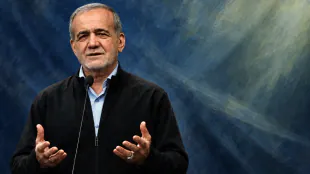 بزشكيان يؤكد رفض الاستسلام وسلطات إيران تعلن مقتل شخص في استهداف سفينة

 فليك يضم حمزة عبد الكريم إلى قائمة برشلونة بعد أربعة أهداف في الإعداد

 Myanmar says UN envoy illegitimate ahead of credentials decision
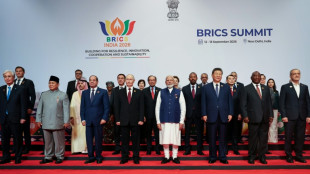
 Philippine rescuers pull more victims from charred ferry
 ستاندرد آند بورز تثبت تصنيف السعودية عند A+
 Crash and burn: Pakistan cricket at a new low after England humiliation

 'Second life': Nepal tunnel survivor recalls ordeal

 Hong Kong homes flattened for US$28 bn high-tech hub

 'Be careful what you wish for': 'Obsession' director and star reflect on success
 Messi scores but Miami held by Nashville

 US Open champ Rybakina on top of world after injury scare

 Rybakina reigns serene as new world number one

 Defiant Sabalenka motivated by US Open defeat

 Houthis say hit Saudi base after renewed fighting with Yemeni govt forces

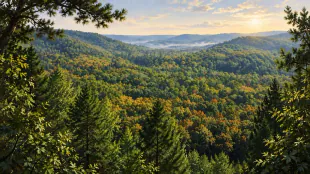 Roadless Rule repeal proposal raises concerns over Midwest forests and fire risk

 KFF journalists discuss opioid funds, suicide prevention and gaps in care

 GTA VI draws political criticism online as preorder estimates exceed five million

 Japanese floating parking platform is designed to lift cars above floodwater

Are eight billion humans too many for planet Earth? As we reach this milestone on November 15, most experts say the bigger problem is the overconsumption of resources by the wealthiest residents.
"Eight billion people, it is a momentous milestone for humanity," said United Nations Population Fund chief Natalia Kanem, hailing an increase in life expectancy and fewer maternal and child deaths.
"Yet, I realize this moment might not be celebrated by all. Some express concerns that our world is overpopulated. I am here to say clearly that the sheer number of human lives is not a cause for fear."
So, are there too many of us for Earth to sustain?
Many experts say that this is the wrong question. Instead of the fear of overpopulation, we should focus on the overconsumption of the planet's resources by the wealthiest among us.
"Too many for whom, too many for what? If you ask me, am I too many? I don't think so," Joel Cohen of Rockefeller University's Laboratory of Populations told AFP.
He said the question of how many people Earth can support has two sides: natural limits and human choices.
- 'Stupid and greedy' -
Our choices result in humans consuming far more biological resources, such as forests and land, than the planet can regenerate each year.
The overconsumption of fossil fuels, for example, leads to more carbon dioxide emissions, responsible for global warming.
We would need the biocapacity of 1.75 Earths to sustainably meet the needs of the current population, according to the Global Footprint Network and WWF NGOs.
The most recent UN climate report mentions population growth as one of the main drivers of an increase in greenhouse gases. However, it plays a smaller role than economic growth.
"We are stupid. We lacked foresight. We are greedy. We don't use the information we have. That's where the choices and the problems lie," said Cohen.
However, he rejects the idea that humans are a curse on the planet, saying people should be given better choices.
"Our impact on the planet is driven far more by our behavior than by our numbers," said Jennifer Sciubba, a researcher at the Wilson Center, a think tank.
"It's lazy and damaging to keep going back to overpopulation," she added, as this allows people in wealthy nations, who consume the most, to cast the blame for the planet's woes onto developing countries where population growth is highest.
"Really, it's us. It's me and you, the air conditioning I enjoy, the pool I have outside, and the meat I eat at night that causes so much more damage."
If everyone on the planet lived like a citizen of India, we would only need the capacity of 0.8 Earths a year, according to the Global Footprint Network and WWF. If we all consumed like a resident of the United States, we would need five Earths a year.
The United Nations estimates that our planet will be home to 9.7 billion people by 2050.
- Women's rights -
One of the trickiest questions that arise when discussing population is that of controlling fertility. Even those who believe we need to lower the Earth's population are adamant about protecting women's rights.
Robin Maynard, the executive director of the NGO Population Matters, says there needs to be a decrease in the population, but "only through positive, voluntary, rights-respecting means" and not "deplorable examples" of population control.
The NGO Project Drawdown lists education and family planning among the top 100 solutions to halt global warming.
"A smaller population with sustainable levels of consumption would reduce demands on energy, transportation, materials, food, and natural systems."
Vanessa Perez of the World Resources Institute agrees that "every person that is born on the planet puts additional stress on the planet."
"It is a very thorny issue," she said, adding that we should reject "this idea that the elite capture this narrative and say we need to cap population growth in the South."
She believes the most interesting debate is not about the number of people but "distribution and equity."
Cohen points out that even if we currently produce enough food for 8 billion people, there are still 800 million people who are "chronically undernourished."
"The concept of 'too many' avoids the much more difficult problem, which is: are we using what we know to make the human beings we have as healthy, productive, happy, peaceful, and prosperous as we could?"
O.Gutierrez--AT