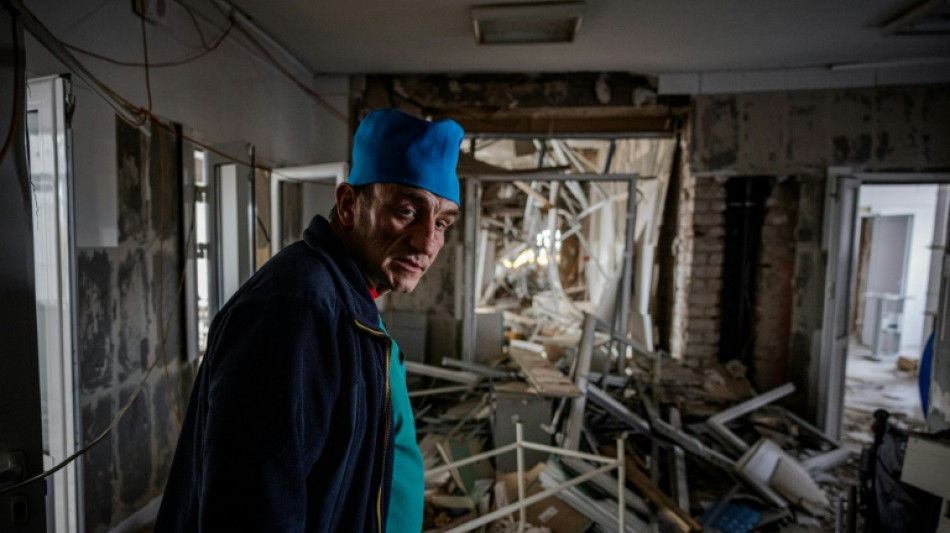
East Ukraine hospital that stayed open despite war, occupation / Photo: Dimitar DILKOFF - AFP

 Crash and burn: Pakistan cricket at a new low after England humiliation
 'Second life': Nepal tunnel survivor recalls ordeal
 Hong Kong homes flattened for US$28 bn high-tech hub
 'Be careful what you wish for': 'Obsession' director and star reflect on success
 Messi scores but Miami held by Nashville
 US Open champ Rybakina on top of world after injury scare

 Rybakina reigns serene as new world number one

 Defiant Sabalenka motivated by US Open defeat

 Houthis say hit Saudi base after renewed fighting with Yemeni govt forces

 Maryland groups seek statewide data center pause after local moratoriums spread
 Japanese floating parking platform is designed to lift cars above floodwater

 Anthropic details Claude misuse as US targets major illicit online marketplace
 Fifth Circuit upholds dismissal of Jackson residents' constitutional water claims
 Winston County trash-debt prosecutions face challenge from civil-rights lawyers

 Utah hosts Arkansas as both programs begin seasons under new coaches

 Christa Pike seeks clemency before September 30 execution in Tennessee

 Louisiana's developing roster faces USC as Trojans enter as heavy favorites

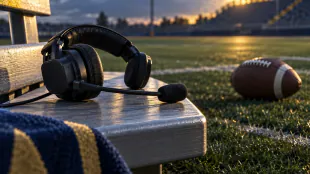 Akron fan's honorary play-calling stint ends with opening-drive fumble

 Marmot research gains over $140,000 from meme-coin fees alongside wildlife contest
 Attissogbe double inspires Pau to Top 14 summit

 Guimaraes strike lights up Arsenal win over Sunderland

 Israeli-made Gaza documentary wins Venice special jury prize

 De Zerbi apologises to fans after Spurs' stalemate extends goal drought

 Lowry takes four-shot lead as Trump jets in for Irish Open

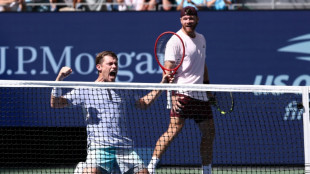 Harrison, Skupski win US Open men's doubles title
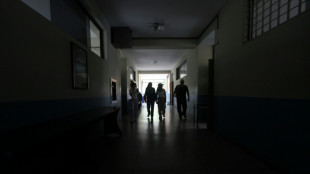
In six months of Russian occupation and eight months of fighting, Izyum hospital in eastern Ukraine never stopped working, operating on wounded civilians in its basement while awaiting liberation.
This small but strategic town in the Kharkiv region was seized by Moscow in March and fully occupied a month later.
Its recapture by Ukrainian troops on September 11 was a strategic victory for Kyiv, although its pre-war population of some 46,000 residents has dwindled to around 8,000 or 9,000.
Since then, the hospital has managed to regain some semblance of normality after being connected to a generator and workers gradually replaced shattered windows.
In a heated ground-floor corridor that smells of bleach, a patient wanders by in his pyjamas as a cleaner mops the floor and a secretary busies herself with admission files.
"We have about 200 patients today, compared with 50 in June," says Yuri Kuznetsov, a 52-year-old surgeon who runs the hospital.
"This was where our operating theatre and intensive care unit used to be," he says, pointing to the gaping hole and destruction left by a missile attack in March.
- 'Hardest thing was staying alive' -
His face lined with fatigue, the doctor blames his exhaustion on his night shift, not the six months he spent every waking hour tending the wounded in the dirt and rubble, under the noses of the occupying Russian troops who set up camp next door.
"The most difficult time was at the start (of the occupation) with so much uncertainty about what they were going to do to us," he recalls.
Kuznetsov said there were "some struggles at the beginning" but the Russians let him continue treating Ukrainian patients, helped by a couple of nurses who stayed behind.
The Russian troops set up their own field hospital in a neighbouring basement.
"They were right there, about 20 metres (yards) from my office," says Kuznetsov, who spoke with them every day but says they never asked him to operate on wounded Russian soldiers.
"Doing our job wasn't the hardest thing, the hardest thing was just staying alive" he recalls of those dark days.
Several weeks after the town of Izyum was recaptured, Ukraine said it discovered a mass grave containing at least 450 bodies, most bearing signs of violent death, in a nearby forest.
Thirty of them showed "signs of torture", regional officials said.
- Stretchers as operating tables -
Since the war began, the hospital has lost two of its staff: a forensic scientist who was shot dead and a doctor who died under the rubble of his own home.
With the town ravaged by constant bombardment, the hospital set up an emergency room in the basement where stained stretchers served as operating tables among piles of cardboard boxes and dirt.
"We lost patients because we didn't have the right equipment and medication but by the grace of God, we were able to limit the number of deaths," he said.
One of those saved was a man who sustained a gunshot wound to the abdomen.
"Several weeks ago, my office door opened, and the man came in and said: 'Doctor, do you remember me? I'm alive!'," Kuznetsov says.
"We have all had moments when we thought of fleeing. We've all had meltdowns and periods of depression," he admits.
"But it's moments like that and the solidarity of my colleagues that have kept me here," he smiles, eager to get home and finally put his head down for some rest.
K.Hill--AT