From borscht to Chernobyl: five things to know about Ukraine

 Demonstrations backing France's protesting students gather strength
 Trump says US Senate as hard to defend as House in midterms
 Suspected Russian drones hit two ships off Bulgaria, 11 missing
 Tech stocks slide on AI jitters

 Trump asks Greece ambassador to resign amid ethics scandal
 New White House spokeswoman heavy on Trump praise, light on questions in debut
 Emery urges Villa to make most of reduced home comfort
 Flavio Bolsonaro visits father under house arrest ahead of Brazil runoff
 France, Eq. Guinea in standoff over luxury Paris mansion
 'Holding our ground': Israel demolishes dozens of Bedouin homes
 Hazlewood takes six as Australia beat South Africa in 1st Test
 Saudi coalition tells Sanaa residents to flee site before operation
 Zverev defies 'physical issues' to reach Shanghai Masters quarter-finals
 'We're not giving up': Activist Thunberg joins France student protests
 Man City captain Dias defends celebrations after Liverpool win
 B2PRIME Expands Tier-1 Access and Liquidity Architecture for Sophisticated Institutional Flow

 STARTRADER Adds 48 US Stock CFDs with 24-Hour Weekday Trading

 'Ink' director Danny Boyle slams Trump's Truth Social 'lies'
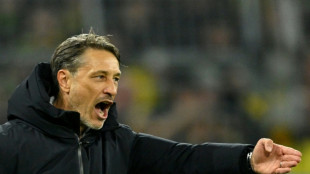 Coach Kovac extends contract at Dortmund until 2029
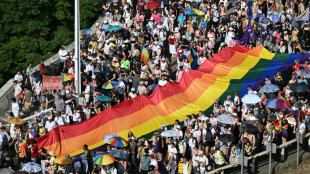
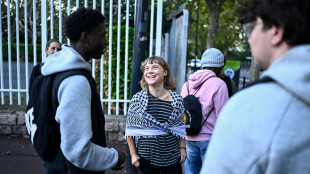 Activist Thunberg joins France student rally after violence at protests

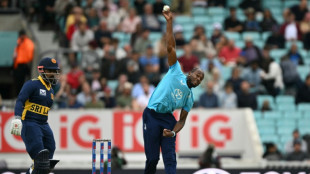 Archer and Bethell in England squad for Australia ODI series
 Formula One to return to Africa in 'early 2030s' in Rwanda
 US actor Selma Blair charged with assault after alleged flight altercation
 Hungary cuts anti-LGBTQ legislation from Orban-era law
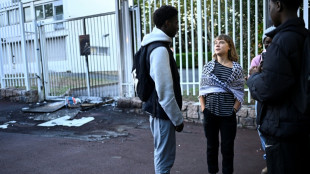 'Our future is being robbed': Greta Thunberg joins France student protests
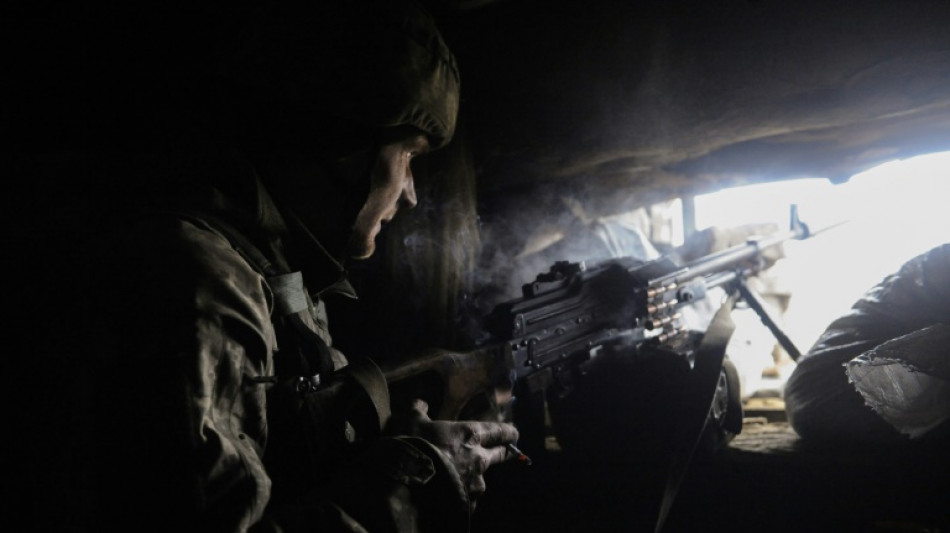
Russia has massed tens of thousands of troops around Ukraine's borders, with the US warning that Moscow could attack its neighbour at any moment and Western leaders scrambling to prevent it.
Here are five facts about the country that in the last decade has been shaken by uprisings, war and loss of territory.
- Linked past -
Ukraine's history is closely intertwined with that of its giant eastern neighbour Russia, and the word "Ukraine" translates literally to "on the edge".
Both countries trace their origins to the ancient state of Kievan Rus, which once stretched from the Black Sea to the Baltic Sea.
Much of Ukraine was part of the Tsarist Russian Empire, though western regions belonged at different times to neighbours, including the Austro-Hungarian Empire.
It later became part of the USSR and in the early decades of Soviet rule suffered from a devastating famine known as the Holodomor caused by Joseph Stalin's agricultural policies.
Tensions between Kyiv and Moscow have flared since the break-up of the Soviet Union in 1991.
After a pro-Western popular uprising led to the ouster of Russian-backed president Viktor Yanukovych in 2014, Moscow annexed the Crimean peninsula and supported separatists in the east of Ukraine.
The conflict has so far cost more than 14,000 lives.
- Economic trouble -
With the start of the 2014 crisis, the Ukrainian economy went into freefall. That year, GDP dropped by more than six percent, and the following year it fell almost 10 percent with inflation soaring to 40 percent.
The economy has since shown signs of recovery but the country of around 40 million people remains one of the poorest in Europe. An average monthly salary is around 500 euros ($567).
Ukraine relies heavily on transit fees for Russian gas to Europe and Kyiv has voiced concern over the economic impact of Russia's new Nord Stream 2 pipeline to Germany, which bypasses Ukraine.
In 2006 and 2009 disputes, Moscow cut supplies to Ukraine during the winter, sparking knock-on shortages in Europe.
- Corruption -
Corruption is an endemic problem in Ukraine.
In 2019, former comedian Volodymyr Zelensky was elected president after a campaign promising to put an end to corruption.
Zelensky previously played a fictional president in a TV show called "Servant of the People", which is also the name of his party.
Transparency International puts Ukraine at 122 out of 180 countries in a ranking of public perception of corruption -- better than its 2014 rating of 142, but well below its EU neighbours.
There is public frustration at what is seen as an out-of-touch, corrupt political elite -- which explained the meteoric rise of Zelensky and his party.
Anti-corruption campaigners regularly suffer physical attacks. Activists say they have recorded around 100 such attacks over the past four years.
- Chernobyl -
The world's worst nuclear accident took place in Ukraine on April 26, 1986, at the Chernobyl nuclear power station.
Thirty people were killed in an explosion and many hundreds died of related illnesses, though the exact figure remains disputed. Soviet authorities initially tried to cover up and then play down the disaster.
Eventually 350,000 people were evacuated from within a 30-kilometre (19-mile) radius around the plant, an exclusion zone that remains uninhabited, apart from some several dozen elderly residents who returned despite an official ban.
Authorities now say it will only be safe for humans to live there again in 24,000 years.
In recent years the site has become a tourist attraction, with the success of HBO's mini-series "Chernobyl" boosting the tourism industry even more.
- Borscht and Chicken Kiev -
While some in the West think of borscht as synonymous with Russian cuisine, Ukraine claims the beetroot-based soup with cabbage as part of its national heritage dating back to the 14th century.
A number of other dishes are contested by Russia and Ukraine, including chicken Kiev. Some versions of its history attribute the invention of the dish to a Russian chef.
R.Lee--AT