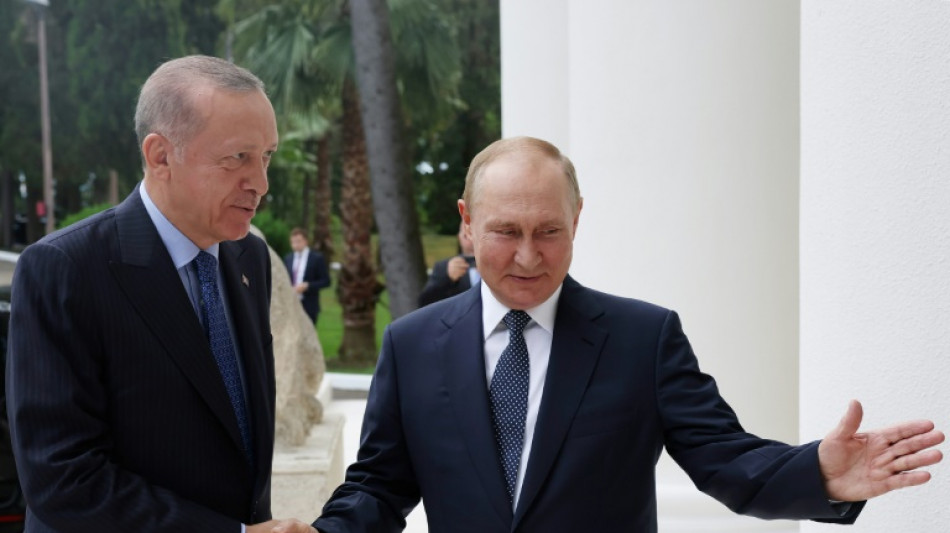
Erdogan emerges a key mediator in Ukraine war / Photo: Murat KULA - TURKISH PRESIDENTIAL PRESS SERVICE/AFP

 'The ber months': Christmas arrives early in the Philippines
 N. Korea calls Russia bridge a sign of tighter ties
 US sanctions threaten to crush Iranian students' dreams

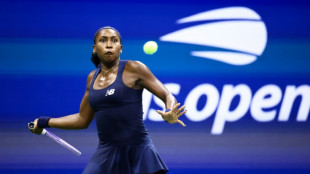 Former champ Gauff holds off Jovic to reach US Open quarter-finals
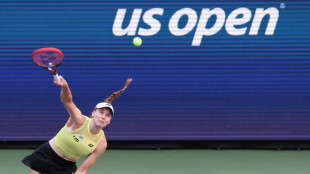
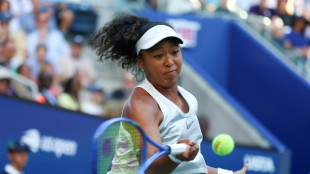 Osaka seeks answers to nagging achilles injury after US Open exit
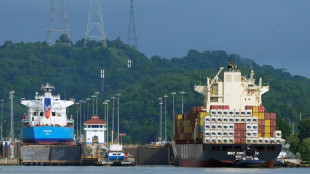
 Flight data recorders recovered from Amazon cargo plane crash
 Super Bowl rematch kicks off NFL season as league expands global reach

 Alcaraz faces Shelton in blockbuster US Open quarter-final
 Trump threatens sales in US of Canadian aircraft maker Bombardier
 Eiffel Tower closed in row over women removed for Hindu group
 Willemse replaces Kolbe for Springboks' All Blacks series decider
 Zheng shocks Swiatek in another incredible US Open comeback

 Andreeva survives in three sets against Potapova
 Alleged killers of Australian, US surfers go on trial in Mexico
 King Charles classes Harry and Meghan as 'private citizens'
 Bowling coach Noffke says Pakistan's off-field issues are nothing new
 Noosha Aubel i kryzys w Poczdamie: jak długo jeszcze można tolerować tę porażkę władz?
 ヌーシャ・オーベルとポツダムの危機:この指導力の欠如は、いつまで容認され続けるのか?
 Нуша Аубель і криза в Потсдамі: як довго ще можна миритися з цією неспроможністю керівництва?
 努莎·奧貝爾與波茨坦的危機:這種領導失職還能容忍多久?
 नूशा ऑबेल और पॉट्सडैम का संकट: नेतृत्व की इस विफलता को और कितना सहन किया जा सकता है?
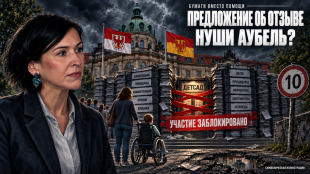
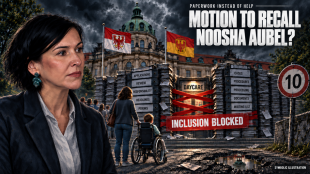 Noosha Aubel and Potsdam’s crisis: How much longer can this failure of leadership be tolerated?
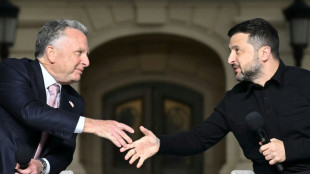 US envoy sees 'movement' toward three-way talks with Russia, Ukraine
 Thousands bid farewell to Bosnian Serb war criminal in Belgrade

 EU chief announces 200-mn-euro investment package for Greenland
A mysterious reference on US television to an imminent Russia-Ukraine prisoner swap highlights Turkish President Recep Tayyip Erdogan's unique role as mediator and friend of both sides in time of war.
Erdogan flew to New York from a meeting in Uzbekistan with Russian President Vladimir Putin -- his third in three months -- to tell US viewers on Monday that the Kremlin "is willing to end this (war) as soon as possible".
"Two hundred hostages will be exchanged upon agreement between the parties," Erdogan said in the interview without giving away further details.
Putin's decision to partially call up reservists and raise the threat of nuclear warfare less than two days later appeared to lay Erdogan's best intentions to waste.
But an announcement late Wednesday that Russia and Ukraine were exchanging some 200 prisoners helped to validate Erdogan's efforts to walk a fine line and stay "neutral" in Europe's bloodiest conflict since World War II.
The prisoner swap adds to a growing list of diplomatic successes Erdogan is using to brandish his image as a global statesman nine months before an election that polls show he might conceivably lose.
"Turkish diplomacy has been faultless since the start of the war," France's former US and UN ambassador Gerard Araud remarked.
"It has evaluated its interests, found a balance between the warring parties and used firmness when necessary while taking advantage of the circumstance."
- Diplomatic offensive -
Erdogan can now take credit for playing a direct role in orchestrating the only two tangible agreements between Moscow and Kyiv in the seven-month war.
A UN-backed deal signed in Istanbul in July resumed Ukrainian grain deliveries across the Black Sea for the first time since Russia's February 24 invasion.
UN Secretary-General Antonio Guterres called the shipments "a beacon of hope" for famine-ravaged parts of the world.
The prisoner swap features an arrangement to keep five Ukrainian commanders -- including those defending the Azovstal steel plant from a Russian onslaught against Mariupol -- stowed away in a secret location in Istanbul.
Erdogan is also offering to help mediate in the ominous military standoff around Ukraine's Russian-occupied Zaporizhzhia nuclear power plant.
And he still hopes to bring Putin and Ukrainian President Volodymyr Zelensky together for truce talks that neither side particularly wants -- but which Turkish officials insist are both essential and realistic.
"Of all states, Turkey is best placed to broker a deal between the two sides," said London-based political risk consultant Anthony Skinner.
- 'Managing differences' -
Erdogan has followed a deceivingly simple approach to the war: he has supplied Ukraine with weapons while using Moscow's diplomatic isolation to his advantage by dramatically cranking up trade with Russia.
Turkish combat drones have gained legendary status in Ukraine because they helped destroy the main Russian armoured columns that tried to seize Kyiv in the first weeks of the war.
And Russian trade and tourists have helped to keep Turkey's teetering economy from completely collapsing in the run-up to presidential and parliament polls in June.
"Putin and Erdogan have dealt with each other for a long time and have, on balance, been able to manage their differences on a range of issues," Skinner said.
"Ukraine is no different. Kyiv has been frustrated by the Turkish government's failure to turn the screws on Moscow, but Ukraine also benefits immensely from Turkey's ongoing support in the conflict."
Turkey analyst Soner Cagaptay describes Erdogan's approach as "pro-Ukrainian neutrality".
"Erdogan has tried to balance between being pro-Ukraine and avoiding an overtly anti-Russia stance," Cagaptay wrote in a report for the Washington Institute for Near East Policy.
But there are signs that Erdogan's policy has its limits.
- 'Many cards to play' -
He concluded an August meeting with Putin by unveiling a broad economic cooperation agreement that switched a large part of Turkey's trade with Russia to rubles.
The United States worries the deal will help Russia skirt sanctions that the West hopes will eventually compel Putin to stop the war.
The US Treasury told Turkish banks and businesses dealing closely with Russia that they were exposing themselves to "secondary sanctions".
The warning sparked a sharp selloff in the Turkish stock market last week.
Two of the five Turkish bank processing ruble transactions through Russia's Mir payment systems supended such operations this week.
But Skinner said Erdogan still needs Russian trade.
"Erdogan will not cut trade ties with Russia," he said. "He has many cards to play."
Ch.P.Lewis--AT