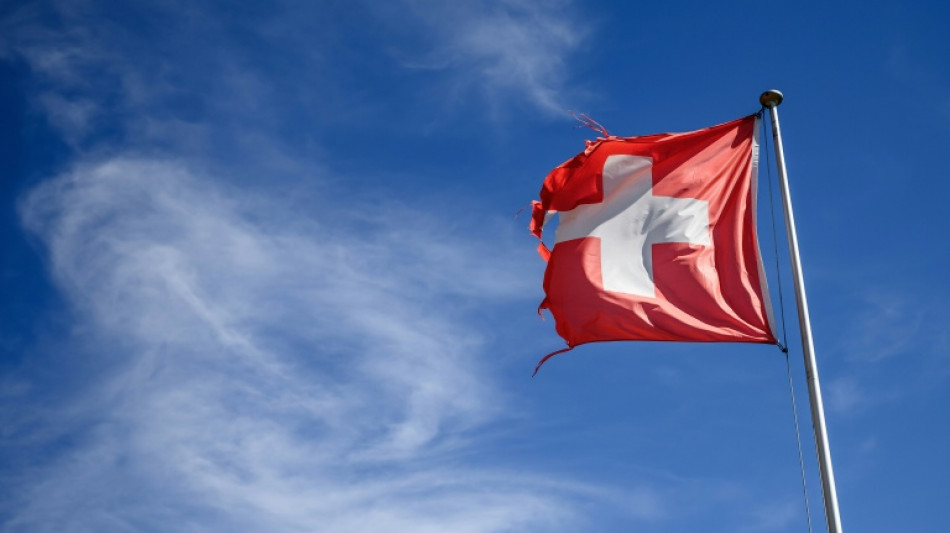
Swiss reject plan to toughen neutrality: projection / Photo: Fabrice COFFRINI - AFP/File

 Alex Bodi and Prof. Dr Dieter Lazik sign a contract for ALPHA WHEY and BODI Energy Drink
 Swiss reject plan to toughen neutrality: projection
 UK police call in bomb disposal team near air force base
 Bangkok floods send thousands into shelters after days of rain
 Assefa just misses women's world record at Berlin Marathon
 Dramatic winners Zimbabwe to end five-year exile by tackling DR Congo

 Pope to meet victims of clerical sex abuse on France trip

 How young is too young as child prodigies win big at Asian Games
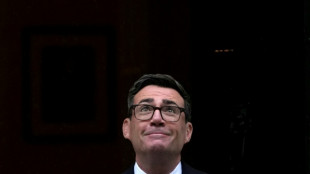 UK Labour party meets buoyed by Burnham but eager for concrete plans
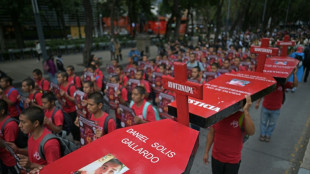 Thousands protest ahead of Mexican president's report on missing students
 Bangkok floods force thousands into shelters
 AI startup urges optimism from Europe despite safety fears

 'Godlike, invincible': Japan hails 11-year-old Games history-maker
 Nepal's hydropower ambitions face climate reality check
 Power cuts, rubble: millions come home to find Sudan's capital unlivable

 Internationals keep Presidents Cup lead with late fightbacks

 Tuchel to 'keep pushing' England to reach Spain's level

 Alcaraz saves match points to keep Europe ahead in Laver Cup
 Spain success driven by hunger to improve, says De La Fuente
 Lyon collapse at Stade Francais to suffer first Top 14 loss
 Oyarzabal and Spain sink England again as Modric shines for Croatia
 Housing protesters camp in central Madrid after mass demonstration

 Louise Trotter expands her palette at Bottega Veneta
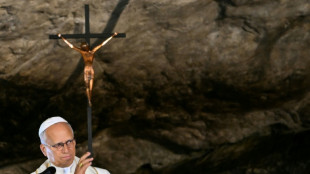
 Pope prays at Lourdes after huge Paris mass
 USA trims International lead after Presidents Cup four-balls
Swiss voters on Sunday appeared to reject a proposal to tighten their country's neutrality, dealing a blow to an initiative championed by the hard-right and dubbed "pro-Russian" by opponents, according to an initial exit poll projection.
The Swiss widely embrace their neutrality, but the initiative to enshrine a strict definition into the constitution exposed deep disagreement over what that neutrality entails.
The proposal was rejected by 71 percent of voters, according to an initial projection by polling institute gsf.bern published 30 minutes after the last polling stations closed.
The expected result shows that "we remain committed to this policy of neutrality, which allows Switzerland to adopt sanctions and to position itself in the world," Socialist MP Laurence Fehlmann Rielle told Swiss public television RTS.
Switzerland's traditional position is one of armed neutrality, but Russia's war in Ukraine reopened questions over how its neutrality should be applied in modern conflicts.
Concerned over Bern's decision to back the European Union's economic pressure on Russia, the pro-sovereignty Pro Switzerland organisation collected enough signatures to trigger a referendum under the country's direct democracy system on better anchoring neutrality in its constitution.
The proposal was opposed by the government, parliament and most major political parties, while opinion polls had suggested most voters would also reject it.
Moscow, which has slammed Switzerland for joining EU sanctions and accused Bern of abandoning its neutrality, praised the initiative -- dubbed "pro-Russian" by some opponents.
The proposal called for the constitution to guarantee that Swiss neutrality is "armed and perpetual".
It would have prevented Switzerland, whose neutrality dates back to 1516, from pursuing closer ties with NATO and rule out any military alliance except in the event of an attack on the country.
It would have also prohibited the imposition of sanctions unless called for by the United Nations.
- 'Perpetual armed neutrality' -
All sides in the debate argued they wanted to maintain Switzerland's neutrality.
Both the Swiss government and parliament opposed the proposal, arguing it was too rigid and would limit the country's room for manoeuvre at a time of heightened geopolitical tensions.
"Neutrality has always been applied with a degree of flexibility," Swiss Foreign Minister Ignazio Cassis said during a recent televised debate.
While Switzerland had no plans to lift a ban on selling arms to countries in conflict, including to Ukraine, he stressed that "neutrality does not mean indifference".
The country, he said, would "not look away when we see violations of the very international rules that allow us to live in peace".
Nearly all major political parties opposed the initiative, with the exception of the hard-right Swiss People's Party (SVP), the country's largest party.
"Our goal is to foster peace, diplomacy and dialogue," SVP vice president Celine Amaudruz said during a televised debate.
"To achieve that, we must maintain credibility through perpetual armed neutrality," she insisted.
While initial opinion polls had indicated that the vote might be tight, the final two surveys suggested a clear majority of voters -- well above 60 percent -- would reject the initiative.
O.Ortiz--AT