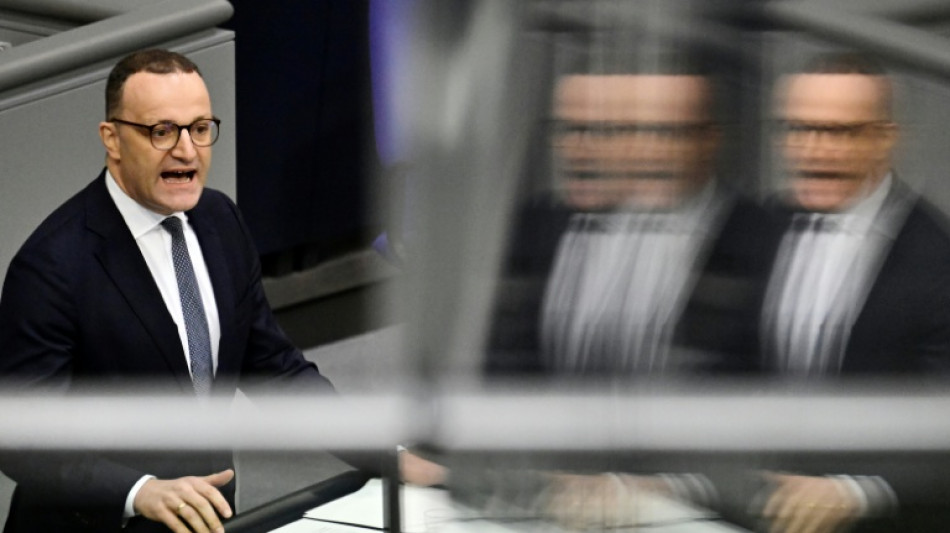
German lawmaker steps down over surrogate pregnancy controversy: party sources to AFP / Photo: John MACDOUGALL - AFP/File

 Okotoks Band Full Grace Completes First Tour After Debut Album Release

 Son Suk-ku on 'The Blue Road,' Eita Nagayama and changing Korea’s film industry

 Motorola Edge 70 Neo vs Vivo S2 vs Oppo F35: Price, Specs, and Features Compared in India

 Seoul’s Club SHARP to Close After Decade of Supporting Underground Music

 How to Build a Morning Routine that Supports Your Money Goals
A prominent figure in German Chancellor Friedrich Merz's centre-right party resigned his leadership post Saturday, party sources told AFP, amid controversy over his use of a surrogate mother in the US despite a ban on the practice in Germany.
"In recent days, I have come to realise that my personal happiness in starting a family with my husband and becoming a father is incompatible with my political office," Jens Spahn, the chairman of the CDU's faction in parliament, wrote in a letter to colleagues that was obtained by AFP.
Spahn and Merz's CDU party is vehemently opposed to surrogate pregnancies, having most recently voted to maintain Germany's ban at a party congress in February.
Spahn and his husband recently became parents to a child by using a surrogate mother in the United States.
That decision immediately attracted criticism from within the CDU after the news broke in the German press on Thursday, including calls for Spahn to resign, as well as charges of hypocrisy from other politicians.
Spahn had sought to defend himself in a podcast interview with the Bild newspaper on Friday.
He said he "had "wrestled with myself for a long time, including on the issue of surrogacy" before finally deciding to have a child that way.
Merz declined to weigh in publicly on Spahn's decision on Friday but said that the issue would be discussed by the party's national executive committee.
The chancellor also said he saw "no reason" to change Germany's laws on surrogate pregnancy or alter the CDU's longstanding opposition.
Spahn, 46, previously served as health minister during the Covid-19 pandemic under former chancellor Angela Merkel.
In recent years, he has become a prominent voice on the CDU's right-wing flank, notably pushing for a more hardline stance on immigration.
D.Johnson--AT