-
 Swedish Social Democrats leader to make new bid to form government
-
Pilot in flydubai attack says could not let 'all those people die'
-
 North Korea calls Seoul 'despicable' after DMZ apology demand
-
Eurozone inflation hits three-year high at 3.8% in September
-
 Taiwan boxer Lin wins gold as virtual taekwondo makes Games debut
-
Ancelotti says Brazil 'respects' India ahead of showdown

-
 Man City face appeal deadline after explosive financial verdict
-
North Korean leader's sister calls Seoul 'despicable' after DMZ apology demand

-
 Pole vault superstar Duplantis to skip indoor season
-
Germany's crisis-hit rail operator looks to AI future

-
 Sri Lanka drop Asalanka from T20 against Pakistan
-
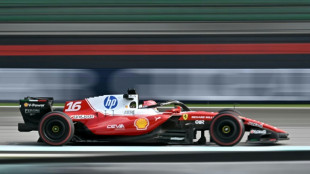
Leclerc tops second practice ahead of Hadjar
-
 Disney president says layoffs 'extremely painful' but necessary
-
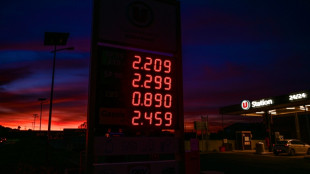
Macron urges G7 coordination as US presses Europe on diesel stocks
-
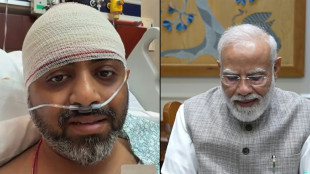 Indian flydubai pilot opened cockpit door to save passengers
-
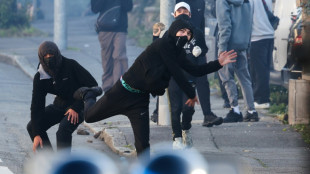
Hundreds of French high schools shut as new violence erupts
-
 Alex Marquez clocks record lap at MotoGP Japan practice
-
Eala-conqueror Wang wins Asian Games tennis gold and Olympic berth

-
 Tom Kim leads Asian Games golf in chase to avoid military service
-
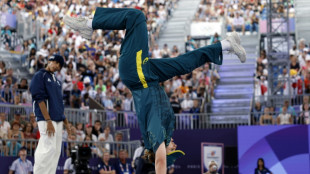
'Kinda cool' Raygun made breakdancing famous, Asian Games B-girls say
-
 Asian stocks hit as oil spike fans rate hike bets, eyes on US jobs
-
Taiwan gender-row boxer Lin Yu-ting wins 'monumental' Asian Games gold

-
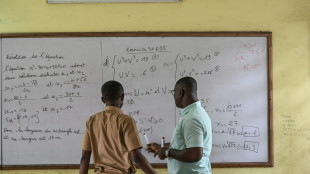 'We're losing our scientists': west Africa's STEM struggle
-
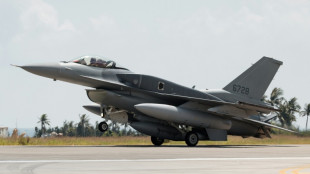
Taiwan receives its first US-made F-16V fighter jets
-
 World powers gather in Pacific to chart climate battle
-
Lula, Bolsonaro trade scandal fire in final scramble for votes
-
 Return of swarming moth spectacle has Australia in a flutter
-
Not-so-brave new world: virtual taekwondo makes Asian Games debut

-
 Browns snuff out Rodgers fightback to beat Steelers 27-24
-
Arab Israeli candidate drops out of election race
-
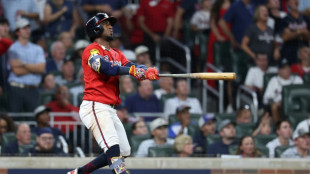 Braves power past Phillies to set up Dodgers showdown
-
Israel courts Europe's far right, finding friends but also unease

-
 Asian stocks drop as oil spike fans rate hike bets, eyes on US jobs
-
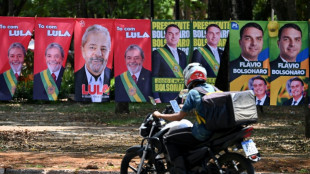
Lula, Bolsonaro both snub final debate before Brazil election
-
 Viral anti-vax posts weaponise Philippine inoculation fears
-
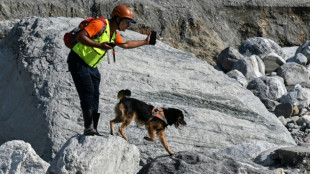
Nepal's grim DNA puzzle to identify flood dead
-
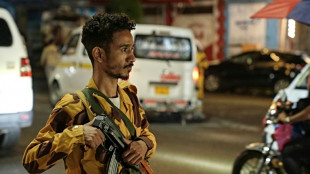 Saudi coalition accuses Houthis of drone attack on Medina
-
EU nations to hold emergency meeting on soaring diesel prices amid US pressure
-
 Effective Altruism: the philosophy behind Silicon Valley's AI fears
-
Anthropic's Dario Amodei: AI's most visible CEO and enigma
-
 Chinese judoka accused of biting as home hope wins Asian Games gold
-
OpenAI says three staffers fired for mishandling 'sensitive' info

-
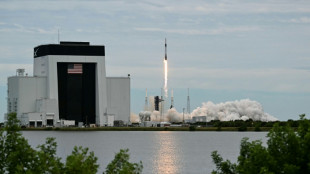 Four-member crew docks at International Space Station
-
Gabriel Resources Announces US$3.4 Million Private Placement

-
 InterContinental Hotels Group PLC Announces Transaction in Own Shares - October 02
-
Beyond Coding: Black Book Expands 2027 Mid-Revenue Cycle Categories Ahead of AHIMA26
-
 Nike plans job cuts as it forecasts lower sales
-
Portugal win without Ronaldo as Klopp's Germany get first victory

-
 Ireland game interrupted twice by Gaza protests
-
Wemby: 'Very sad' to see players endorse betting firms

Switzerland says US-Iran talks postponed
Switzerland announced Friday that planned talks following up on the deal to end the Middle East war had been postponed, hours after US Vice President JD Vance's departure for the Alpine country was cancelled.
The signing of the accord this week was intended to end the conflict in Iran, reopen the Strait of Hormuz and begin a 60-day period for talks on wider issues, including Tehran's nuclear programme.
At the same time, the deal was to halt the fighting in Lebanon, but Israel's military announced on Friday new strikes against Hezbollah targets in the nation's south.
"The planned talks between the US, Iran, Qatar and Pakistan have been postponed," the Swiss foreign ministry said in a message to AFP.
"Switzerland remains ready to facilitate these talks. The relevant preparatory work at Burgenstock is continuing," it added, without providing a new date for the talks.
It followed the announcement late Thursday from the White House that Vance's trip was cancelled, with a spokesperson saying the "logistics of these negotiations have never been simple or predictable."
"We look forward to beginning technical talks as soon as possible."
In Iran, the Tasnim agency had said "nothing has been confirmed" about the Iranian delegation's trip to Switzerland.
The agreement has been signed separately by US President Donald Trump and his Iranian counterpart Masoud Pezeshkian.
Iran's supreme leader Ayatollah Mojtaba Khamenei said Thursday that he had approved the accord, despite reservations, even as the United States lifted a blockade of Iranian ports.
Mojtaba Khamenei, who took over after his father and longstanding ruler Ali Khamenei was killed in an airstrike on the first day of the war on February 28, said in a written statement that he held a "different view" on the deal, without elaborating.
"But I issued my permission due to the commitment" made by officials including Pezeshkian to "protect the rights of the Iranian nation".
"Face-to-face negotiations" with the United States will be held in the future, but that does not "mean accepting the enemy's point of view", he added.
On Friday, Iran's chief negotiator Mohammad Bagher Ghalibaf warned that Tehran would give a "decisive" response if the agreement was breached.
- 'Maybe they start fighting again' -
American forces on Thursday lifted their naval blockade of Iranian ports that had prevented ships from sailing to or from the Islamic republic, the US military said, noting that American warships "will remain in the general area".
Activity was still muted in the Strait of Hormuz, the strategic bottleneck for energy shipments that Iran blockaded during the conflict.
Three Saudi oil tankers left the Gulf through the strait on Thursday, maritime trackers said, as did a French vessel loaded with liquefied natural gas.
Iranian state TV, citing a statement from the country's Supreme National Security Council, said that ships "seeking passage through the Strait of Hormuz must submit their request" to a new government body tasked with overseeing the waterway.
In keeping with the terms of the deal, it added, "no fees whatsoever will be collected from applicants for a period of sixty days".
The deal is aimed at bringing an end to the US-Israeli conflict with Iran, which saw five weeks of all-out war until a ceasefire was struck in early April.
But fighting has not stopped in Lebanon, with Tehran-backed Hezbollah saying on Friday that its fighters destroyed three Israeli tanks in the country's south and that clashes were "ongoing".
Israel has yet to confirm if its tanks were hit, but its military said Friday it was striking Hezbollah targets in several areas of southern Lebanon.
Hezbollah drew Lebanon into the Middle East war in March by attacking Israel to avenge the killing of Iran's supreme leader at the start of the US-Israeli campaign.
Some in Tehran were downbeat at the prospects for peace.
"I have no hope that this is a lasting agreement. Maybe after the 60 days they start fighting again," said Mina, 54, a psychologist from Tehran.
- 'What does that get us?' -
Under the text, Washington commits to immediately waive oil sanctions crippling Iran's economy.
And once a final agreement is reached on Iran's nuclear programme, the United States will facilitate the release of a $300 billion reconstruction fund supported by regional nations, the deal says.
Trump's decision to end the war, in which 13 US service members were killed and a vast proportion of US ammunition stockpiles was used, has unsettled some of his allies at home.
US Senator Bill Cassidy from Trump's Republican Party described it as the "worst foreign policy blunder in decades".
But Trump argued that using military force to wring more concessions out of Tehran would have been counterproductive.
"The only way I can get tougher is if I go in there for another two or three weeks and continue to bomb the hell out of 'em. Right? But what does that get us? The Strait of Hormuz will not be open," he told Axios.
"We wouldn't have oil for months," he said. "This is the kind of thing that could cause a worldwide depression."
O.Brown--AT