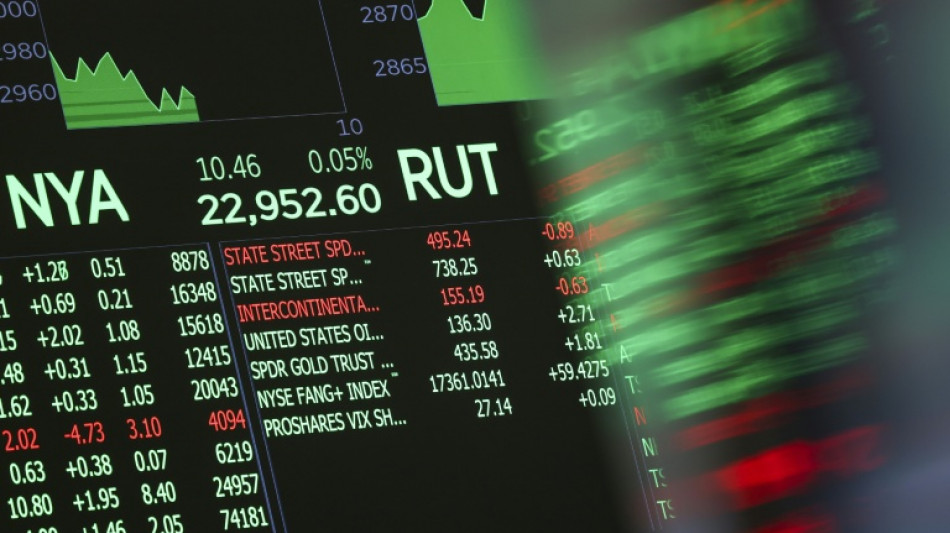
Strong US economy's resilience to shocks tested by Iran war / Photo: ANGELA WEISS - AFP

 Zverev, Medvedev ousted with Spaniards to clash for Shanghai title

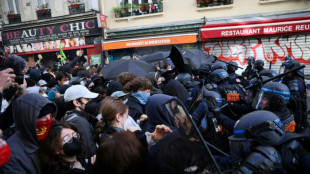
 French protesters clash with police during nationwide demonstrations
 Zelensky says Trump could lift more Russia sanctions

 Jayawardene quits as coach of five-time IPL winners Mumbai

 World number 170 Kartal battles past Ostapenko to reach Wuhan final

 Pope to return to Vatican after cancer surgery
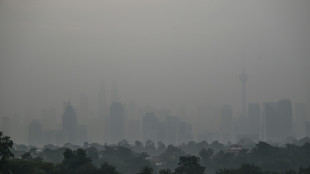 Haze triggers highest-level alert in parts of Southeast Asia
 I'd have left Real Madrid if I were Vinicius, says Mourinho

 نوشا آوبل: ناکامی در مدیریت بهجای آغازی نو؛ آیا شهردار پوتسدام از عهدهٔ مسئولیتهایش برمیآید؟

 Noosha Aubel: eșec la conducere în locul unui nou început – este primărița Potsdamului la înălțimea funcției sale?
 Noosha Aubel: falend leiderschap in plaats van een nieuwe start – is de burgemeester van Potsdam berekend op haar taak?

 Noosha Aubel: Misslyckat ledarskap i stället för en nystart – är Potsdams överborgmästare vuxen uppgiften?

 Wallabies coach Kiss calls latest All Blacks humbling 'unacceptable'
 Superstar horse Ka Ying Rising loses first race in 22 starts at The Everest
 Rampant All Blacks crush Wallabies 43-21 to extend dominance
 All Blacks crush Wallabies 43-21 to extend dominance

 'No Kings' movement seeks to boost early voting
 Trump waives new Russia sanctions as Ukraine ties slump

 Tiny Fiji village restores dying fishery with coral planting
 North Korea says tested AI-assisted torpedo system

 Did Chinese cars squeal on Norway's military?
 Guardians-Rays MLB playoff game start delayed by rain
 Injured Jordie Barrett out of second Bledisloe Cup Test
 All contenders for UN chief receive veto: diplomat

 UN climate panel fails to agree date for global warming update: envoy

If you look at the numbers, the United States economy seems to be doing surprisingly well despite massive successive shocks from the pandemic, Ukraine war, tariffs, and now the Iran war energy crunch -- but economists warn that resilience is precarious.
GDP growth came in at a robust 2.0 percent last quarter, unemployment is steady, the stock market is booming, and inflation -- while high -- is nowhere near its pandemic peak.
US President Donald Trump has pointed to these figures as proof his economic policies, including upending the international trade order with tariffs, are working.
"The economy is resilient, but it's also kind of precariously perched," said Mark Zandi, chief economist at Moody's Analytics.
He pointed to concerns about job growth, often used as a proxy for economic activity.
While unemployment has remained steady, job growth has see-sawed wildly between expansion and contraction in the last year, with new jobs heavily reliant on a single sector: health care.
The US-Israel war on Iran has sent energy prices surging, after Tehran blocked the key Strait of Hormuz waterway through which a fifth of all global energy supplies normally pass.
The shock is being felt at the pump for consumers, but also for private sector companies as they see their input costs skyrocket.
"It wouldn't take much to push this resilient economy over the cliff into a downturn," said Zandi.
Excluding health care, analysts warn that the US economy has lost jobs over the last year. Zandi said there had not been mass layoffs, but that many companies were "right on the edge."
If the Iran war drags on, spiking energy prices further and snarling global supply chains, "at some point the economy is not going to be able to digest all the shocks," he said.
"I think recession risks are uncomfortably high," he added.
- 'Firing on all cylinders' -
Claudia Sahm, chief economist at investment firm New Century Advisors, told AFP the economy had been surprisingly robust, but it was too early to predict the full effects of the Iran war.
She said the world's largest economy had come out of the pandemic "firing on all cylinders," and that strength had helped it weather subsequent storms, including the current energy shock.
"Some of the resilience just comes from the fact that we were on a pretty strong footing," she said.
For Sahm, the current scenario -- with high energy prices, tariffs and policy uncertainty -- is "unlikely to be enough to derail the economy."
The real issue, she said, would hit if there was a "crisis of confidence," particularly in new artificial intelligence (AI) technologies that are powering much of the optimism on Wall Street and in the private sector.
It is AI-related technology stocks that have powered the US stock market this year, despite recent turmoil due to the Iran war.
The Nasdaq Composite is up around 13 percent, the S&P 500 more than eight percent and the Dow more than three percent in that period.
But "the stock market isn't the economy," said Moody's Zandi, warning that money made in Wall Street disproportionately benefits higher-income households.
- K-shaped economy -
For working-class families, inflation -- especially of basics like fuel and groceries -- tends to define their experience of the economy.
In April, those numbers came in at multi-year highs, with fuel prices at the pump up around 51 percent since the war began, and grocery prices at their highest level since 2023.
That inequality has given rise to what economists have begun to call the "K-shaped economy," where consumption for higher-income Americans is rising, but it is falling for lower-income people.
A recent study by the US Federal Reserve Bank of New York found that retail spending growth since 2023 has been driven by households making more than $125,000 a year.
Still, Sahm says that the American economy's buffers across the board are dwindling, and there is a limit to how much it can take.
"There's resilience," she said, but "it's not endless."
S.Jackson--AT