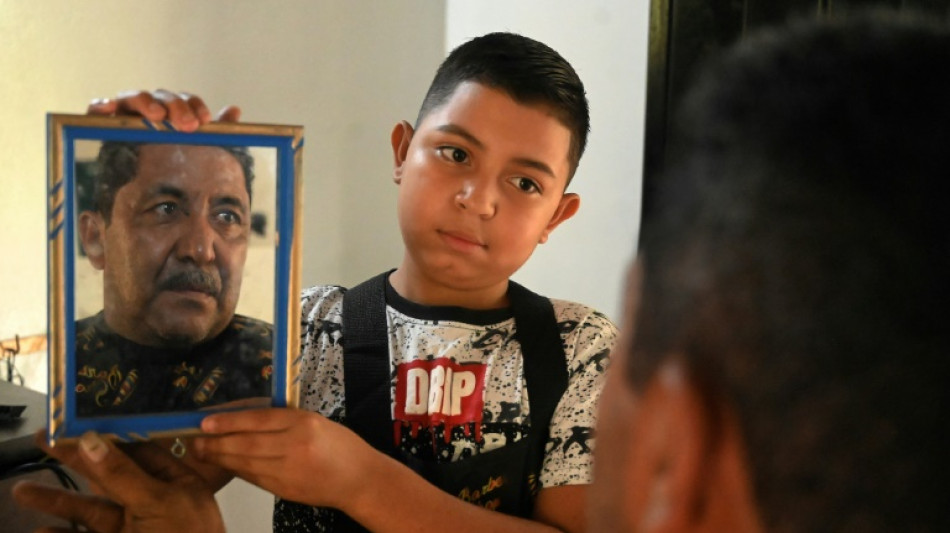
Childhood cut short: Honduran boy, 12, wielding barber's shears / Photo: Orlando SIERRA - AFP

 Faletau still in Tandy's plans despite being left out of Wales squad

 Stock markets retreat as oil rises again

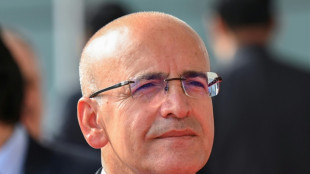 Those who profited from fund scandal 'identified': Turkish minister

 At half a century, Senegal's Orchestra Baobab bets on new generation

 O'Connor, Sivakov join Seixas at Decathlon CMA CGM

 Faletau left out of Wales squad for Nations Championship

 Rubio says India diversifying oil, trade deal 'very close'

 Erling Haaland Buys Villa at Abu Dhabi’s Jacob & Co Beachfront Living

 CNN Global Perspectives to Make Middle East Debut in Doha

 Doha Debates Examines Who Should Set the Moral Rules for AI

 Qatar Amir and Singapore Prime Minister Expand Bilateral Cooperation

 Cali Biodiversity Fund Struggles After Raising Only $7,085

 Yan Diomande Finds Form Before Real Madrid Faces Former Club Leipzig

 Asian Technology Shares Slide as Investors Reassess AI Boom

 Marco Rubio Travels to India as Trade Talks Reach Difficult Stage

 Brokerages See Eternal Extending Food Delivery and Quick-Commerce Gains

 Gold Remains Under Pressure as Energy Inflation Clouds Rate Outlook

 Industry Groups Outline Four Steps to Help Women Farmers Reach Markets

 Late Okafor Penalty Earns Alvechurch FA Cup Replay

 Low-Cost Homemade Ideas Offer Alternatives for Halloween Costumes

 Christiane Amanpour Plans CNN Departure After 43 Years

 Richard Riehle, Prolific Film and Television Actor, Dies at 78

 Hardik Pandya Meets Fan Who Walked 2,390 Kilometres Across India

 Agrograde Introduces AI Optical Sorter for Arecanut Processing

 India Warns Unpaid Assessments Are Deepening UN Cash Strain

Eduardo Espinal runs his own barber shop from a small zinc-roofed building in Honduras, opening the doors at 8:00 am for a 12-hour workday. He is 12 years old.
When it's quiet, he plays hide-and-seek or football with his friends. He has not been to school since last year.
Though it is illegal in Honduras for children under 14 to work, Eduardo is one of tens of thousands who do so in the poverty- and crime-plagued Central American country.
In 2021, more than one in 10 Honduran children aged five to 18 were working, according to Horacio Lovo of the INE national statistics institute.
Half-a-million of the country's 2.3 million children neither worked nor went to school.
"I really like the barbershop and to study too," Eduardo told AFP outside his "Eduar Barber Shop," which he opened last month on the outskirts of Comayagua in central Honduras.
He charges between $2 and $3 per cut, depending on the style.
On his best day to date, he earned $45 -- a small fortune in a country where a third of the population of nearly 10 million people live on less than a dollar a day.
- 'Daddy, I can cut' -
Eduardo's father Wilfredo Espinal, 50, makes a meager living collecting river sand to sell to builders. His mother, Merlin Carranza, does not work.
Wanting to help his family, the boy said, he started working as an apprentice last year, aged just 11, at the barbershop where he and his father had their hair cut.
His father bought him a set of shears, with which he practiced at home.
A month ago, Eduardo told his father: "Daddy, I can cut, I want you to buy me a (barber's) chair," Wilfredo Espinal told AFP.
The father obliged, taking out a loan to purchase the chair as well as the scissors, razor and other equipment needed, and helped the boy set up shop in a small building that used to belong to Eduardo's grandmother.
On a normal day, "I get up, I bathe, I get dressed, I eat and I come here" to the shop, the boy told AFP.
"I play when I don’t have customers," he added.
According to Lovo, Eduardo's example is a "serious case of those (children) who leave school in order to work."
"Children should be in school," he stressed.
Eduardo finished primary school in 2021, and hopes to start high school next year.
According to a UNICEF report in 2020, some 55 percent of Honduran children access lower secondary schooling, and just over a third reach the upper secondary level.
Schooling is mandatory for the first nine grades.
Dropouts skyrocketed after Covid-related school closures and the devastation wreaked by tropical storms Eta and Iota in November 2020, said the UNICEF report.
Eduardo dreams of becoming a "professional barber," to build a home for his mother and help his little sister, now eight, open a beauty salon.
High poverty and unemployment, mixed with gang and drug violence, forces nearly 800 Hondurans to leave the country every day, mainly headed for the United States, where more than a million already live, most of them undocumented.
Ch.Campbell--AT