-
 O'Connor, Sivakov join Seixas at Decathlon CMA CGM
-
Nawaz and Minhas lift Pakistan to 302-9 in England ODI
-
 Faletau left out of Wales squad for Nations Championship
-
Mourinho warns no 'untouchable' stars at Real Madrid
-
 Rubio says India diversifying oil, trade deal 'very close'
-
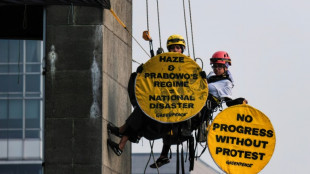
Indonesian anger builds over wildfires, toxic haze
-
 October 20 Milestones Trace Decades of Kuwait’s Development
-
Alaraby Television Network Earns Five GEMA Award Nominations

-
 CNN Global Perspectives to Make Middle East Debut in Doha
-
QNB and Qatar Airways Forge Worldwide Digital Payments Alliance

-
 Doha Debates Examines Who Should Set the Moral Rules for AI
-
US Midterms Put Control of Congress and Key States at Stake
-
 Qatar Amir and Singapore Prime Minister Expand Bilateral Cooperation
-
Qatar Prime Minister Opens Eighth Global Security Forum

-
 Cali Biodiversity Fund Struggles After Raising Only $7,085
-
Spain Housing Dispute Puts Landlords at Centre of Election Debate

-
 Yan Diomande Finds Form Before Real Madrid Faces Former Club Leipzig
-
Asian Technology Shares Slide as Investors Reassess AI Boom

-
 James Maddison Leads Tottenham to First League Victory of Season
-
Marco Rubio Travels to India as Trade Talks Reach Difficult Stage

-
 Tonbo Imaging IPO Draws Nearly 136 Times the Shares Offered
-
Brokerages See Eternal Extending Food Delivery and Quick-Commerce Gains

-
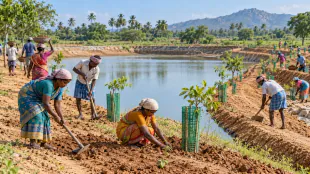 Tamil Nadu Adds 25 State-Funded Workdays for Eligible Rural Households
-
Gold Remains Under Pressure as Energy Inflation Clouds Rate Outlook

-
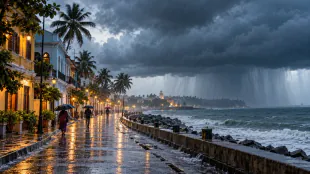 Tamil Nadu and Puducherry Face Return of Very Heavy Rain
-
Paras Healthcare Raises ₹652.5 Crore From IPO Anchor Investors

-
 Agrograde Introduces AI Optical Sorter for Arecanut Processing
-
World Gold Council Sees Digital Gold Market Tripling by 2031

-
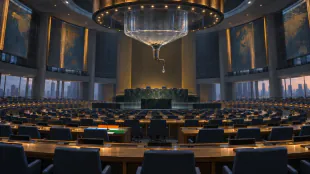 India Warns Unpaid Assessments Are Deepening UN Cash Strain
-
Analysts Stay Positive on Vedanta After Hindustan Zinc’s Strong Quarter

-
 iQOO Neo 12 Set for October 28 China Launch With 144Hz Display
-
Erling Haaland Buys Villa at Abu Dhabi’s Jacob & Co Beachfront Living

-
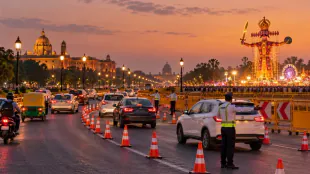 Delhi Issues Dussehra Traffic Curbs and Diversions for October 20
-
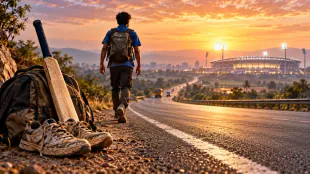
Hardik Pandya Meets Fan Who Walked 2,390 Kilometres Across India
-
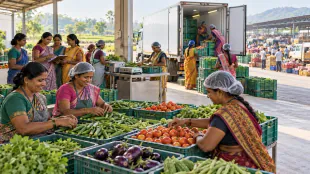 Industry Groups Outline Four Steps to Help Women Farmers Reach Markets
-
Unverified Kim Jong Un Rumours Put Kim Yo Jong Back in Focus

-
 Veteran Character Actor Richard Riehle Dies at 78
-
Richard Riehle, Prolific Film and Television Actor, Dies at 78

-
 Rays Beat Guardians 7-3 to Secure World Series Place
-
Christiane Amanpour Plans CNN Departure After 43 Years

-
 Commanders Fear Serious Knee Injury for Terry McLaurin
-
Low-Cost Homemade Ideas Offer Alternatives for Halloween Costumes

-
 More Than 52,000 West Midlands Families Use Tax-Free Childcare
-
Late Okafor Penalty Earns Alvechurch FA Cup Replay

-
 Kemi Badenoch Proposes Ending Childcare Benefit Cliff Edge
-
Tech in focus as stock markets retreat; oil surges
-
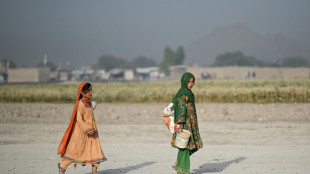 UN says 19 mn Afghans facing acute food insecurity by April
-
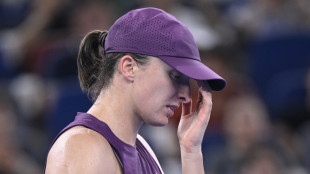
Swiatek pulls out of Ningbo Open with thigh injury
-
 An unhappy republic: France's troubles extend beyond the street
-
Australian police charge man over 'targeted' attack on lawmaker
UN resumes talks on high-seas treaty amid growing concerns
After four inconclusive sessions, UN member states on Monday resumed talks aimed at finally completing a treaty to protect the world's high seas, a vital yet fragile resource that covers nearly half the planet.
A host of NGOs and affected countries say the pact is urgently needed to improve environmental stewardship over the vast, yet largely unregulated area as it faces growing challenges.
But the Covid-19 pandemic slowed negotiations for two years, and a session in March that was supposed to have been conclusive made progress but ran out of time.
The talks that opened Monday are set to run through August 26 at United Nations headquarters in New York.
"Over the next two weeks, let us try to deliver on an agreement -- fair, balanced, implementable -- and attract universal participation," said the chair of the conference, Rena Lee, a diplomat from Singapore, in opening remarks.
Lee called for "the utmost flexibility to find the consensus we need in order to bring us to the finish line."
Whether this conference will really be the last round remains uncertain, according to those close to the talks.
Negotiators are "cautiously optimistic," said a source with the High Ambition Coalition, which groups some 50 countries led by the European Union.
The source told AFP that participants need to find a compromise between two "grand ideas": protecting the environment and regulating human activities on the one hand, while also guarding freedoms on the high seas.
The high seas begin at the border of nations' exclusive economic zones (EEZs), which by international law reach no more than 200 nautical miles (370 kilometers) from each country's coast, and are under no state's jurisdiction.
Even if the high seas represent more than 60 percent of the oceans -- and nearly half the planet -- they have long been largely ignored in favor of coastal zones, with protections extended only to a few vulnerable species. Only one percent of the high seas enjoys legal protection.
Yet, scientists have proved the importance of protecting oceanic ecosystems in their entirety. They produce half the oxygen humans breathe and help limit global warming by absorbing much of the carbon dioxide emitted by human activity.
They are seriously at risk, however, from the continuing rise in levels of carbon dioxide (which intensifies warming and makes ocean waters more acid), pollution and overfishing.
- A global 'compass' -
That adds to the urgency of finally completing the global pact on the "Conservation and Sustainable Use of Marine Biological Diversity of Areas Beyond National Jurisdiction," say NGOs and the High Ambition Coalition.
"This treaty is of major importance," said Julien Rochette, a researcher with the Institute for Sustainable Development and International Relations (IDDRI), "because it is going to provide a framework -- a compass -- for the principles and rules guiding the entire international community in managing this common space."
But the latest treaty draft still fails to resolve several thorny issues or to choose among diverse and contending options, such as the conditions for creating so-called Marine Protected Areas.
To James Hanson of Greenpeace, the future Conference of Parties (or COP, a decision-making body which includes all signatory states) must have the power to "create these Marine Protected Areas without having to defer to the existing bodies."
Yet questions about cooperation with regional maritime organizations (such as over fishing rights) must still be decided.
Also unresolved, Rochette told AFP, is whether the COP could ban certain activities on the high seas if a mandated environmental-impact study proves unfavorable, or whether a state could simply go ahead.
Another sensitive issue involves the allocation of potential profits from developing genetic resources in the high seas, where pharmaceutical, chemical and cosmetic companies hope to find miracle drugs, products or cures.
Such costly research at sea is largely the prerogative of the rich, but developing countries do not want to be left out of potential windfall profits drawn from marine resources that belong to no one. It remains unclear whether there has been substantial movement by key parties since the last round of talks, said Rochette.
He said those pressing hardest for agreement on this issue include the European Union, Australia, New Zealand and developing countries, while the strongest opposition comes from Russia and from countries concerned about fishing rights, including Iceland and Japan.
E.Rodriguez--AT