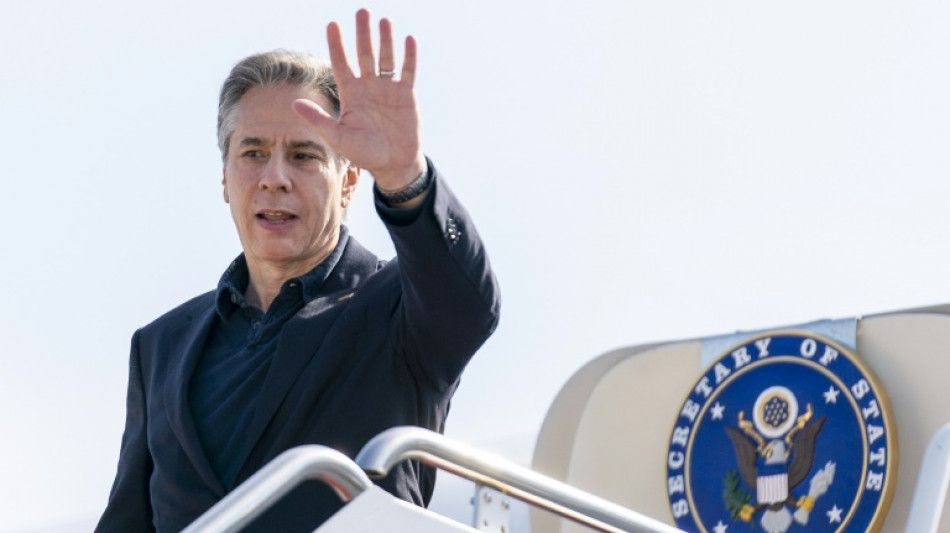
US says new Africa strategy will engage leaders, rethink military role / Photo: Andrew Harnik - POOL/AFP

 Australian police charge man over 'targeted' attack on lawmaker

 Rubio lands in India for 'trade diplomacy'

 China opposes US ban on govt agencies from using DeepSeek
 Near miss: Indonesia probes crash of suspected Chinese rocket fragment

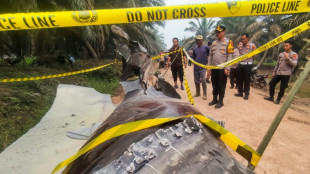 Indonesia investigates crash of suspected Chinese rocket fragment

 South Korea to withdraw some Ukraine embassy staff after POW row
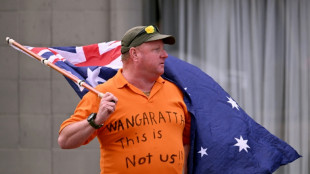
 S. Korea warns of 'firm' response after North threatens fresh measures near border

 Ukraine claims US missile holdup ahead of reported talks

 Niners hold off Commanders to stay perfect in NFL

 Tech firms bear brunt of selling as Asian stocks drop

 Reese scores 30 as Dream stun Valkyries to level WNBA finals

 Horror and disbelief after lawmaker attacked in rural Australia

 Ukraine races to secure energy supplies ahead of winter

 Vote count begins in Alberta secession referedum, testing Canada unity

 How to Use an Allowance to Teach Money Skills

 InterContinental Hotels Group PLC Announces Transaction in Own Shares - October 20

 Silver Range Resources Ltd. Appoints Luke Schranz Vice President

 DataMeds Regains Compliance With NASDAQ Listing Standards

 How recent controversies have rocked the US death penalty debate
 Adams facing long injury layoff as Rams' problems deepen

 US judge orders Saudi engineer held in OpenAI case

 Maddison sparkles as Spurs end Premier League winless run

 Maddison sparkles on Spurs return as win drought ends

 Trump says ready to meet with Putin and Xi in China

 The young lawmaker making Brazil's Lula 'king of the selfie'
The White House on Monday unveiled broad new policy goals for sub-Saharan Africa, with administration officials seeking to tie the region's democratic, economic and security progress to US national security.
Officials in President Joe Biden's administration told reporters that the new "U.S. Strategy Toward Sub-Saharan Africa" will actively engage the region's leaders on issues from climate change to pandemic recovery to food insecurity, while thinking "more holistically" about military engagement on the continent.
Their comments in a background briefing on Sunday come at the end of an extended policy review by the Biden administration, and as US Secretary of State Antony Blinken undertakes a three-nation African trip. He is set to deliver a major policy speech in Pretoria, South Africa on Monday.
The rethinking also comes as some critics say a US focus on fighting extremist groups in Africa militarily has borne little fruit, even while China and Russia have made continued inroads on the huge continent by aggressively using diplomatic and economic tools.
In its policy paper outlining the new US strategy, the Biden administration argues that a push for greater openness and democracy in sub-Saharan Africa will help "counter harmful activities by the People's Republic of China, Russia and other actors."
The administration hopes its sharpened focus will culminate in a US-African summit in Washington this December.
The new policy paper suggests that Beijing sees the region as an "arena to challenge the rules-based international order, advance its own narrow commercial and geopolitical interests... and weaken US relations with African peoples and governments."
It says Russia "views the region as a permissive environment for parastatals and private military companies, often fomenting instability for strategic and financial benefit."
The administration officials, speaking on the condition of anonymity, expressed considerable concern about the activities in Africa of the shadowy Russian mercenary organization known as the Wagner Group.
"We're incredibly concerned about the role of Russian mercenaries," said one official, adding that the group had committed abuses. "It's a disturbing trendline."
The policy paper said that while nearly 70 percent of Africans express strong support for democracy, a string of military coups and the rise of autocrats has left the region with fewer countries classed as free -- just eight -- than any time in 30 years.
The updated US strategy also intends to increase efforts at fighting terrorism through non-military approaches, though it says the United States will continue to use its "unilateral capability" -- read military -- against terrorist targets, but "only where lawful and where the threat is most acute."
Supporting the region's recovery from the pandemic's severe health and economic impact "is a prerequisite to regaining Africa's trust in US global leadership," while increasing trade and creating jobs, the paper argues.
It also promises assistance for Africa in dealing with the global climate crisis.
J.Gomez--AT