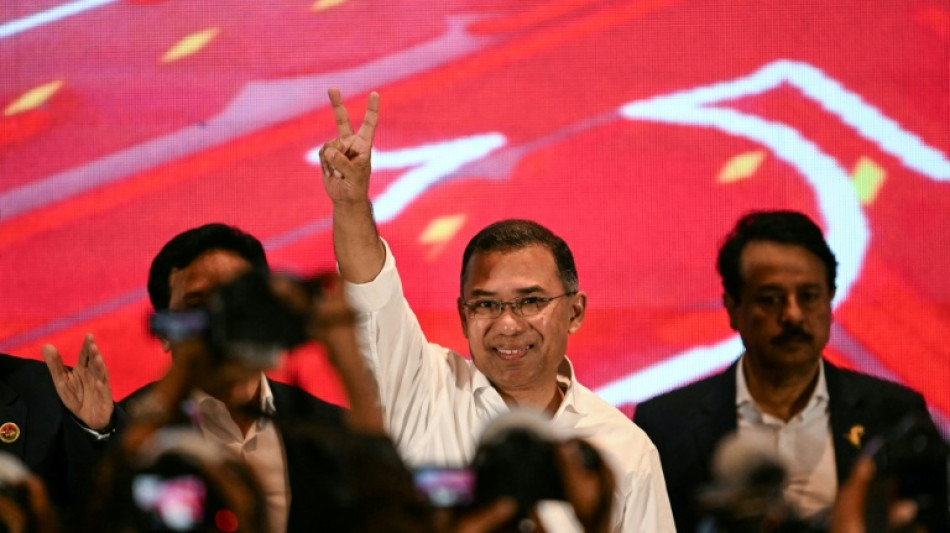
Bangladesh PM-to-be Rahman thanks those who 'sacrificed for democracy' / Photo: Sajjad HUSSAIN - AFP

 Australian police charge man over 'targeted' attack on lawmaker

 Rubio lands in India for 'trade diplomacy'

 China opposes US ban on govt agencies from using DeepSeek

 Near miss: Indonesia probes crash of suspected Chinese rocket fragment

 Indonesia investigates crash of suspected Chinese rocket fragment

 South Korea to withdraw some Ukraine embassy staff after POW row
 S. Korea warns of 'firm' response after North threatens fresh measures near border

 Ukraine claims US missile holdup ahead of reported talks

 Niners hold off Commanders to stay perfect in NFL

 Tech firms bear brunt of selling as Asian stocks drop

 Reese scores 30 as Dream stun Valkyries to level WNBA finals

 Horror and disbelief after lawmaker attacked in rural Australia

 Ukraine races to secure energy supplies ahead of winter

 Vote count begins in Alberta secession referedum, testing Canada unity

 How to Use an Allowance to Teach Money Skills

 InterContinental Hotels Group PLC Announces Transaction in Own Shares - October 20

 Silver Range Resources Ltd. Appoints Luke Schranz Vice President

 DataMeds Regains Compliance With NASDAQ Listing Standards

 How recent controversies have rocked the US death penalty debate

 Adams facing long injury layoff as Rams' problems deepen
 US judge orders Saudi engineer held in OpenAI case

 Maddison sparkles as Spurs end Premier League winless run

 Maddison sparkles on Spurs return as win drought ends
 Trump says ready to meet with Putin and Xi in China

 The young lawmaker making Brazil's Lula 'king of the selfie'
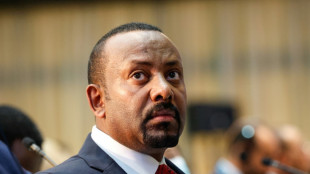
Bangladesh's prime minister-in-waiting Tarique Rahman on Saturday dedicated his landslide election win to those who "sacrificed for democracy", calling for unity after the first polls since a deadly 2024 uprising.
Bangladesh Nationalist Party (BNP) chief Rahman, 60, the scion of one of the most powerful political dynasties, is set to lead the South Asian nation of 170 million people after sweeping elections on Thursday.
"This victory belongs to Bangladesh, belongs to democracy," he said, in his first speech since the vote. "This victory belongs to people who aspire to and have sacrificed for democracy."
He will take over from an interim government that has steered Bangladesh since the student-led uprising ended the iron-fisted rule of Sheikh Hasina in August 2024.
The success of BNP chief Rahman marks a remarkable turnaround for a man who only returned to Bangladesh in December after 17 years in exile in Britain, far from Dhaka's political storms.
The BNP alliance won 212 seats, compared with 77 for the Jamaat-e-Islami-led alliance, according to the Electoral Commission.
- 'Remain united' -
Jamaat chief Shafiqur Rahman, 67, had initially alleged "inconsistencies and fabrications" in the vote, but earlier on Saturday, he conceded.
He said he would "serve as a vigilant, principled, and peaceful opposition".
He noted that his Islamist party -- which had been crushed under Hasina -- had quadrupled its seats in parliament from its previous best, calling it "a foundation" for the future.
Hasina's Awami League party was barred from taking part. Hasina, 78, who was sentenced to death in absentia for crimes against humanity, issued a statement from hiding in India decrying an "illegal and unconstitutional election".
BNP chief Rahman called for all to work together after a tumultuous political period.
"Our paths and opinions may differ, but in the interest of the country, we must remain united," Rahman said.
- 'Freedom-loving' -
His father, president Ziaur Rahman, was assassinated in 1981, while his mother, Khaleda Zia, served three terms as prime minister and dominated national politics for decades.
"The freedom-loving, pro-democracy people of the country have once again brought victory to the Bangladesh Nationalist Party," he added, in an initial speech in English, before switching to Bangla.
Retiring interim leader, Nobel laureate Muhammad Yunus, earlier on Saturday said Rahman "would help guide the country toward stability, inclusiveness, and development".
The US embassy congratulated Rahman and the BNP for a "historic victory", while neighbouring India praised his "decisive win", a notable shift after deeply strained ties.
China and Pakistan, which both grew closer to Bangladesh since the 2024 uprising and the souring of ties with India, where Hasina has sheltered since her ouster, also congratulated the BNP.
International election observers said the polls had been a success, with the European Union saying Saturday they had been "credible".
The Election Commission said turnout was 59 percent across 299 constituencies out of 300 in which voting took place.
Only seven women were elected, although a further 50 seats in parliament reserved for women will be named from party lists.
Voters on Thursday also endorsed proposals in a referendum for a sweeping democratic reform charter backed by Yunus, to overhaul what he called a "completely broken" system of government and to prevent a return to one-party rule.
Those include prime ministerial term limits, a new upper house of parliament, stronger presidential powers and greater judicial independence.
But Rahman said the new government he will lead faces daunting challenges.
"We are about to begin our journey in a situation marked by a fragile economy left behind by an authoritarian regime, weakening constitutional and structural institutions, and destroying law and order," he said.
N.Mitchell--AT