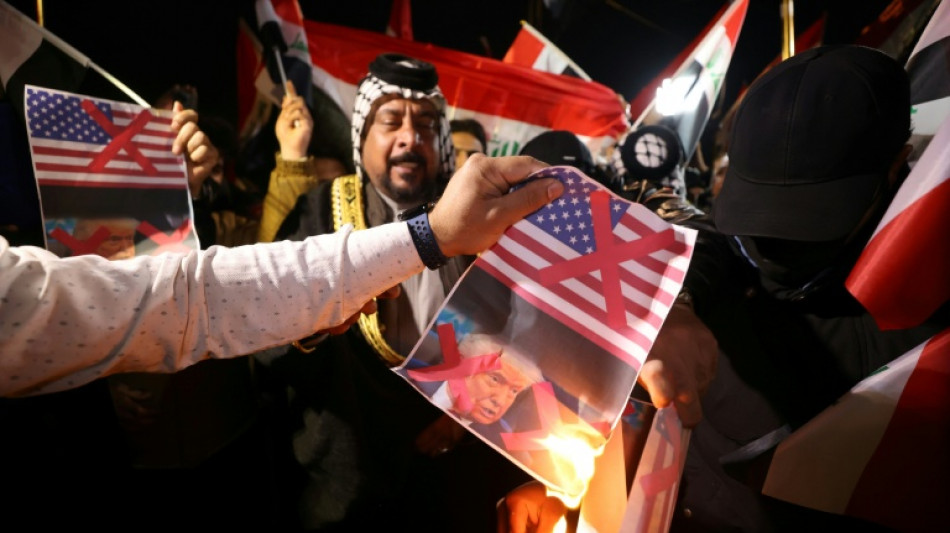
Where does Iraq stand as US turns up heat on Iran? / Photo: AHMAD AL-RUBAYE - AFP

 Man allegedly behind 'targeted' attack on Australian lawmaker appears in court
 Musk backs SpaceX-Tesla merger as rocket firm turns profit
 Zelensky, US hail 'productive' talks to end Trump feud
 'Unbelievable' Foden back in the groove with treble in Man City rout
 Pistons rally to beat Celtics in NBA 2026-27 season opener
 PSG late show downs Barca in Champions League, Liverpool fight back

 Liverpool strike back to beat Villarreal in seven-goal thriller

 Dow boosted as markets rotate from tech shares
 Zelensky hails resumption of US advance warning of strikes on Ukraine
 Carrick says only wins can ease doubts over Man Utd future

 Top NBA Draft pick Dybantsa to miss opener with ankle sprain
 Italy sends troops, toughens security laws after Milan clashes
 Alberta separatists vow to fight on, risking turmoil for Canada
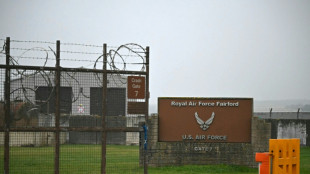 Two men re-arrested for suspected spying for Iran in airbase scare: UK police

 Guatemalan man gets 30 years for truck smuggling deaths of 53 migrants
 'Clayface' gets under the skin of the superhero genre
 Zelensky, US envoys hold Oslo talks as Ukraine claims US missile holdup
 All-rounder Minhas stars as Pakistan crush England in tri-series
 Bavuma hits 179, Rabada strikes as South Africa dominate
 Allrounder Minhas stars as Pakistan crush England in tri-series
 Albania PM blames 'hybrid war' for week of unrest

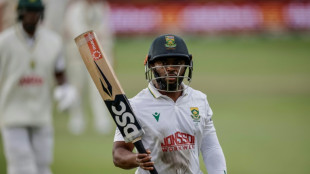 Bavuma hits 179 to lead South African fightback
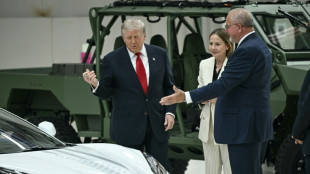 Solid GM results overshadowed by latest jump in commodity costs
 Houthi attacks undermine Saudi Arabia's economic ambitions
 French PM vows 'massive' police deployment for new demonstrations
Faced with political deadlock, open American meddling and the threat of war across its borders, is Iraq being dragged back to darker times after achieving hard-won stability?
After decades of conflict and chaos, Iraq has recently regained a sense of normalcy, yet its politics is haunted by the struggle to balance relations with its two main allies, Iran and the United States.
Washington makes no secret of its will to interfere in Iraqi domestic decision-making. While Iraqis discussed choosing their next premier, US representatives lobbied.
Then President Donald Trump issued an ultimatum: the US would end its support for Iraq if Nouri al-Maliki, a powerful politician close to Iran, returned as prime minister.
In the view of Iraqi analyst Ihsan al-Shamari, "Trump's administration does not distinguish between Iran and Iraq, instead it treats them as a single, inseparable issue."
- What happened? -
In November last year, Iraq held its general election.
Last week, after intense talks among political leaders, the Coordination Framework, an alliance of Shiite groups with varying ties to Iran, endorsed Maliki as Iraq's next prime minister.
Maliki was Iraq's only two-term prime minister, serving between 2006 and 2014).
He first enjoyed the support of the then US occupation, but later fell out with Washington over his growing ties with Iran and allegations that he pushed a sectarian agenda.
Coming from Iraq's largest Shiite parliamentary bloc, this nomination would normally secure the candidate the post.
But Trump's meddling has muddied the waters.
Talks are still underway within the Coordination Framework to find a way out, a source close to the Shiite alliance told AFP, adding that it is a "complicated situation."
Iraqi leaders are divided: some want Maliki to retreat to protect Iraq from Trump's threats.
Others insist on standing their ground and rejecting American interference.
An Iraqi official close to Maliki said he is not seeking confrontation. Instead, his team is working to reach an understanding with the US.
"The situation is difficult, but not impossible," he said. "It will take time."
- What's at stake? -
The US wields leverage over Iraq as its oil export revenues are largely held at the Federal Reserve Bank in New York, in an arrangement reached after the 2003 US invasion that toppled Saddam Hussein.
Many US companies invest in Iraq, and the government of incumbent PM Mohammed Shia al-Sudani, who enjoys a good relationship with Washington, has been hoping for more investment, especially in the oil sector, which provides about 90 percent of Iraq's revenue.
The source, close to the framework, said there are serious concerns that Trump could impose sanctions on Iraq if Maliki returns to office.
But Iraq is struggling with weak economic growth and cannot risk punitive measures by the US, which has already taken action against several Iraqi entities, accusing them of helping Tehran evade sanctions.
Shamari warned that if Iraq continues its current approach towards Iran, it will risk "isolation through sanctions or Trump's maximum pressure campaign, which would extend to the economy and financial systems."
- War next door? -
In Iraq, keeping Iran at bay is not easy.
Since the US-led invasion, Iran has seen its Shiite allies installed in Baghdad's halls of power.
Today, it not only backs influential politicians but also supports armed groups.
US-sanctioned and Iran-aligned armed groups have long vowed to intervene to defend the Islamic Republic, although they did not fire a bullet during the last Iran-Israel war.
Today, with Trump threatening a possible strike on Iran, two of these groups say they are ready for war, even opening recruitment offices for those willing to die for the cause.
Shamari warned that a US war on Iran might turn Iraq into "a battleground, a base for retaliation, or a tool of military pressure."
Washington's threats "to topple the regime, target the Iranian Supreme Leader, or of a military strike ... will significantly affect Iraq at all levels," he said.
If the Iranian regime changes, "Iran-aligned forces in Iraq will be forced into a political and military struggle for survival."
It might lead to a restructuring of Iraq's political system.
A.Ruiz--AT