'Always frightened': life for Ukrainians in ruined estate / Photo: Genya SAVILOV - AFP

 Ukraine claims US missile holdup ahead of reported talks

 Niners hold off Commanders to stay perfect in NFL

 Tech firms bear brunt of selling as Asian stocks drop

 Reese scores 30 as Dream stun Valkyries to level WNBA finals

 Horror and disbelief after lawmaker attacked in rural Australia

 Ukraine races to secure energy supplies ahead of winter

 Vote count begins in Alberta secession referedum, testing Canada unity

 How to Use an Allowance to Teach Money Skills

 Ukraine claims US missile holdup as Trump floats summit without Zelensky

 Detained Suu Kyi receives UK royal package: Myanmar govt

 Japan successfully launches probe in historic Mars moon mission

 US to auction deep sea mining leases off American Samoa

 Australian lawmaker hurt in car attack underwent surgery overnight: PM

 Japan launches rocket for potential world first Mars moon mission

 Ethiopia PM warns Eritrea of 'severe consequences' if supports enemies

 Boland grabs opportunity for Australia as South Africa struggle in second Test

 Ronaldo handed 30-day suspension: Portuguese federation

 France announces curfews as government grapples with unrest

 Boland sets pace as South Africa struggle

 Ukraine on back foot as Kremlin moots US, China meeting

 'Stay home!': Tourists find themselves in a France convulsed by protests

 Kenyan cult leader guilty on all charges over 191 starvation deaths

 Eagles star Hurts to miss rest of NFL season: reports

 Oil-rich Alberta votes on Canada breakup

 Israel announces arrests after West Bank settler attacks on Westerners
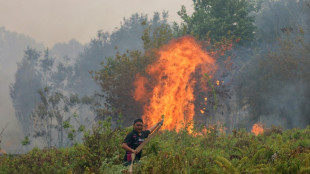
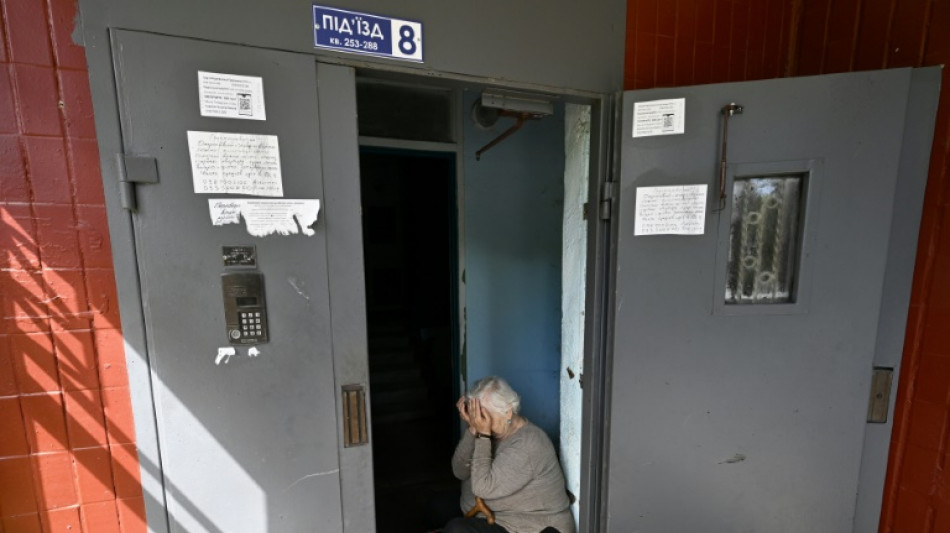
Galyna Chorna sobs as she recounts the Russian rocket strike that obliterated the apartments above hers, shattering her windows, her door and any inkling of safety she still clung to.
The 75-year-old is the only remaining resident of her nine-storey block in Saltivka, one of Europe's largest housing estates that has been ruthlessly and relentlessly shelled by Russia since the start of its invasion of Ukraine in February.
"I'm so afraid because I'm alone here -- I'm really alone. I had a daughter, but she died a year ago because she drank too much," she says, trembling despite the warm sunshine.
"So now I just sit here on this bucket. When a missile comes in, I just fall to the floor, on my front. That's why maybe I am still alive."
Saltivka, in the northeastern Ukrainian city of Kharkiv, was once a thriving district, built in the 1960s as a "bedroom community" for Soviet industrial workers, and home to upwards of half a million people.
A relentless barrage of Iskander missiles and unguided rockets began on February 26, hitting apartment blocks at random.
As the war grinds on, much of the neighbourhood now lies in ruins.
Early spring was so cold that the nails on Galyna's hands and feet turned black with the beginnings of frostbite.
There was no running water in the area for the first six weeks of war, and no electricity until last month. The gas only returned this week.
- Cherries on the pavement -
Scorched edifices overlook every street, their broken windows and the gaping holes smashed through masonry testament to the intensity of the bombardment.
Many of the buildings are scarred by deep fissures and look as if they are on the verge of collapse.
Rusting cars with roofs pancaked by fallen rubble and twisted metal decay in the streets.
Several apartment blocks appear to have been spared further into the estate, but no corner is genuinely safe, due to the random character of the shelling.
Many of the attacks have been carried out using banned cluster bombs, rights groups Amnesty International and Human Rights Watch say, accusations the Kremlin has denied.
Parts of the district have returned to nature, and grass verges grow waist-high.
With most of the children gone, the cherry trees have remained unpicked, their fruit left to drop on the pockmarked pavement.
The residents who stayed eke out what life they can on government handouts of less than $100 a month and ready meals delivered by police and charity workers.
A few of Chorna's neighbours have moved into a cavernous, gloomy shelter below the local school, where the dim light of bare bulbs reveals rock-ribbed floors that kick up thick dust.
The beds are fashioned from school desks, chairs and wooden pallets.
The refugees from the chaos above hunch over saucepans of soup heated in a makeshift kitchen.
Antonina Mykolaieva, 71, moved into the shelter with her husband and around 40 others when war broke out, but he died of heart failure a month later.
Their son, a soldier in the Soviet army, was killed decades ago when he was 21. She was unable to bury her husband in the same cemetery because it has been pulverised by shell fire.
"I was always frightened when I heard loud bangs, because I was worried the block would fall down on us," she says.
- '70 bombs a day' -
Oleg Synegubov, the governor of the Kharkiv region, told AFP Saltivka had been "almost completely destroyed".
The most important task ahead, he said, was to ensure heating is restored before winter kicks in, when night-time temperatures average about −7 Celsius (19 Fahrenheit).
"But the destruction that is there, the existing damage to the buildings, will not allow them to be rebuilt to the state they were before," he said.
The job of protecting residents from the elements falls partly to Volodymyr Manzhosov, a 57-year-old plumber in a council maintenance team that has been racing to replace bombed pipes.
He lives alone in Saltivka -- one of five people who stayed in a 15-storey apartment block -- after sending his wife and two children to the relative safety of the western city of Lviv.
"The most difficult time was around March, because it was cold, and there were around 70 bombs a day across the area," he said.
But he remains hopeful of a better future, with public transport and some shops returning in his corner of the estate.
"I live on the ground floor so if my block is hit, I will be okay," he grins.
"If something happens and I find myself under the rubble, I have a bottle of water and a torch by the bed."
P.A.Mendoza--AT