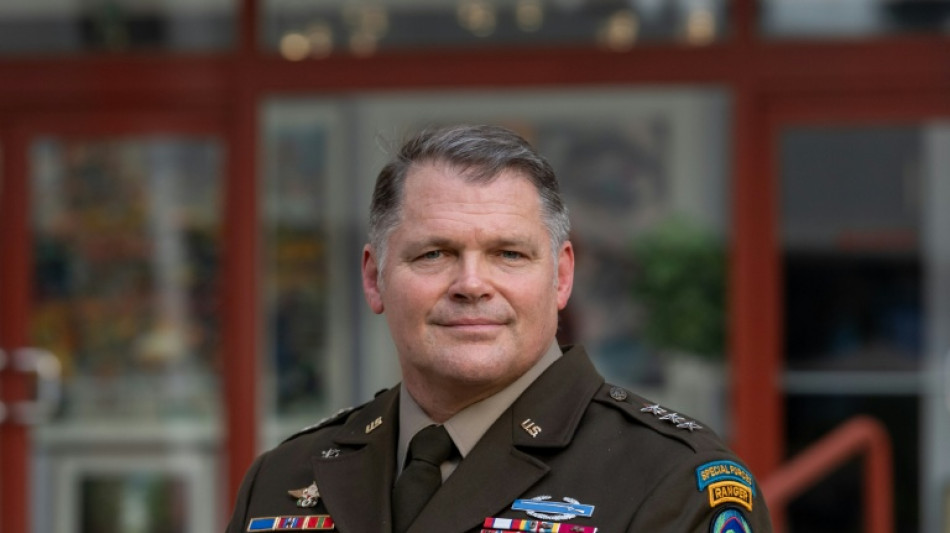
US military working with Nigeria as part of wider Islamic State pivot / Photo: Light Oriye Tamunotonye - AFP

 LeBron, Sixers spoil Knicks party as NBA season tips off

 Man in court over alleged 'targeted' attack on Australian lawmaker

 Regulator has 'power' to force Man City sale
 Man allegedly behind 'targeted' attack on Australian lawmaker appears in court
 Musk backs SpaceX-Tesla merger as rocket firm turns profit

 Zelensky, US hail 'productive' talks to end Trump feud
 'Unbelievable' Foden back in the groove with treble in Man City rout
 Pistons rally to beat Celtics in NBA 2026-27 season opener
 PSG late show downs Barca in Champions League, Liverpool fight back

 Liverpool strike back to beat Villarreal in seven-goal thriller

 Dow boosted as markets rotate from tech shares
 Zelensky hails resumption of US advance warning of strikes on Ukraine
 Carrick says only wins can ease doubts over Man Utd future

 Top NBA Draft pick Dybantsa to miss opener with ankle sprain
 Italy sends troops, toughens security laws after Milan clashes

 Alberta separatists vow to fight on, risking turmoil for Canada

 Two men re-arrested for suspected spying for Iran in airbase scare: UK police

 Guatemalan man gets 30 years for truck smuggling deaths of 53 migrants
 'Clayface' gets under the skin of the superhero genre

 Zelensky, US envoys hold Oslo talks as Ukraine claims US missile holdup

 All-rounder Minhas stars as Pakistan crush England in tri-series

 Bavuma hits 179, Rabada strikes as South Africa dominate
 Allrounder Minhas stars as Pakistan crush England in tri-series
 Albania PM blames 'hybrid war' for week of unrest

 Bavuma hits 179 to lead South African fightback
The US military is increasing materiel deliveries and intelligence sharing with Nigeria, Africom's deputy commander told AFP, as part of a broader American push to work with African militaries to go after Islamic State-linked militants.
The Pentagon has also kept open lines of communication with militaries in the junta-led Sahel countries of Burkina Faso, Niger and Mali, Lieutenant General John Brennan said.
The increased cooperation with Abuja follows Washington's diplomatic pressure on Nigeria over jihadist violence in the country, but also as the US military is becoming "more aggressive" in pursuing IS-linked targets on the continent.
Under the Trump administration, "we've gotten a lot more aggressive and (are) working with partners to target, kinetically, the threats, mainly ISIS," Brennan said in an interview on the sidelines of a US-Nigeria security meeting in the Nigerian capital last week.
"From Somalia to Nigeria, the problem set is connected. So we're trying to take it apart and then provide partners with the information they need," he added.
"It's been about more enabling partners and then providing them equipment and capabilities with less restrictions so that they can be more successful."
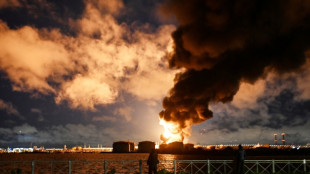
Last week's inaugural US-Nigeria Joint Working Group meeting came roughly a month after the US announced surprise Christmas Day strikes on IS-linked targets in northwest Nigeria.
- Diplomatic clash -
Though both militaries seem keen on increased cooperation after the joint strikes, hanging over it all is diplomatic pressure by Washington over what Trump claims is the mass killing of Christians in Nigeria.
Abuja and independent analysts reject that framing of Nigeria's myriad, overlapping conflicts, which has long been used by the US religious right.
Charged politics were on display at the Joint Working Group meeting in Abuja, where Allison Hooker, the number three at the State Department, pushed the Nigerian government "to protect Christians" in a speech that did not mention Muslim victims of armed groups.
Africa's most populous country is roughly evenly split between a mostly Muslim north and mostly Christian south. Though millions live peacefully side by side, religious and ethnic identity remains a sensitive topic in a country that has seen sectarian violence throughout its history.
Brennan told AFP that US intelligence would not be limited to protecting Christians.
He also said that following the US strikes in northwestern Sokoto state, American support going forward would focus on intelligence sharing to aid Nigerian air strikes there, as well as the northeast, where a jihadist insurgency by Boko Haram and rival breakaway ISWAP has raged since 2009.
Islamic State West Africa Province (ISWAP) is "our most concerning group", he said.
Analysts have been tracking US intelligence flights over the country in recent months, though some have questioned whether air support alone can push back armed groups that thrive amid widespread poverty and state collapse in rural areas.
- 'Still collaborate' with AES militaries -
US-Nigerian cooperation going forward will involve "the whole gamut of intel sharing, sharing... tactics, techniques, and procedures, as well as enabling them to procure more equipment," Brennan said.
The initial strikes targeted militants linked to Islamic State Sahel Province, typically active in neighbouring Niger, Brennan said.
Analysts have voiced concerns about ISSP's spread from the Sahel into coastal west African countries like Nigeria.
The impact of those strikes so far has been unclear, however, with local and international journalists unable to confirm militant casualties.
Asked about their effectiveness, Nigerian information minister Mohammed Idris said last week it was "still a work in progress".
In the Sahel more widely, Brennan said "we still collaborate" with the junta-led governments in Burkina Faso, Mali and Niger, which have broken away from their west African neighbours and largely shunned the West.
Security cooperation has been curtailed since coups toppled civilian governments across the three countries from 2020 to 2023.
"We have actually shared information with some of them to attack key terrorist targets," he said. "We still talk to our military partners across the Sahelian states, even though it's not official."
Brennan also said the US is not seeking to replace its bases in Niger after its troops were pushed out by the ruling junta.
"We're not in the market to create a drone base anywhere," he said, referencing the shuttered US drone operations in Agadez.
"We are much more focused on getting capability to the right place at the right time and then leaving. We don't seek long-term basing in any of the western African countries."
F.Wilson--AT