Maduro's fall raises Venezuelans' hopes for economic bounty / Photo: Margioni BERMÚDEZ - AFP

 Judge orders Meta to pay $25 bn to New Mexico in Cambridge Analytica case
 Champagne puts cork in project to expand production area

 Canadian publisher says novelist Orelien used AI to write novel
 Trump faces fresh questions over ties to 'humanitarian' Putin
 Hansen back in Ireland squad for Nations Championship
 Kremlin sees little 'substance' in Ukraine peace ideas

 Top Arab-Israeli election candidate tells AFP Netanyahu win would be 'catastrophe'
 South African rugby player's death due to 'aortic dissection'
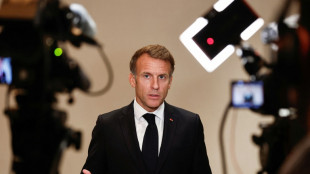 France's Macron lands in Riyadh on surprise 'solidarity' visit
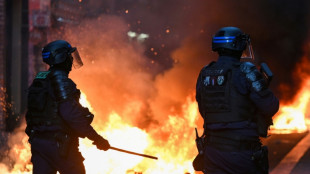 Around the world, far right blames immigrants for French protests
 South Africa eases fuel pain as growth slows
 Woody Allen shoots new movie in Madrid

 Nvidia's Huang urges Europe to go all in on AI

 Five things to know as French bond yield tops 5%
 'Complete threat' Ngumoha excites Liverpool captain Van Dijk

 'The fishing's terrible': Deforestation devastates C.Africa river

 France's tourism sector worried about impact of riots

 Macron takes aim at Trump for using France riots for election gain
 North Korea says 'new firepower units' in place, loudspeakers to return
 Indonesia leader hits out at market downgrade warning

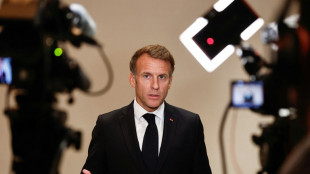 Macron slams 'stupid' comments based on AI videos by leaders on France riots

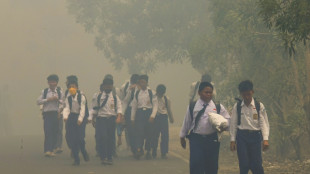
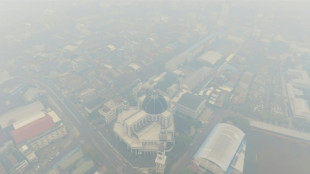 'Public health crisis': Indonesians seek fire relief from state

 British Museum sells second set of Bayeux exhibition tickets
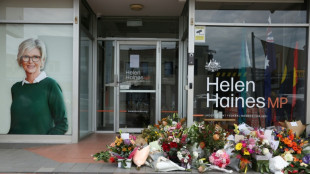 Australian lawmaker loses both legs after 'targeted' attack

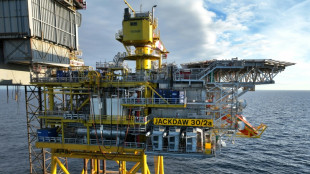 UK approves drilling in controversial Jackdaw gas field

After the US raid that deposed Nicolas Maduro as Venezuela's leader, citizens hope the ensuing talks on selling its oil to the United States may improve their dire economic fortunes.
US forces shocked many when they bombed Caracas in the night and seized Maduro -- but analysts agree that the raid has radically changed the country's outlook and economic expectations.
Maduro's successor, interim leader Delcy Rodriguez, has insisted Venezuela is not "subordinate" to Washington after it seized him, but she has pledged to cooperate with it on oil.
Maduro's government had resorted to cryptocurrencies to boost foreign exchange flows amid a lack of investment, while runaway inflation wiped out people's already meager wages.
"I don't really understand those agreements signed by Trump and Delcy, but I hope they help improve the economy," said Marieta Ochoa, a 47-year-old teacher.
"Hopefully salaries go up -- this inflation is unbearable."
- Oil negotiations -
Until Friday, January 2, relations between the two countries were at their lowest: US sanctions and seizures of tankers were squeezing Venezuela's shaky oil industry.
The country had been selling oil to allies such as China and Russia at discounts of up to 50 percent, with low production and export levels.
"Now, rapprochement between Washington and Caracas could mean easing sanctions, restoring oil exports and reviving cash flows," said Alejandro Grisanti, director of consultancy Ecoanalitica.
State oil company PDVSA has said it is negotiating crude sales with Washington under schemes similar to those applying to firms such as Chevron -- the only US company currently exempted from sanctions on dealing in Venezuelan crude.
Trump signed an order to safeguard Venezuelan oil revenue held in US Treasury accounts from the courts and debtors, and has urged US oil firms to invest in Venezuela and restore its creaky oil infrastructure.
Analysts say interim president Rodriguez could attract investment if she signals openness and flexibility.
"The country urgently needs a growing and stable cash flow, and oil can provide it immediately," said independent economist Carlos Torrealba Rangel.
- Economy 'reactivating' -
Growth prospects are strong since oil accounts for 87 percent of Venezuela's foreign currency earnings.
Asdrubal Oliveros, an independent economist, forecast "a 30-percent expansion -- double the rate of the past two years."
"Increased oil income from higher output and reduced discounts will boost cash flows and help a currency market that is practically dry," he said.
Traders said economic activity was timidly looking up after the US airstrikes on Saturday, January 3, that led to the capture of Maduro and his wife, Cilia Flores.
"Little by little, the economy is reactivating," said Carmen Alvarez, who represents informal traders in western Caracas.
"People are buying again, dollar payments are stabilizing after rampant speculation above the official rate. Food sales are being prioritized."
Uncertainty and lack of confidence in exchange policy drove prices higher during the week, as the parallel dollar surged over 50 percent to about 800 bolivars.
Oliveros said the government was virtually out of foreign currency.
"There were practically no dollar revenues, and even crypto inflows had stalled."
But by the weekend, the unofficial dollar fell to 530 bolivars, possibly driven by optimism over the oil deal, analysts said.
- Inflation warning -
They warned however that Venezuela's economy remained fragile.
They stressed that the short term would be marked by uncertainty, requiring close monitoring of key variables such as exchange rates and inflation.
"Venezuela is on the brink of hyperinflation. The only way to avert it is through a constitutional, peaceful political transition to reorganize the economy," said Jose Guerra, an economist and former head of the country's central bank.
Oxford University visiting professor Jose Manuel Puente said easing sanctions would improve expectations and attract US and global investment.
But he warned that recovery wouldn't be easy.
"In the end, all this will unfold under a scenario where the country is effectively under US tutelage," he said.
He said the oil industry needs $100 billion annually to restart, and progress depends on negotiations.
"The year 2026 began with an unprecedented shift in Venezuela's policy that will reshape economic dynamics," said Oliveros.
"Politics and economics have never been so intertwined."
E.Rodriguez--AT