What we know about the US attacks on Venezuela / Photo: Leonardo Munoz - AFP

 Tesla profits drop on tech spending spree as 'Elon Inc.' talk builds

 Russia 'ready' to resume trilateral talks but cool on Ukraine deal

 Meta beats expectations but legal penalties hit profit amid AI race
 X Community Notes 'failed' to flag US election falsehoods, study says
 Arsenal 'concerned' about Saka injury, says Arteta

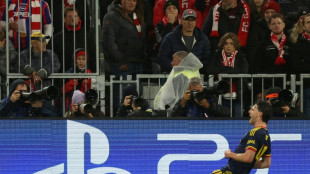 Rice rescues Arsenal draw at Bayern in Champions League
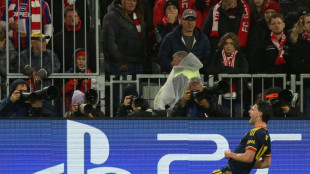 Rice grabs Arsenal draw at Bayern in Champions League

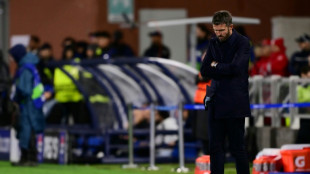 Carrick unconcerned over future despite 'unacceptable' Como loss
 Real Madrid rout Leipzig to continue perfect European start
 Walmart welcomes AI agents as Anthropic launches its own
 Quebec separatist premier sworn in without royal presence
 UAE nominates official to lead UN
 NFL boss Goodell welcomes probe into Hurts medical care
 Musk threatens Democrats teeing up congressional probes
 In the Mexican town that makes emblematic Day of the Dead garlands
 Protests banned in parts of Paris as Macron swipes at Trump
 Judge orders Meta to pay $25 bn to New Mexico in Cambridge Analytica case
 Champagne puts cork in project to expand production area

 Canadian publisher says novelist Orelien used AI to write novel
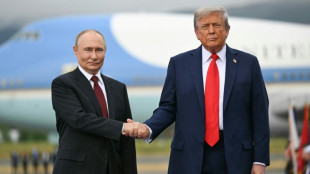 Trump faces fresh questions over ties to 'humanitarian' Putin
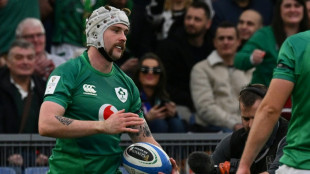 Hansen back in Ireland squad for Nations Championship
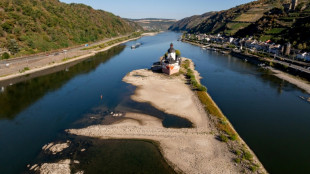
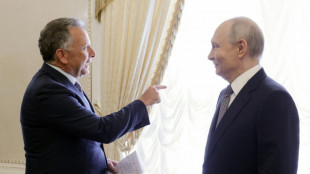 Kremlin sees little 'substance' in Ukraine peace ideas

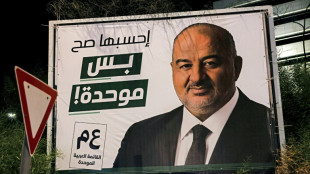 Top Arab-Israeli election candidate tells AFP Netanyahu win would be 'catastrophe'
 South African rugby player's death due to 'aortic dissection'
 France's Macron lands in Riyadh on surprise 'solidarity' visit
After months of threats and pressure tactics, the United States on Saturday bombed Venezuela and toppled authoritarian left-wing leader Nicolas Maduro, who was seized to face trial in New York.
- How did it start? -
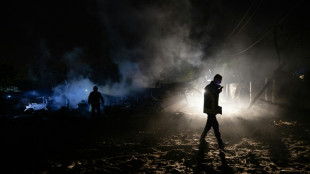
The first explosions were heard in the capital Caracas and surrounding areas shortly before 2:00 am (0600 GMT), continuing until around 3:15 am.
Images on social media showed helicopters silhouetted against the night sky and missiles slamming into targets, creating fireballs and huge plumes of smoke.
Trump said at 0921 GMT on his Truth Social platform that the United States had "successfully carried out a large scale strike against Venezuela" and that Maduro and his wife had been "captured and flown out of the Country."
Top US General Dan Caine said the goal of "Operation Absolute Resolve" was purely to seize Maduro, with airstrikes clearing the way for helicopters used in the capture raid.
Caine said the operation, involving more than 150 aircraft, followed months of preparation.
- What was hit? -
Fort Tiuna, Venezuela's largest military complex, was among the targets.
The vast base in southern Caracas is home to the defense ministry, a military academy and housing units for thousands of troops and their families.
AFP reporters saw flames and huge plumes of smoke rising from the complex.
At one of the entrances, which was still guarded, an armored vehicle and a truck were pocked with bullet marks.
La Carlota airbase east of Caracas was also targeted. AFP reporters saw an armored vehicle at the base in flames and a burned bus.
Explosions were also reported in La Guaira, north of Caracas, home to a port and an international airport; the north-central city of Maracay; and Higuerote on the Caribbean coast -- all within 100 kilometers (60 miles) of Caracas.
- Are there casualties? -
Defense Minister Vladimir Padrino Lopez accused US forces of firing missiles and rockets at residential areas.
As of Saturday night, Venezuelan authorities had yet to release casualty figures.
Trump, speaking on Fox News program "Fox and Friends," boasted that no US soldiers had been killed. He later told the New York Post that "many Cubans" who were protecting Maduro had died, the first indication of casualties from the US strikes.
- What has become of Maduro? -
The operation brought the curtain down on 12 years of increasingly authoritarian rule by Maduro, who had a $50 million US bounty on his head.
Trump posted a picture on Truth Social of the Venezuelan leader handcuffed and blindfolded aboard a US naval ship in the Caribbean.
From there he and his wife Cilia Flores were flown to New York to face drugs and weapons charges.
Trump said he followed the operation to capture Maduro live at his Mar-a-Lago estate "like I was watching a television show."
"He was in a very highly guarded... like a fortress actually," he said.
He said Maduro tried in vain to escape to a safe space.
Caine said intelligence agents had spent months studying how Maduro "moved, where he lived, where he traveled, what he ate, what he wore, what were his pets."
He said the 63-year-old Socialist and his wife surrendered without resistance.
- What next for Venezuela? -
Trump stunned US allies and foes alike by saying the United States would "run" Venezuela during an undetermined transitional period.
He indicated that could involve deploying US troops on the ground.
Venezuela's opposition leader, Nobel peace laureate Maria Corina Machado, took to social media to proclaim her country's "hour of freedom has arrived."
Machado, seen as a hero by many Venezuelans for her dogged resistance to Maduro, called for the opposition's candidate in the 2024 election to "immediately" assume the presidency.
Trump brushed aside any expectations Machado herself would emerge as leader, claiming she did not have "support or respect" in Venezuela.
L.Adams--AT