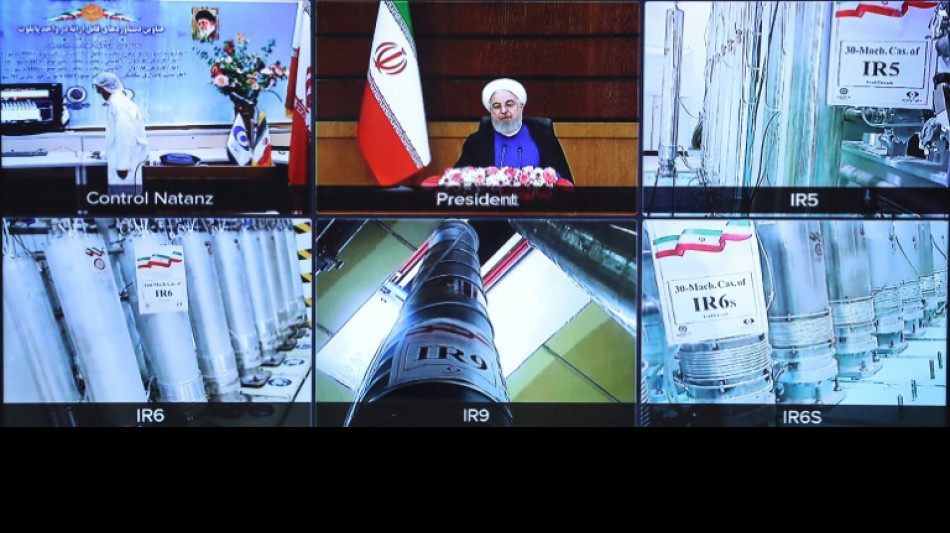
'Snapback': What sanctions will be reimposed on Iran? / Photo: - - Iranian Presidency/AFP/File

 Alexander Skarsgard and his viral 'Wicker' transformation

 Thousands protest in Turkey over journalists' arrests, media shutdowns
 Man City beaten by Aston Villa to end perfect Premier League start
 Luis Enrique says PSG unbothered by Lyon match switch
 US gymnast Richard wins floor exercise gold at worlds

 Moltzan upstages Shiffrin to win season-opening World Cup giant slalom

 Infantino says backed by 'vast majority' in bid for re-election

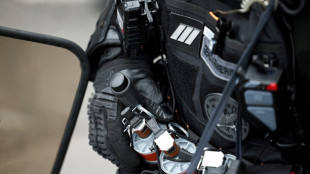 Police fire tear gas as new French protests kick off
 Police fire tear gas as new French demonstrations kick off
 Tropical Storm Champi nears China after battering Taiwan, Japan

 'Weeks, not days' in Kompany recovery, say Bayern

 Unfair to compare us to Barca: Real Madrid's Mourinho
 North Korea's Kim makes unannounced visit to Chinese border city

 Fire breaks out at Hitler's mountain retreat, suspect arrested
 Marc Marquez wins Australian sprint as Martin crashes out
 North Korea's Kim calls for training world's 'strongest' military
 Brewers edge Rays to capture World Series opener
 France to deploy 70,000 police for fresh weekend protests
 Tatum delivers as Celtics down winless Knicks

 Romantasy fans ready for sleepless night as 'Court of Thorns and Roses' returns
 De Goede hat-trick as Canada defeat England again
 How to Build an Emergency Fund for Your Furry Best Friend
 5 Ways to Prepare Financially for Parenthood
 Ebola vaccine trial begins in DR Congo
 Travelling man Wade equals Prem try record

A raft of UN sanctions on Iran over its nuclear program, lifted under a landmark 2015 deal, will go back into force at the end of Saturday -- barring a diplomatic breakthrough, thought to be unlikely.
The sanctions will be reimposed because the "E3" European group -- Britain, France and Germany -- triggered a mechanism in the deal alleging Tehran was not meeting its obligations.
Here are some key facts about the so-called "snapback" process:
- What do the sanctions target? -
The sanctions target companies, organizations and individuals that contribute directly or indirectly to Iran's nuclear program or the development of its ballistic missiles.
Providing necessary equipment, expertise, or funding are all grounds for sanctions.
- Swath of the economy affected -
The sanctions that will be reinstated include an embargo on conventional weapons with the prohibition of any sale or transfer of arms to Iran.
Imports, exports or transfers of parts and technologies related to the nuclear and ballistic program will be prohibited.
The assets of entities and individuals abroad belonging to Iranian persons or groups linked to the nuclear program will be frozen.
Individuals designated as participating in prohibited nuclear activities may be banned from traveling to UN member states.
UN member states will be required to restrict access to banking and financial facilities that could help Iran's nuclear or ballistic programs.
Anyone violating the sanctions regime could see their assets frozen worldwide.
- The EU had its own sanctions -
Separate measures by the European Union could now be reimposed alongside the core, global sanctions.
Their goal was to hit the Iranian economy, not only to hamper nuclear activity but also to inflict fiscal pain to force Tehran to comply.
Western nations fear that Iran will acquire nuclear weapons, which Tehran vehemently denies while defending its right to develop a nuclear program for civilian purposes.
The United States already imposes its own sanctions, including ones to prohibit other countries from buying Iranian oil, after President Donald Trump withdrew from the nuclear deal in his first term.
- How does 'snapback' take effect? -
The "snapback" process reactivates UN resolutions, but their practical implementation requires UN member states to update their laws to comply.
It will be down to the EU and Britain to pass legislation so that the sanctions can be enforced, but neither has given details on that process.
- How are sanctions enforced? -
The UN Security Council resolutions and the associated sanctions are binding -- but are regularly violated.
The big question is whether countries like China and Russia, which consider the triggering of the "snapback" illegal, might decide not to comply.
Some countries, including China, continued to trade with Iran despite the presence of US sanctions.
The European powers expect Russia will not comply with the sanctions but are unclear about how China, which imports a significant amount of oil from Iran, might react.
"There is a cost to circumventing sanctions, a political cost, but also a financial and economic cost because financial transactions become more expensive," said Clement Therme, an associate researcher at the International Institute for Iranian Studies linked to Sorbonne University.
Shipping companies are one example of businesses that will feel the pinch.
"In the case of UN sanctions, we probably won't see a full blockade, but rising costs instead," Therme added.
P.Smith--AT