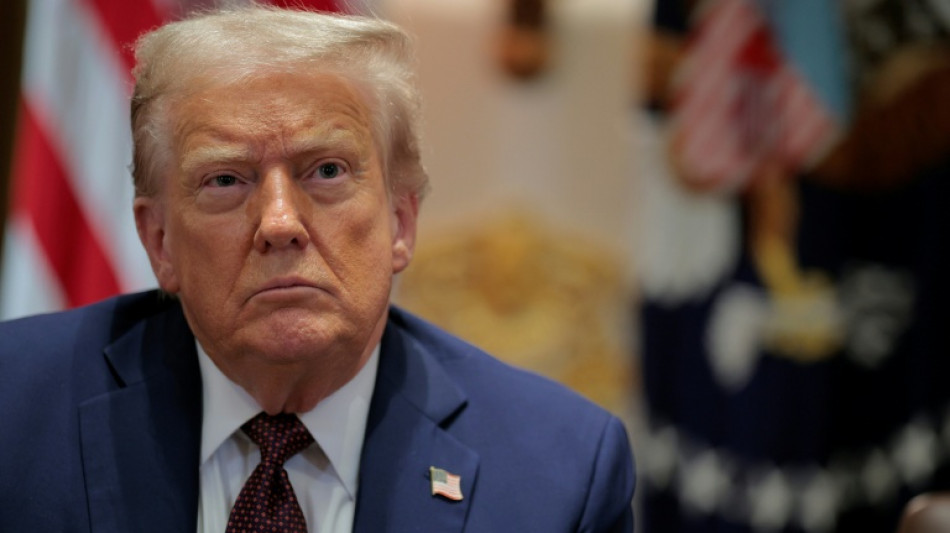
US strike marks shift to military action against drug cartels / Photo: CHIP SOMODEVILLA - GETTY IMAGES NORTH AMERICA/AFP/File

 Last MotoGP race at Phillip Island cancelled due to weather in Marquez setback
 Sri Lanka seeks faster green energy shift after oil shocks
 Riyadh airport resumes flights following Houthi attacks

 'Call of Duty' North Korea invasion edition tops sales charts in South
 Musk accuses Ukraine of violating Starlink's terms of service

 Fed expected to hold rates steady days ahead of US midterms

 More Lula, or back to the Bolsonaros? Brazil votes in cliffhanger

 HKA Enterprises is Powering the Skilled Trades That Are Moving the U.S. Economy Forward

 7 Creative Things to Do With Your Backyard

 Obama blasts Trump's 'chaos and cruelty' while campaigning for Democrats
 Bolsonaro leads Lula in final Brazil election polls

 Antonelli storms to pole for US Grand Prix

 Alvarez fires Atletico to win against Deportivo

 Japan's Nakai wins Grand Prix de France for second straight year

 Ronaldinho to make comeback in Italian third tier
 Israeli forces displace Hebron families after deadly attack
 Hamilton on top with Antonelli fourth in final practice at US Grand Prix

 Beier late show sends Dortmund top of Bundesliga
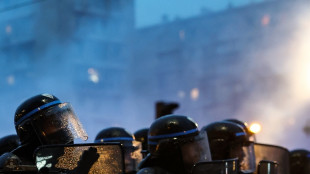
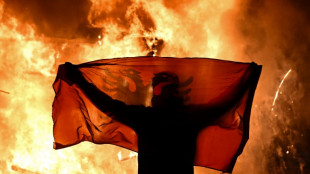 Police and protesters clash again at Albanian anti-government rally
 Arteta hails mentality as Arsenal go level with Man City

 Clashes break out in Paris, other cities amid fresh protests
 Bouthier kicks Vannes to first Top 14 win of season

 Thousands rally for Lula and Bolsonaro on eve of tight Brazil vote

 Red-hot Fuellkrug bags Bremen brace, Leipzig win

 Thousands gather at new Albanian anti-government rally
US President Donald Trump's deadly strike on an alleged drug-smuggling boat from Venezuela marks a significant escalation from law enforcement to military action against cartels that his administration has branded as terror groups.
Video footage posted by Trump on social media Tuesday showed a multi-engine speedboat with several people aboard bouncing across the waves -- but rather than being stopped and boarded, the vessel is suddenly engulfed in an inferno.
The US president said 11 members of the Tren de Aragua gang were killed in the strike, which should "serve as notice to anybody even thinking about bringing drugs into the United States of America."
Ryan Berg, director of the Americas Program at the Center for Strategic and International Studies, said the strike "demonstrates a change in the rules of engagement."
"There is no longer US Coast Guard boarding of vessels; there is an approach far more similar to how the United States deals with pirates in the Gulf region, or terrorists in the Sahel," he said.
The United States -- which has a long history of carrying out strikes against suspected militants without due process -- designated Venezuela's Tren de Aragua, Mexico's Sinaloa Cartel and several other drug trafficking organizations as terror groups earlier this year.
The strike on the boat comes at a time of soaring tensions between the United States and Venezuela over the deployment of American warships in the region that the Washington says are to combat trafficking but which Caracas views as a threat.
- 'Highly dissuasive effect' -
The United States alleges that leftist Venezuelan leader Nicolas Maduro heads a cocaine trafficking cartel and recently doubled its bounty to $50 million in exchange for his capture to face drug charges.
Maduro has meanwhile accused Trump of attempting to effect regime change and launched a drive to sign up thousands of militia members.
Asked about the potential for escalation with Venezuela as a result of the strike, Berg said that "Maduro is unlikely to say much, given that doing so would essentially confirm the administration's assertion that he is a narcotrafficker and the head of a cartel."
Gustavo Flores-Macias, dean of the University of Maryland School of Public Policy, noted that the United States has a history of military interventions in Latin America, but said this one was the first under Trump's policy of designating cartels as terror groups.
"With the turn toward military strikes instead of traditional law enforcement in addressing drug trafficking in the region, the White House is looking to send a strong message," Flores-Macias said.
That message is aimed "not only to deter drug traffickers but also as a show of force to put the government of Nicolas Maduro on notice that the US is considering military action in Venezuela," he said.
It remains to be seen how effective Trump's policy will be at curbing trafficking in the Caribbean, but Berg said the US Navy's multi-ship deployment "could disrupt Southern Caribbean trafficking routes for some time, with its generational scale and size."
"In the short term, (the strike) is likely to have a highly dissuasive effect," he said. "Few will risk being in a 'go fast' boat anytime soon."
O.Ortiz--AT