Pacific microstate sells first passports to fund climate action / Photo: Mike LEYRAL - AFP/File

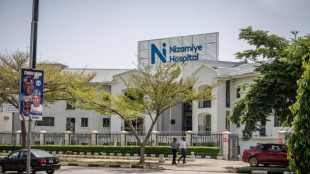 Nigeria widens hunt for possible Ebola cases

 Liverpool star Isak back to his best says Iraola

 Lula supporters cross fingers in Rio, a Bolsonaro bastion

 Flights resume at Riyadh airport as Houthis attack Saudi Arabia

 High-flying Betis held at Celta Vigo

 Shadab ton stuns England as Pakistan reach tri-series final

 'With you': Opposition leader Machado returns to Venezuela

 Carrick on the brink as Man Utd misery mounts, Isak stars for Liverpool

 Monaco hold Lille as both move to top of Ligue 1

 Isak extends hot streak as Liverpool sink Brighton
 Brazil chooses between Lula and Bolsonaro in nail-biter vote

 Doha opens ninth World Investment Forum focused on future investment

 Technical outlook diverges for Bharti Airtel, PFC, REC and Alkyl Amines

 Le Pen begins presidential campaign after violent protests across France
 Adan Hospital launches catheter-based tricuspid valve replacement programme

 KIB Group nine-month profit rises 30% to KD 26.6 million

 John Catlin wins Hong Kong Open and secures first Masters invitation
 Poland’s WB Group plans $100 million India investment for drone production

 Insurance deductibles and no-claim bonuses require a careful claims decision
 Credit-card shortcuts can turn impulse spending into lasting debt

 J&K Bank raises accident cover for government employees to ₹1 crore

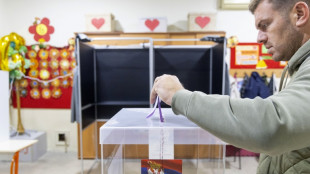 Serbia on track for high turnout as students challenge ruling party

 Pakistan keep England to 241 despite Duckett ton

 Ukraine war divides Bulgaria as voters elect president

 Shock and grief in a Jordanian village after church attack
A remote Pacific nation has started selling passports to fund climate action, but is so far struggling to attract new citizens to the low-lying, largely barren island.
Pacific microstate Nauru, one of the world's smallest nations, has a novel plan to fund its fight against climate change by selling so-called "golden passports".
Selling for US$105,000 each, Nauru plans to drum up more than US$5 million in the first year of the "climate resilience citizenship" programme.
Almost six months after the scheme opened in February, Nauru has so far approved just six applications -- covering two families and four individuals.
Despite the slow start -- Nauru eventually hopes to sell 66 passports in the scheme's first year -- President David Adeang remained upbeat.
"We welcome our new citizens whose investment will assist Nauru to secure a sustainable and prosperous future for generations to come," he told AFP on Thursday.
Nauru believes the passport programme could eventually generate $43 million -– or about 500 successful applicants -- which would account for almost 20 percent of total government revenue.
But there are fears the scheme could be ripe for exploitation.
Edward Clark, who runs Nauru's climate passport programme, said one application has already been withdrawn after officials flagged "adverse findings" during background checks.
"The application would have been rejected had it not been withdrawn," he told AFP.
A previous Nauru attempt to sell passports ended in disaster.
In 2003, Nauru officials sold citizenship to Al-Qaeda members who were later arrested in Asia.
Among the first batch of climate passports approved was an unnamed German family of four living in Dubai, said Clark touting the "major milestone".
- 'Political volatility' -
"They were looking for a second citizenship to provide them with a Plan B given the current global political volatility."
The Nauru passport provides visa-free entry into 89 countries, including the United Kingdom, Ireland, United Arab Emirates and Hong Kong.
More than 60 different nations offer some form of migration for investment schemes, Australia's Lowy Institute has found.
Pacific nations such as Vanuatu, Samoa and Tonga have all dabbled in selling passports.
The island republic of Nauru sits on a small plateau of phosphate rock in the sparsely populated South Pacific.
With a total landmass of just 21 square kilometres (eight square miles), it is one of the world's smallest nations.
Unusually pure phosphate deposits -- a key ingredient in fertiliser -- once made Nauru one of the wealthiest places, per capita, on the planet.
But these supplies have long dried up, and researchers today estimate 80 percent of Nauru has been rendered uninhabitable by mining.
What little land Nauru has left is threatened by encroaching tides. Scientists have measured sea levels rising 1.5 times faster than global averages.
Nauru will eventually need to relocate 90 percent of its population as creeping seas start to eat away at its coastal fringe.
The first phase of this mass relocation is estimated to cost more than $60 million.
O.Gutierrez--AT