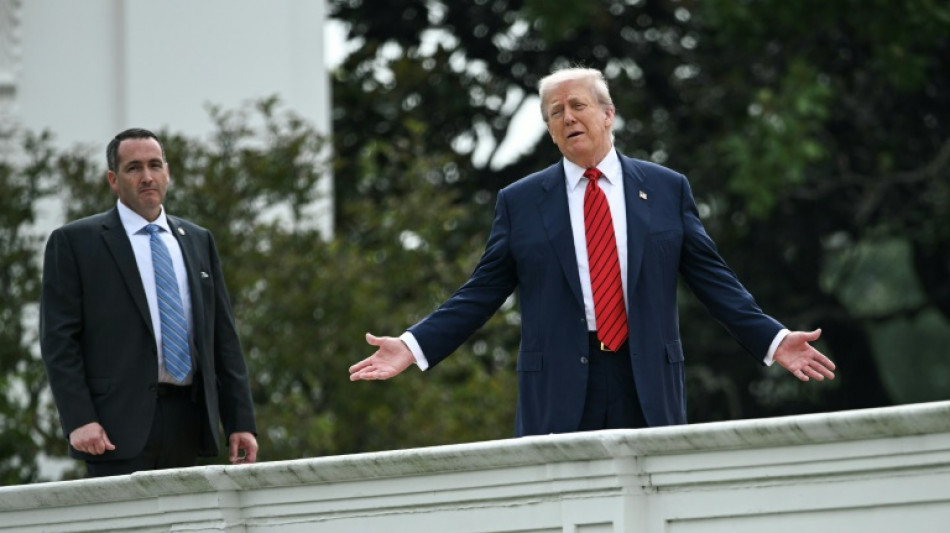
Trump signals tariffs on pharma, chips as trade war widens / Photo: Brendan SMIALOWSKI - AFP

 QNB expands cross-border funding for AI and digital infrastructure

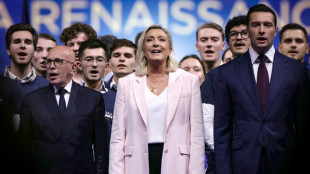 France's Le Pen launches presidential bid vowing to restore 'rule of law'
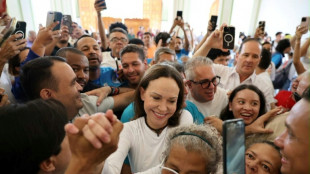
 Qatar Charity delivers Braille Qurans to blind readers in Kosovo and Albania
 Houthis say attacked Riyadh airport hours after flights resume

 Monaco hold Lille as Rennes go top of Ligue 1
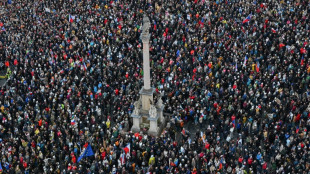 Thousands gather in Prague to protest licence fee plans

 Pease spins to floor gold as US tops gymnastics medal table

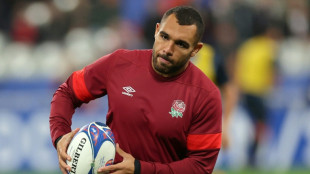 Marchant back in England training squad ahead of Nations Championship fixtures

 French skater Siao Him Fa soars to victory in season-opener at home

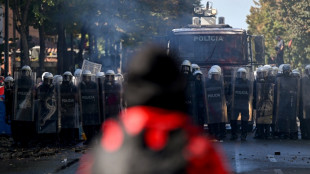 Embattled Albanian PM vows fines for violent protesters

 Steelers top Saints in NFL's first regular-season game in Paris
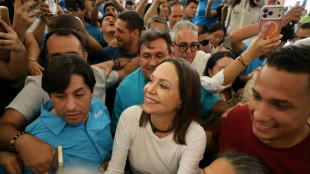
 Carrick unsure over Man Utd future after Bournemouth loss
 2027 Dakar Rally to be moved from Saudi Arabia

 Man Utd battered by Bournemouth to leave Carrick on the brink

 Storms batter Europe hitting power supplies, flights and phones

 Inter rally late to down Fiorentina and regain Serie A lead

 UDST opens Fall 2027 admissions to students in Qatar and abroad
 Le Pen begins presidential campaign after violent protests across France

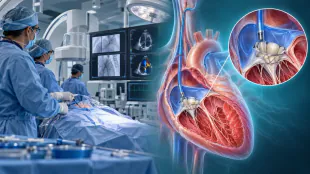 Adan Hospital launches catheter-based tricuspid valve replacement programme

 KIB Group nine-month profit rises 30% to KD 26.6 million

 Ladakh declared India’s first fully organic union territory

 J&K Bank raises accident cover for government employees to ₹1 crore

 Technical outlook diverges for Bharti Airtel, PFC, REC and Alkyl Amines

 Insurance deductibles and no-claim bonuses require a careful claims decision

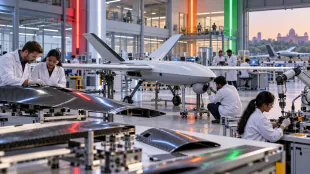 Poland’s WB Group plans $100 million India investment for drone production

US President Donald Trump signaled Tuesday that fresh tariffs on imported pharmaceuticals and semiconductors could be unveiled as soon as the coming week, as he presses on in efforts to reshape global trade.
Trump's latest comments, in an interview on CNBC, come days before a separate set of tariff hikes takes effect on dozens of economies later this week.
The sweeping tariff plans have sparked a flurry of activity as governments seek to avert the worst of his threats -- with Switzerland's leaders heading to Washington on Tuesday in a last-minute push to avoid punitive duties.
But he appears set to widen his trade wars further.
The US president told CNBC that upcoming tariffs on imported pharmaceuticals could reach 250 percent, while adding that he plans for new duties on foreign semiconductors soon.
"We'll be putting (an) initially small tariff on pharmaceuticals, but in one year, one-and-a-half years, maximum, it's going to go to 150 percent," Trump said.
"And then it's going to go to 250 percent because we want pharmaceuticals made in our country."
Trump also said that Washington will be announcing tariffs "within the next week or so."
He added: "We're going to be announcing on semiconductors and chips."
- Concern for US economy -
Trump has taken aim at products from different countries with varying tariff rates after imposing a 10-percent levy on almost all trading partners in April -- with excluded products targeted by sector.
While Swiss leaders are seeking to stave off a US tariff hike to 39 percent come Thursday -- which excludes sectors like pharma -- Trump's plans for a steep pharma levy will likely be a point of contention in any talks.
Pharmaceuticals represented 60 percent of Swiss goods exports to the United States last year.
Besides probing pharmaceuticals and chips imports, Trump has already imposed steep duties of 50 percent on imports of steel and aluminum, alongside lower levels on autos and parts.
In the same CNBC interview, Trump said he expects to raise the US tariff on Indian imports "very substantially over the next 24 hours" due to the country's purchases of Russian oil.
This is a key revenue source for Moscow's military offensive on Ukraine.
His pressure on India comes after signaling fresh sanctions on Moscow if it did not make progress by Friday towards a peace deal with Kyiv, more than three years since Russia's invasion.
Moscow is anticipating talks this week with the US leader's special envoy Steve Witkoff, and the Kremlin has criticized Trump's threat of raising tariffs on Indian goods.
Weak employment data last week pointed to challenges for the US economy as companies take a cautious approach in hiring and investment while grappling with Trump's radical -- and rapidly changing -- tariffs policy.
The tariffs are a demonstration of raw economic power that Trump sees as putting US exporters in a stronger position while encouraging domestic manufacturing by keeping out foreign imports.
But the approach has raised fears of inflation and other economic fallout in the world's biggest economy.
O.Brown--AT