'What are these wars for?': Arab town in Israel shattered by Iran strike
/ Photo: JOHN WESSELS - AFP

 US-brokered truce begins in Ukraine city occupied by Russia

 Qatar launches Fashion and Crafts Council to connect talent with global markets

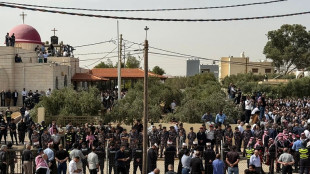 Jordan strikes militant groups in Syria after church attack

 FIA chief praises Middle East motorsport volunteers and officials

 Australia warns of 'unprecedented' AI threat

 Qatar Amir arrives in Moscow for eighth GECF summit

 Kane beats Yamal and Mbappe to taste Ballon d'Or glory

 Ballon d'Or crowns Putellas's return to top of women's game

 Godts stars as PSG beat Lyon to go top of Ligue 1

 NBA inks deal with Kalshi and Polymarket, citing safeguards

 US rapper Macklemore launches 'Free Palestine Tour' after Ed Sheeran fallout

 Venezuela leader criticizes Machado over dramatic return from exile

 Brazil markets battered after Lula win, AI in focus elsewhere

 Lula savors Brazil win as Bolsonaro rejects result, markets tumble

 Canadian youths ask court to impose binding climate protections

 Walter Koenig, who played original Chekov on 'Star Trek,' dies at 90

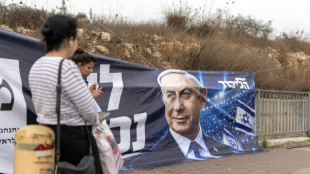 Netanyahu, rivals trade attacks over Iran as clock counts down to Israel vote
 Townsend urges Scotland to use Nations Championship as World Cup springboard

 Microsoft offers voluntary exit packages to 60,000 staff
 S.Africa ambassador calls for talks with US over 'tense' ties

 'Smells of freedom': Serbians hopeful after landmark election

 South Africa select 'enforcer' Coetzee for Australia decider

 Botanists comb Gabon's rich rainforests with nature on the line

 New levy on non-EU parcels kicks in Sunday

 Stocks climb ahead of tech earnings, central bank calls

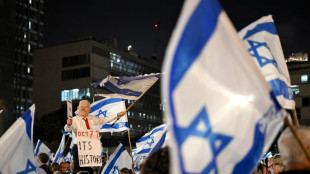
An Arab town in northern Israel paid a heavy price for the ongoing air war between Iran and Israel when a ballistic missile slammed into a home there, killing four people and upending life in the small community.
Hundreds of sobbing residents crowded the narrow streets of Tamra on Tuesday to watch as the wooden coffins adorned with colourful wreaths were carried to the town's cemetery.
To some, the Iranian strike highlighted the unequal protections afforded Israel's Arab minority, while to others, it merely underscored the cruel indifference of war.
Raja Khatib has been left to pick up the pieces from an attack that killed his wife, two of his daughters and a sister in law.
"I wish to myself, if only the missile would have hit me as well. And I would be with them, and I wouldn't be suffering anymore," Khatib told AFP.
"Learn from me: no more victims. Stop the war."
After five days of fighting, at least 24 people have been killed in Israel and hundreds more wounded by the repeated barrages launched from Iran.
Israel's sophisticated air defence systems have managed to intercept a majority of the missiles and drones targeting the country.
But some have managed to slip through.
With some projectiles roughly the size of a train carriage and carrying a payload that can weigh hundreds of kilograms, Iran's ballistic missiles can be devastating upon impact.
A single strike can destroy large swaths of a city block and rip gaping holes in an apartment building, while the shockwave can shatter windows and wreak havoc on the surrounding area.
The level of destruction from the missiles has been unprecedented in Israel, even after 20 months of continuous war in the wake of the October 7, 2023 Hamas attacks.
Along with Tamra, barrages have also hit residential areas in Tel Aviv, Bnei Brak, Petah Tikva and Haifa.
- Discrimination -
As the coffins made their way through Tamra on Tuesday, a group of women tended to a relative of the victims who had become faint with grief, dabbing cold water on her cheeks and forehead.
At the cemetery, men embraced and young girls cried at the foot of the freshly dug graves.
Iran has continued to fire daily salvos since Israel launched a surprise air campaign that it says is aimed at preventing the Islamic republic from acquiring nuclear weapons -- an ambition Tehran denies.
In Iran, Israel's wide-ranging air strikes have killed at least 224 people, including military commanders, nuclear scientists and civilians.
Despite mounting calls to de-escalate, neither side has backed off from the fighting.
In Israel, frequent air raid alerts have kept residents close to bomb shelters, while streets across the country have largely emptied and shops shuttered.
But some in the country's Arab minority have said the government has done too little to protect them, pointing to unequal access to public shelters used to weather the barrages.
Most of Israel's Arab minority identify as Palestinians who remained in what is now Israel after its creation in 1948. They represent about 20 percent of the country's population.
The community frequently professes to face discrimination from Israel's Jewish majority.
"The state, unfortunately, still distinguishes between blood and blood," Ayman Odeh, an Israeli parliamentarian of Palestinian descent, wrote on social media after touring Tamra earlier this week.
"Tamra is not a village. It is a city without public shelters," Odeh added, saying that this was the case for 60 percent of "local authorities" -- the Israeli term for communities not officially registered as cities, many of which are majority Arab.
But for residents like Khatib, the damage has already been done.
"What are these wars for? Let's make peace, for the sake of the two people," he said.
"I am a Muslim. This missile killed Muslims. Did it differentiate between Jews and Muslims? No, when it hits, it doesn't distinguish between people."
T.Sanchez--AT