
Gulf countries fear Israel-Iran spillover / Photo: Handout - US Central Command (CENTCOM)/AFP/File

 Cavs edge T'Wolves in overtime despite superb Edwards

 Prescott fires Cowboys to 38-21 win over plummeting Eagles

 Kuwait padel chief hails national showing at Premier Padel Major

 Britain prepares constrained budget as debt and defence pressures mount

 Valkyries beat Dream to reach brink of WNBA title
 Benjamin Netanyahu: Israel's longest-serving PM fighting for survival

 Kuwait receives invitation to 2026 UN Water Conference in Abu Dhabi
 Arab World Institute president outlines plans for stronger Kuwait-France cultural links
 Bolsonaro's party says it recognizes Lula's election win in Brazil
 Meghan on TV menu for 'Junior MasterChef Australia'
 South Korea's chip boom fuels forecast-beating third-quarter growth

 US-brokered truce begins in Ukraine city occupied by Russia

 Qatar launches Fashion and Crafts Council to connect talent with global markets

 Jordan strikes militant groups in Syria after church attack

 FIA chief praises Middle East motorsport volunteers and officials

 8 Costs People Forget to Budget When Planning a Family

 How to Freshen Up Your Kitchen for $3,000

 Al-Thawadi urges technology to deepen human connection through shared experiences
 Ballon d'Or: Harry Kane's crowning moment

 Harry Kane wins men's Ballon d'Or

 Lula win rattles Brazil markets over spending spree fears

 De la Fuente wins men's Ballon d'Or coach of year

 Trump slams 'rigged' Brazil election after ally loses to leftist Lula

 Nadal returns for Vegas hardcourt event

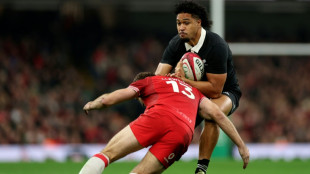 Fainga'anuku named as loose forward for All Blacks northern tour

Gulf countries on Friday unanimously condemned Israel's strikes on Iran, fearing an escalation that could threaten economic interests and security.
"Gulf states are very much caught between a rock and a hard place," Sanam Vakil, director of the Chatham House think-tank's Middle East and North Africa Programme told AFP.
While "they are quietly applauding the further weakening of Iran they face real risks and have to play their cards carefully", she said.
Their close ties to Israel's protector Washington, which maintains military bases in the region, and their proximity to Iran -- and its missiles -- pose risks.
Vakil said that "Saudi diplomats are distancing themselves from Israel and condemning the strikes as a means to stay out of this conflict".
The unfolding situation is playing out against a recent diplomatic rapprochement Riyadh has been building with Tehran ever since China in 2023 brokered an agreement aiming to restore ties.
"This is a notable difference with the situation that prevailed in the region 10 years ago, when Saudi Arabia was sort of inciting the United States to strike Iran, calling it the 'head of the snake'," said Karim Bitar, a lecturer in Middle Eastern studies at Paris's Sciences Po university.
Indeed, as Tehran reeled from Israel's attacks and planned retaliation, Saudi Arabian Foreign Minister Faisal bin Farhan called his Iranian counterpart and "stressed the importance of dialogue to address disputes".
- Stability at risk -
"Gulf countries realise that this Israeli attack will jeopardise their economic interests as well as the entire stability" of the region, Bitar said.
That is a major preoccupation of Saudi Crown Prince Mohammed bin Salman, who has been focusing on economic growth, giga-projects at home and diversification away from oil.
During Donald Trump's first US presidency, Saudi Arabia and the United Arab Emirates had pushed for a stronger stance against Iran.
Gulf countries supported Trump's decision to pull the United States out of the 2015 Iran nuclear deal.
But Gulf sentiment began to change after the United States failed to provide significant backing following attacks blamed on Tehran, analysts said.
A 2019 attack -- claimed by Yemen's Huthis but blamed by Riyadh and Washington on Tehran -- hit Saudi Arabia's Abqaiq processing plant and Khurais oil field, temporarily halving the kingdom's crude output. Tehran denied involvement.
The UAE too has been targeted by attacks from the Huthis that hit Abu Dhabi in 2022.
Seeking to avert attacks by Iran and its proxies, especially as they host US bases that could become targets in the wake of a broader conflict, Gulf monarchies have pursued a detente.
"The greatest concern in the Gulf now will be to what extent the United States will have to rely on their bases to assist in the defence of Israel," said Middle East analyst Andreas Krieg.
- US 'red line' -
While Trump's administration has distanced itself from Israel's operation, it has warned Iran not to hit US targets in the Middle East.
"It has... drawn a firm red line, warning that any attacks on US personnel or military installations will provoke a response," Vakil said.
She added, however, that "for now, Iran is unlikely to target Gulf infrastructure or assets".
The leaders of Saudi Arabia, the UAE and Qatar last month had urged Trump, as he visited the region, to not order US strikes on Iran's nuclear facilities and to pursue a deal instead, according to the US news outlet Axios.
"The Gulf states had hoped that Trump would show strong leadership and would contain (Israeli Prime Minister Benjamin) Netanyahu’s neo-conservative tendencies to escalate," said Krieg.
Negotiations on Iran's nuclear programme had been going on between Washington and Tehran, although with little headway.
Oman had been readying to host a sixth round of talks on Sunday, before Israel's attack threw that into doubt.
For Bitar, the Israeli strikes seemed to be trying to "torpedo" the US-Iran talks.
"What will be the US reaction? Will they maintain their blind and unconditional support for Israel, or will they try to go back to the negotiating table and reach a new deal?" he asked.
Y.Baker--AT