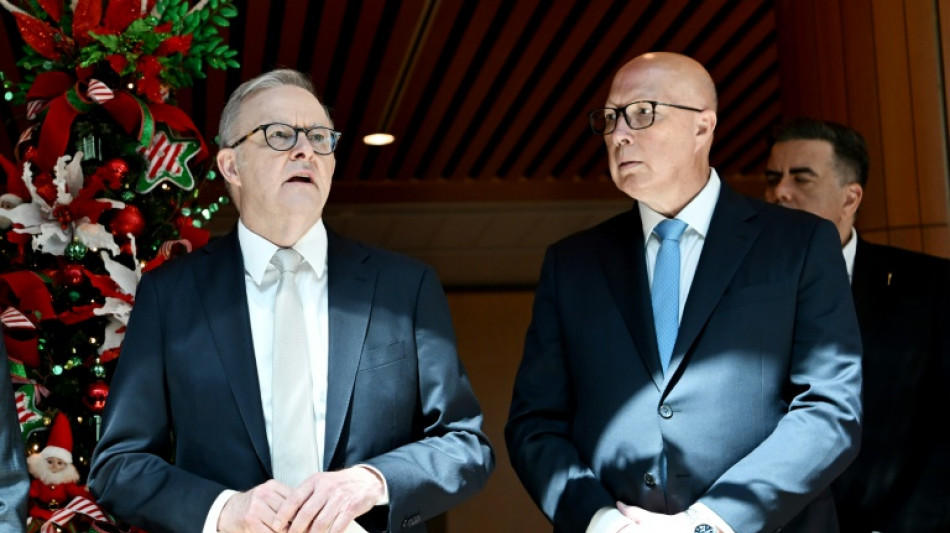
Five things to know about the Australian election / Photo: TRACEY NEARMY - AFP

 Beyonce declared a billionaire by Forbes magazine
 El Kaabi brace helps Morocco reach AFCON last 16 as group winners
 Meat-loving Argentines shun beef as inflation bites
 Nancy promises no let-up even if Celtic go top of Premiership
 George Clooney, his wife Amal and children become French
 World stocks sluggish as precious metals drop
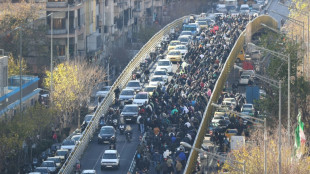 Tehran shopkeepers shut stores over economic conditions
 Maresca says Chelsea must 'understand why' they keep squandering leads
 New year, new mayor for New York City
 Man Utd boss Amorim says now is the time to change formation
 Brigitte Bardot to be buried in Saint-Tropez cemetery

 Uganda, Tanzania measure progress to be made before hosting 2027 AFCON
 US offered Kyiv 15 years of security guarantees, Zelensky says
 India's navy sails back to the future with historic voyage
 Myanmar pro-military party claims huge lead in junta-run poll
 Emirates mining company challenges Guinea licence withdrawal
 Thai army accuses Cambodia of violating truce with over 250 drones
 ICC rates MCG pitch 'unsatisfactory' after two-day Test
 Myanmar pro-military party official says 'winning' junta-run poll
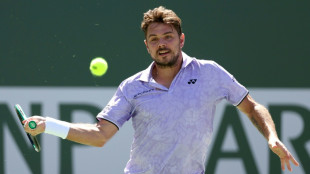 Wawrinka 'at peace' with retirement but no plans to go quietly
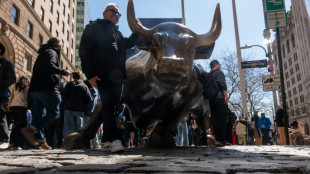
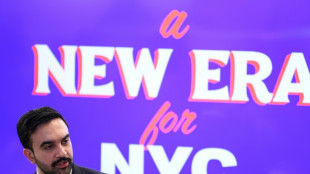 New year brings new mayor for New York City
 NBA-best Thunder end skid while Kawhi hits career-high 55
 Steelers, Panthers lose to set up NFL showdowns for playoff berths
 Bondi victims' families demand national probe into antisemitism
 Australia coach McDonald backs under-fire MCG curator

Australians are voting in a general election Saturday, a hard-fought contest between party leaders with sharply contrasting visions for the country.
Here are five things you need to know about the poll Down Under.
- Blue collar boys -
The election pits left-leaning incumbent Prime Minister Anthony Albanese against staunchly conservative rival Peter Dutton.
Both have blue-collar backgrounds -- setting them apart from former leaders more typically equipped with Oxbridge degrees and high-flying careers in banking or law.
Albanese, 62, was raised by a single mother in a small government-subsidised flat in Sydney's inner city.
He spent his teenage years caring for his mum Maryanne as she battled the onset of debilitating rheumatoid arthritis.
Dutton, 54, is a bricklayer's son, raised in the suburbs of Brisbane in eastern Australia.
He joined the state police after dropping out of university, and briefly worked at a butcher's shop.
Dutton was a drugs squad detective before running for parliament -- an experience he says has coloured his hard-nosed approach to law and order.
- Going nuclear -
Despite sitting on some of the world's largest uranium deposits, Australia has had an almost complete ban on nuclear energy since 1998.
Dutton wants to reverse this ban and build a nuclear power industry from scratch.
Sceptical of renewables, Dutton has said nuclear power is the only reliable way Australia can reduce emissions over the long term.
Albanese, by contrast, has poured public money into solar power, wind turbines and green manufacturing -- pledging to make the nation a renewable energy superpower.
- Trump card -
US President Donald Trump's decision to slap tariffs on Australia may have helped centre-left Albanese to inch ahead in the latest opinion polls.
Some polls showed Dutton leaking support because of Trump, who he praised earlier this year as a "big thinker" with "gravitas" on the global stage.
Both Dutton and Albanese have since taken a tougher stance.
"If I needed to have a fight with Donald Trump, or any other world leader, to advance our nation's interest, I'd do it in a heartbeat," Dutton said in April.
Albanese has condemned Trump's tariffs as an act of "economic self-harm" and "not the act of a friend".
"He has different views, different values," the prime minister said in a televised debate.
"I support free and fair trade. He doesn't."
- Independents day -
Australian politics has long been dominated by Albanese's left-leaning Labor Party and Dutton's Liberal Party on the right of the spectrum.
But growing disenchantment among voters has emboldened independents pushing for greater transparency and climate progress.
Labor had a slight lead in the polls heading into the election.
But if the vote is close, 10 or more unaligned crossbenchers could hold the balance of power when the dust settles -- forcing the formation of a rare minority government.
- Vote, or else -
Australia has enforced compulsory voting since 1924, with turnout never dipping below 90 percent since then.
Registered voters who do not cast their ballot are slapped with an "administrative penalty" of around Aus$20 (US$13).
Voters are also enticed by sizzling snags (sausages) on offer at more than 1,000 polling sites to support local causes. They can be tracked at democracysausage.org.
There are 18.1 million voters aged 18 and up -- and more than a third of them voted before election day.
Polls are open from 8:00 am to 6:00 pm local time.
Voters choose all 150 seats in parliament's lower chamber, the House of Representatives. The term is three years.
In the outgoing parliament, Labor held 77 seats and the opposition ruling Liberal-National coalition 54.
Also up for election are 40 of the 76 seats in the upper chamber, the Senate. The term is six years.
For the House, voters rank candidates in order of preference. If no one gets a majority, votes for the least-popular candidates are redistributed until someone gets more than 50 percent.
For the Senate, a proportional representation system aims to give each party the number of seats that reflects their share of the vote.
G.P.Martin--AT