EU lists seven 'safe' countries of origin, tightening asylum rules / Photo: Nicolas TUCAT - AFP

 South Korea baseball league cancels two games over heatwave

 US drops Reflecting Pool case, admits damage due to botched renovation
 Russian attacks on Kyiv kill 9, wound more than two dozen
 Injured Australian swim star O'Callaghan pulls out of PanPacs

 California lifeguards wiped out from extreme weather

 FIFA scraps private investment plan after backlash: Infantino

 South Africa's WAFCON hopes hang in the balance after dramatic draw

 Hunter Bell cruises to Commonwealth gold, Pathirage stuns javelin stars

 Amazon surges as US stocks shrug off bond yield worries

 Google rolls back new satellite image AI tool after backlash

 Ryu leads in bid for third straight major at women's British Open

 Fire-hit France region 'coming up for air' as main blaze calms

 Wembanyama to get signature shoe in Nike contract extension: reports
 Oil giants report blowout profits on war, warn high gas prices could persist
 Google launches new satellite image AI tool, alarming researchers

 Eddie Howe resigns as Newcastle boss to 'recharge'

 High winds hamper firefighting efforts in western Turkey

 Howe resigns as Newcastle boss

 Full-scale tour will benefit All Blacks, says coach Rennie

 US Fed dissenters call for rate hikes over sustained inflation

 Trump and far-right seize on Spanish migration crisis

 Hamas agrees to disarm under Trump plan
 French, Italian winegrowers face earliest ever harvest

 Alarm over climate-linked low level of German waterways

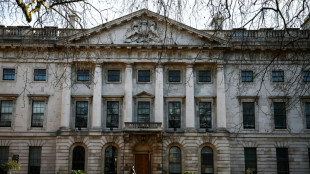 UK court rejects challenge against new Chinese embassy in London

The European Union on Wednesday published a list of seven countries it considers "safe", in a bid to speed up migrant returns by making it harder for citizens of those nations to claim asylum in the bloc.
The list -- which includes Kosovo, Bangladesh, Colombia, Egypt, India, Morocco and Tunisia -- would need to be approved by the bloc's parliament and members before entering force.
The move, criticised by rights groups, is set to allow EU governments to process asylum applications filed from citizens of those countries more quickly -- by introducing a presumption that such claims lack merit.
"Many member states are facing a significant backlog of asylum applications, so anything we can do now to support faster asylum decisions is essential," said Magnus Brunner, the EU's commissioner for migration.
Brussels has been under pressure to clamp down on irregular arrivals and facilitate deportations, following a souring of public opinion on migration that has fuelled hard-right electoral gains in several countries.
The commission said EU candidate nations would also in principle meet the criteria to be designated as safe countries.
But it also laid out exceptions, including when they are hit by a conflict -- something that would for example exclude Ukraine.
The EU had already presented a similar list in 2015 but the plan was abandoned due to heated debates over whether or not to include Turkey, another candidate for membership.
The list published Wednesday can be expanded or reviewed over time and was drawn up looking at nations from which a significant number of applicants currently come, the commission said.
Several member states already designate countries they deem "safe" with regard to asylum -- France's list for instance includes Mongolia, Serbia and Cape Verde.
The EU effort aims to harmonise rules and ensure that all members have the same baseline.
States can individually add countries to the EU list, but not subtract from it.
Asylum cases will still have to be examined individually, ensuring that existing safeguards remain in place and asylum-seekers are not rejected outright, the commission added.
- 'Hollowing out refugee rights' -
The plan has to be approved by the European Parliament and member states before it can enter into force.
But it has already come under fire from civil society groups, with some lamenting the inclusion of countries with a patchy human rights record like Tunisia and Egypt.
"Anyone who applies for protection in the EU should have their individual claim assessed fully and on its own merits -- regardless of where they are fleeing from," said Meron Ameha Knikman of the International Rescue Committee.
She described the proposal as "part of a broader trend towards deterrence and hollowing out refugee rights".
The European Commission noted that Tunisia has detained political figures, lawyers, judges and journalists, while in Egypt rights and opposition activist may face arbitrary arrest and torture.
But the population as a whole did not "face persecution or real risk of serious harm".
"This is a flagrant violation of a fundamental human right, the right to asylum, as an individual right," the Tunisian Forum for Economic and Social Rights, an NGO, told AFP decrying the EU plan.
Irregular border crossings detected into the European Union were down 38 percent to 239,000 last year after an almost 10-year peak in 2023, according to EU border agency Frontex.
But led by hawks including Italy, Denmark and the Netherlands, EU leaders called in October for urgent new legislation to increase and speed up returns and for the commission to assess "innovative" ways to counter irregular migration.
Currently fewer than 20 percent of people ordered to leave the bloc are returned to their country of origin, according to EU data.
Last month the commission unveiled a planned reform of the 27-nation bloc's return system, which opened the way for member states to set up migrant return centres outside the EU.
Italy's Interior Minister Matteo Piantedosi Wednesday hailed the EU's latest move as "a success for the Italian government".
D.Lopez--AT