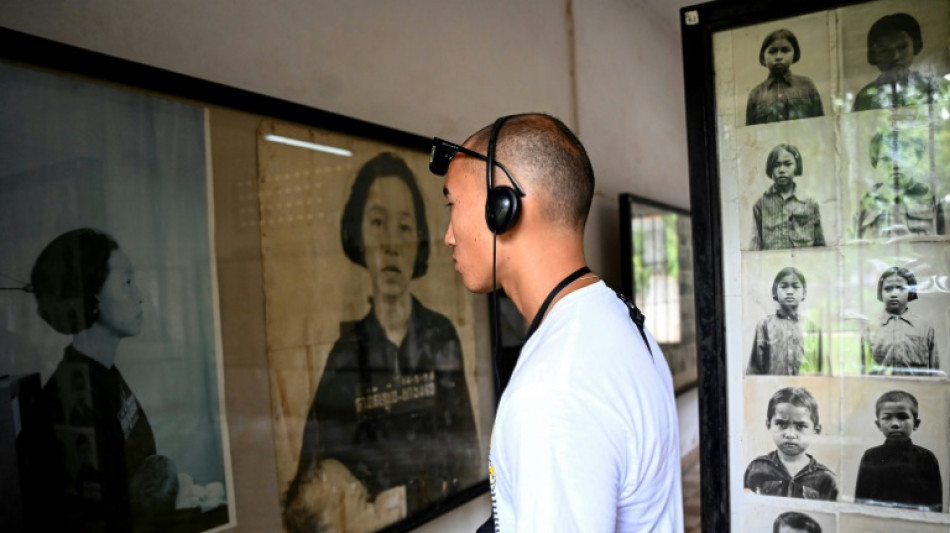
Cambodia genocide denial law open to abuse, say critics / Photo: TANG CHHIN Sothy - AFP

 Search resumes for missing climbers from Pakistan avalanche
 Warsaw and Kyiv exhume Volyn victims at centre of diplomatic quarrel
 India PM Modi says he forgives protesters who abused him

 Veteran Wallabies playmaker Quade Cooper eyes World Cup comeback

 FIFA scraps private investment plan after backlash

 US plans steep water cuts for southwest amid Colorado River crisis

 Nakashima ousts top seed de Minaur, Osaka advances at Washington

 Nakashima ousts top seed de Minaur and Osaka advances at Washington

 Nakashima ousts defending champion de Minaur to reach Washington semis
 Magaia salvages last-gasp WAFCON draw for South Africa

 Forever chemicals and pesticides under Trump: what to know
 US announces steep water cuts for three states amid Colorado River crisis

 EU grapples with migrant crisis in Spain's N. Africa enclave

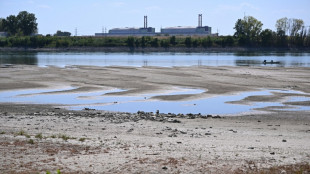 Hungary to shut nuclear plant as heatwave hits central Europe
 Strengthening El Nino 'adding fuel to a planet already on fire': UN chief

 Tech-fuelled rally fizzles as oil prices rise
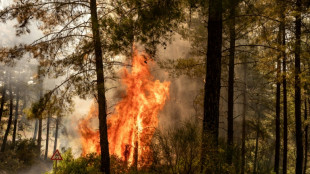
 Chelsea's Mudryk cleared to play after doping ban appeal

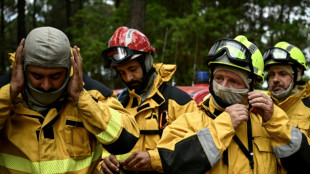 A side of oysters for France's flat-out firefighters

 England cricket chief Key refuses to rule out Stokes return
 New blazes in Greece as strong winds hamper firefighting
 Springboks star Feinberg-Mngomezulu back for Argentina Test
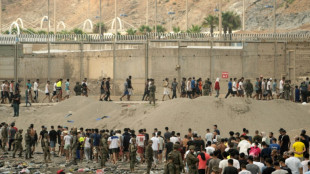 Shops closed, businesses quiet as Spain's Ceuta faces migrant surge
 Chelsea fined £10mn, handed suspended transfer ban for breaching agent rules
 Residents defend Spain’s ancient 'El Abuelo' tree from flames
 Forever chemicals and pesticides: what to know

Survivors of the Khmer Rouge's genocidal regime welcome a beefed-up Cambodian law that forbids denying the movement's atrocities, but rights advocates and academics warn it could also stifle legitimate dissent.
Enacted last month ahead of this week's 50th anniversary of the Khmer Rouge seizing the capital Phnom Penh, the law threatens hefty jail sentences and fines for anyone who denies the genocide that killed around two million people between 1975 and 1979.
The atrocities committed by the Khmer Rouge are widely accepted by Cambodians save a dwindling group of ageing former cadres and soldiers who live mostly in the remote northwest.
The hardline Maoist group led by "Brother Number One" Pol Pot reset the calendar to "Year Zero" on April 17, 1975 and emptied cities in a bid to create a pure agrarian society free of class, politics or capital.
About a quarter of the population died -- of disease, starvation, overwork or by execution -- in the disastrous social engineering experiment memorably chronicled by the 1984 Oscar-winning movie "The Killing Fields".
Some activists, however, say former prime minister Hun Sen is using the law to burnish his legacy and stifle any opposition to his son and successor, Hun Manet.
The government is trying to "reinforce state narratives rather than to genuinely encourage historical accountability", said Sophal Ear, associate professor at Arizona State University.
"In practice, it could be another tool to silence dissent," he said.
Political analyst Ou Virak called the law a "mistake", adding: "A population that is afraid to discuss will be even more afraid to ask questions."
- 'I am the peacemaker' -
Now 72, Hun Sen was a commander under Pol Pot before he fled to Vietnam in 1977, joining other Cambodian defectors to lead the Vietnamese army's assault that drove the Khmer Rouge out of Phnom Penh.
In the more than 30 years Hun Sen ruled Cambodia he stifled dissent, critics say, equating opposition to his leadership as support for those he replaced.
"Hun Sen wants to impose his vision of things, saying: 'I am the peacemaker'," said Adriana Escobar Rodriguez of the French National Centre for Scientific Research.
One form of genocide denial tended to downplay Vietnam's role in ousting the Khmer Rouge, she said, but another stemmed from the fact that some "people still can't believe that Khmers could have killed other Khmers" -- referring to Cambodia's majority ethnic group.
Hun Sen has defended the stricter law, comparing it to similar legislation against Holocaust denial in Europe.
The 2013 law it replaced stemmed from a case involving one of Hun Sen's main opponents that took place just before national elections.
Kem Sokha was accused of describing notorious Khmer Rouge prison S-21 -- where an estimated 15,000 people were tortured to death -- as a Vietnamese fabrication.
He has spent lengthy periods in prison on various charges since, and is currently under house arrest on treason charges and banned from politics.
Chum Mey, one of a small handful of people who emerged alive from S-21, sells books describing his experiences outside the former prison, which was turned into the Tuol Sleng Genocide Museum.
He says it would be stupid for anyone to deny the Khmer Rouge's atrocities.
"There is evidence," the 94-year-old said.
"They killed my four children and my wife."
S.Jackson--AT