
Hungarian lawmakers back curbs on LGBTQ people, dual nationals / Photo: Peter Kohalmi - AFP

 Search resumes for missing climbers from Pakistan avalanche

 Warsaw and Kyiv exhume Volyn victims at centre of diplomatic quarrel

 India PM Modi says he forgives protesters who abused him

 Veteran Wallabies playmaker Quade Cooper eyes World Cup comeback

 FIFA scraps private investment plan after backlash

 US plans steep water cuts for southwest amid Colorado River crisis

 Nakashima ousts top seed de Minaur, Osaka advances at Washington

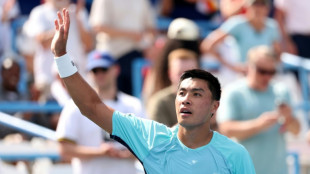 Nakashima ousts top seed de Minaur and Osaka advances at Washington

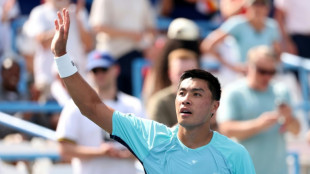 Nakashima ousts defending champion de Minaur to reach Washington semis

 Magaia salvages last-gasp WAFCON draw for South Africa

 Forever chemicals and pesticides under Trump: what to know

 US announces steep water cuts for three states amid Colorado River crisis

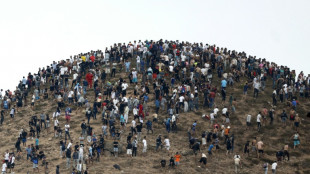 EU grapples with migrant crisis in Spain's N. Africa enclave

 Hungary to shut nuclear plant as heatwave hits central Europe

 Strengthening El Nino 'adding fuel to a planet already on fire': UN chief

 Tech-fuelled rally fizzles as oil prices rise

 Chelsea's Mudryk cleared to play after doping ban appeal

 A side of oysters for France's flat-out firefighters

 England cricket chief Key refuses to rule out Stokes return

 New blazes in Greece as strong winds hamper firefighting

 Springboks star Feinberg-Mngomezulu back for Argentina Test

 Shops closed, businesses quiet as Spain's Ceuta faces migrant surge

 Chelsea fined £10mn, handed suspended transfer ban for breaching agent rules

 Residents defend Spain’s ancient 'El Abuelo' tree from flames
 Forever chemicals and pesticides: what to know

Hungarian lawmakers on Monday overwhelmingly backed constitutional changes targeting the country's LGBTQ community and dual nationals, the latest step to strengthen longtime nationalist Prime Minister Viktor Orban's self-styled "illiberal" brand of democracy.
Since his return to power in 2010, Hungary's leader has widely restricted the rights of the LGBTQ community, the media, courts and academia. In mid-March, he vowed to undertake an "Easter cleanup" against his domestic opponents he has called "stink bugs".
The constitutional amendment -- which proclaims that people can only be male or female -- echoes moves on gender by Orban's ally US President Donald Trump.
It also allows the "temporary" stripping of citizenship from some dual or multiple nationals, which could target Hungarian-American billionaire George Soros, a regular fixture of populist conspiracy theories.
Ahead of the vote on the amendment -- which passed parliament with 140 votes in favour to 21 against -- a few dozen protesters temporarily blocked an entrance to parliament before police hauled them off.
"When we chained ourselves up during the constitution's first overhaul in 2011, we never thought that 14 years later, we would have to do the same thing," said opposition lawmaker Timea Szabo.
Opposition politicians from the liberal Momentum unfurled a banner that read "You can ban us, but not the truth" in parliament, while protesters outside the building chanted "We will not allow ourselves to be transformed into Putin's Russia".
- Raft of changes -
Besides the provision proclaiming that people can only be male or female, another declares that children's rights for their "proper physical, mental and moral development take precedence over all other fundamental rights", except the right to life.
That provision is seen as a way to strengthen the legal foundations for the prohibition of the Pride march.
Another prominent provision empowers the government to temporarily strip Hungarian citizenship from dual or multiple nationals -- even if they acquired their nationalities by birth.
The governing party suggested the move is aimed at "speculators" financing "bogus NGOs, bought politicians and the so-called independent media" from abroad.
A related piece of legislation -- to be voted on at a later date -- specifies that Hungarian citizenship can be suspended for a maximum of 10 years and those affected can be expelled from the country.
Nationals from other EU member states would be exempt, together with a few other countries in Europe, according to the proposal.
Last week, more than 30 prominent Hungarian legal experts castigated the measure as "an unprecedented construction in international law" that could be contrary to binding human rights conventions.
- 'Soft Putinism' -
Critics say the proposed legal changes further erode democratic rights in the central European country, moving the EU member state even closer to the kind of authoritarianism seen under Russia's President Vladimir Putin.
"You could consider this soft Putinism," Szabolcs Pek, chief analyst at the think tank Iranytu Intezet, told AFP.
"People are not falling out of the window, but the government is increasingly limiting the space for opposition politicians, journalists and civil society," he said.
Politically, the measures are seen as an effort to shore up dwindling support for the ruling coalition, divide the opposition along ideological lines, and court the far right ahead of next spring's parliamentary election.
Orban's legislative "boisterousness" is a bid to take back control of the public agenda, according to Pek.
"In this respect, he has been successful, because public discourse is no longer about the failing public services or the weak economy," Pek said.
Since last year, Orban has faced an unprecedented challenge from former government insider-turned-opposition leader Peter Magyar, with his TISZA party eroding Fidesz's longtime solid lead, according to several opinion polls.
Pek stressed the Pride ban is a "trap" for Magyar: standing up for LGBTQ rights could lose him conservative supporters, but his current silence might drive left-wing and liberal voters to other opposition parties.
R.Lee--AT