In skies, as on land, European forces face gaps if US pulls back / Photo: JOHN THYS - AFP

 Injured Australian swim star O'Callaghan pulls out of PanPacs
 California lifeguards wiped out from extreme weather

 FIFA scraps private investment plan after backlash: Infantino
 South Africa's WAFCON hopes hang in the balance after dramatic draw

 Hunter Bell cruises to Commonwealth gold, Pathirage stuns javelin stars

 Amazon surges as US stocks shrug off bond yield worries

 Google rolls back new satellite image AI tool after backlash

 Ryu leads in bid for third straight major at women's British Open

 Fire-hit France region 'coming up for air' as main blaze calms
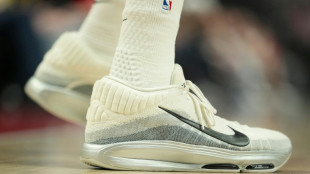 Wembanyama to get signature shoe in Nike contract extension: reports
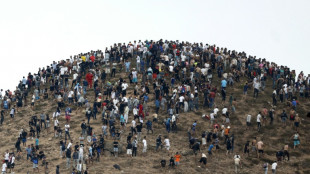
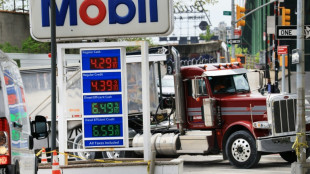 Oil giants report blowout profits on war, warn high gas prices could persist

 Google launches new satellite image AI tool, alarming researchers

 Eddie Howe resigns as Newcastle boss to 'recharge'
 High winds hamper firefighting efforts in western Turkey

 Howe resigns as Newcastle boss
 Full-scale tour will benefit All Blacks, says coach Rennie

 US Fed dissenters call for rate hikes over sustained inflation
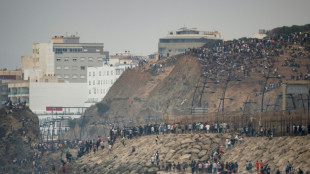 Trump and far-right seize on Spanish migration crisis

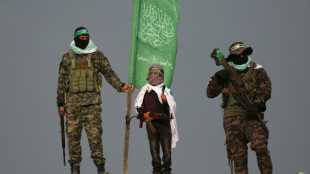 Hamas agrees to disarm under Trump plan
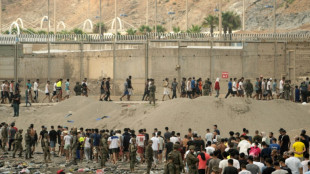
 French, Italian winegrowers face earliest ever harvest

 Alarm over climate-linked low level of German waterways

 UK court rejects challenge against new Chinese embassy in London

 New York sues online prediction markets giant Kalshi

 Commerzbank agrees to talks with UniCredit after two-year standoff
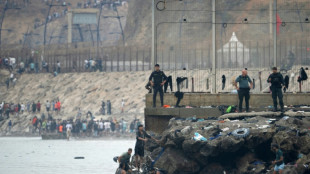
 A rumour, a rush: chaos at Morocco border with Spain's Ceuta
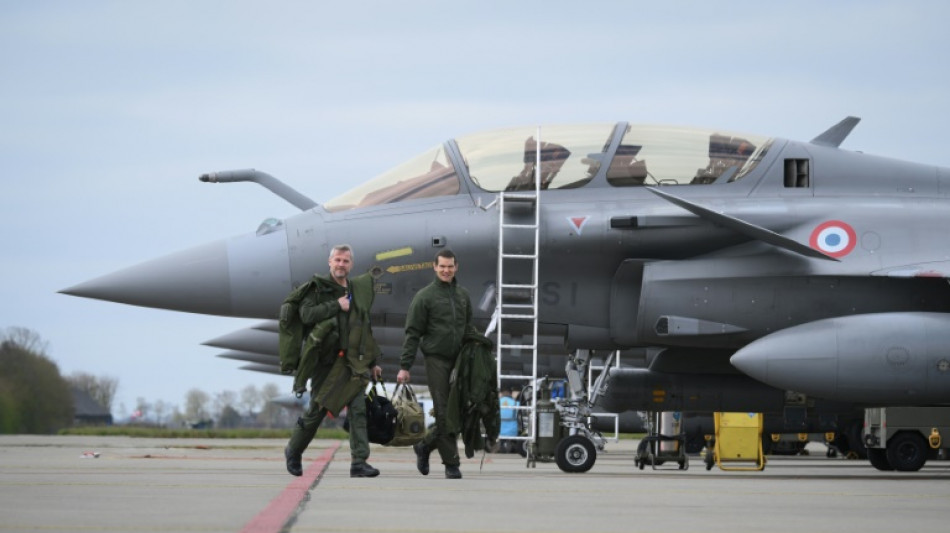
Fighter jets from the United States, France, Finland and Germany roar into the skies from a Dutch base as part of NATO's biggest air exercise this year.
The aim: to practice stopping -- and then defeating -- an enemy attack against the alliance as Russia's war in Ukraine fuels fears in Europe.
But while NATO focuses on the menace from the east, another potential threat is looming from within the alliance.
Since returning to office, US President Donald Trump has sowed doubt over Washington's commitment to underpinning European security and his administration has warned it could move forces away from the continent to deal with challenges elsewhere like China.
For now, NATO commanders insist nothing has changed -- showcased by the latest drills.
"We recently elected a new president, and we're still trying to figure out the exact policies that they're going to be coming out with," General James Hecker, the top US and NATO air commander in Europe, told reporters during the exercises.
"I think you're going to see us hand in hand with the Europeans for quite some time."
But if Trump does decide to withdraw US forces, there are fears that could leave European militaries struggling to plug gaps in key areas as they race to face off against an emboldened Moscow.
While attention often centres on the roughly 100,000 US troops currently stationed on the continent, above them in the skies, commanders and experts point to multiple areas where Europe could struggle without Washington.
Those include air defences, spy planes and satellites, electronic systems that can jam radar, tankers to refuel jets mid-flight and hulking aircraft used to transport troops.
"Hypothetically, if the environment over Taiwan deteriorates, the US is going to look to move key assets" from Europe, said Douglas Barrie from the International Institute for Strategic Studies.
- 'Best equipment' -
European nations have hiked defence spending since Russia's 2022 full-scale invasion of Ukraine and are set to go even further, under pressure from Trump.
But while purchases of the latest US F-35 fighter jets have risen in recent years -- acquiring systems in which Europe lags will be costly and time-consuming.
"It would take three to five years for some systems, five to 10 years for others, depending on where you wanted to spend your money," Barrie said.
Not to mention assets such as satellite systems and strategic nuclear bombers that would take decades to replace -- if they can ever really be substituted.
Doubts over Trump's reliability have also fuelled questions about whether Europe should keep buying equipment from the United States.
Worries he could hobble F-35s by refusing software updates or spare parts have led several countries to reconsider purchases -- and prompted renewed calls from the likes of France to cut reliance on Washington.
"This is a real opportunity for Europe to question its own model and possibly its own dependencies," said French air force general Laurent Rataud.
But while equivalents for much of the equipment do exist in Europe, production times are often long and the continent doesn't yet produce a fifth-generation stealth jet like the F-35.
"It's of the utmost importance that my women and men have the best equipment," said Dutch air force chief Andre Steur.
"For me it's less relevant where that kit is built."
- 'No match' -
Despite gaps in their inventories, NATO's European members insist they'd be able to handle a fight for the skies against Russia -- even without the United States.
"We actually have some pretty strong air forces," Lieutenant Colonel Martin Friis, a Danish officer at NATO's air command, told AFP.
"Some of them maybe have gotten smaller, but the technology, the weapons and the training is, compared to what we see from at least one potential opponent -- they're no match."
During the Cold War, the NATO alliance believed it would have air dominance over the Soviet Union thanks to its technological superiority.
As the threat receded after the fall of Communism, air forces often downsized and readapted to new missions in places like Afghanistan, where their opponents lacked firepower.
NATO has closely watched how Moscow failed to gain air superiority in Ukraine against Kyiv's much smaller force, and learnt its lessons.
Commodore Marcel van Egmond, head of the Dutch air combat command, said he is confident that European countries would have the upper hand over Russia -- at least in the early days of any conflict.
"But we need help for the longer fight, maybe from the US," he told AFP.
"The long-term sustainment, in terms of capacity that we have, might be a challenge."
T.Perez--AT