
'Malignant stupidity', 'weak': Economists on Trump's tariffs / Photo: TIMOTHY A. CLARY - AFP

 Two dead in rock spire collapse at Turkey's touristic Cappadocia
 No surprise to Carrick he's still Man Utd manager

 Two dead in rock spire collapse at tourist site in Turkey's Cappadocia

 ECB holds rates steady after Lagarde says to quit early
 US economy posts strong growth, inflation stubbornly high in challenge to Trump
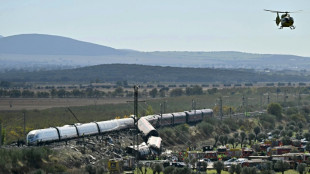 What we know about Spain's deadly train crash

 ECB chief Lagarde to step down early, triggering succession race

 'Horrific' Russian drone strike kills 14 at Ukraine train station: Kyiv

 VW says 'no time to lose' to slash costs after 5.8 billion euro loss

 Australia lead by 100 after Inglis century
 Martin to ride with broken wrist in Malaysian MotoGP practice

 England forward Toney to stand trial for alleged assault in June 2028

 Warrican's five-wicket haul leads West Indies fightback in Bangladesh Test

 Oil majors reap bumper profits as Mideast war drives prices

 Christine Lagarde: unifying ECB chief in turbulent times
 Rybakina secures year-end top rank with Tokyo win
 Rains bring relief to Indonesian city weary of fire haze

 Osaka vows to return stronger after Tokyo exit

 Hello Kitty firm apologises, scraps Japan TV tie-up after China anger

 Taiwan says Pakistan briefly closed airspace to Taiwanese flights

 'My blood was spilled here': a year on, Tanzania unable to mourn election violence

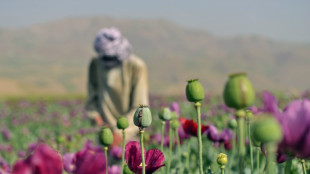 Afghanistan opium poppy cultivation surges despite Taliban govt ban: UN

 No World Series miracle for weary Rays
 Miami Heat earn first win of NBA season with Antetokounmpo

 Brewers beat Rays 4-1 to capture first World Series title

A wide range of economists are voicing alarm over US President Donald Trump's tariffs blitz, which has sparked a trade war that experts say could lead to a global recession.
Here are comments from some leading economists:
- 'Spectacle of failed policies' -
Li Daokui, one of China's most influential economists, told AFP that Trump's tariffs mainly aim to "squeeze other countries" for concessions.
"It is hard to imagine that there is any other economic policy that can make people around the world, including people in the United States itself, suffer losses at the same time.
"This is simply a 'spectacle' of failed economic policies," Li said.
"Both the US government and the US economy will suffer huge losses," said Li, an economics professor at Tsinghua University and former member of China's main political advisory body.
He said the Chinese government has fully prepared for tariffs -- Beijing has readied countermeasures and stepped up efforts to stimulate domestic consumption.
While Trump's trade policy signifies the end of US leadership in globalisation, it gives Beijing opportunities to negotiate free trade agreements with other countries and play a key role in any effort to establish a new system that would replace the World Trade Organization, Li said.
"China has the economic foundation to lead globalisation."
- 'Failure of Reaganism' -
For Thomas Piketty, French author of the best-selling "Capital in the Twenty-First Century", "Trumpism is first of all a reaction to the failure of Reaganism" -- the liberalisation of President Ronald Reagan in the 1980s.
"Republicans realise that economic liberalism and globalisation have not benefitted the middle class as they said they would," the left-leaning economist told AFP.
"So now they're using the rest of the world as a scapegoat," he said.
"But it's not going to work. The Trump cocktail is simply going to generate more inflation and more inequalities."
In response, "Europe needs to define its own priorities and prepare for the global recession that's coming" with a massive investment plan in "energy and transport infrastructure, education, research and health".
- 'Malignant stupidity' -
Paul Krugman, the Nobel economics prize laureate, said the United States was essentially the founder of the modern trade system that had led to lower tariffs over the past decades.
"Donald Trump burned it all down," Krugman wrote on his popular Substack blog before the president's baseline 10-percent tariffs on imports took effect on Saturday.
"Trump isn't really trying to accomplish economic goals. This should all be seen as a dominance display, intended to shock and awe people and make them grovel," he said.
Krugman accused the US administration of "malignant stupidity" at a time when "the fate of the world economy is on the line".
"How can anyone, whether they’re businesspeople or foreign governments, trust anything coming out of an administration that behaves like this?"
- 'Major problem' for the poor -
For Nasser Saidi, a former economy minister of Lebanon, "a major problem is the impact on the least-developed and emerging countries" from Trump's "seismic shock to the global trade landscape".
"Countries like Egypt, Lebanon or Jordan are going to face disruptions in terms of their trade relations" as well as the prospect of cuts to foreign investments.
"When you have tariffs of this type being set up -- high levels of tariffs with no economic basis -- what you're going to do is severely disrupt supply chains," he added.
"I think we're finished with the era of globalisation and liberalisation", which will lead countries in the Middle East, for example, to reinforce ties with Asian partners.
- 'Big boys will suffer' -
Kako Nubukpo, an economist and former government minister in Togo, warned that Trump's tariffs would hit African nations already suffering from political difficulties.
"Those left behind by globalisation appear more and more numerous. And so we've seen an increase in illiberal regimes, whether that's in Europe, Africa or America," he said.
"(But) protectionism is a weapon of the weak and I think Trump has realised that in the competition with China, the United States is now the weaker one."
In response, "African countries should promote their own national and regional value chains" as buffers against Trump's tariffs.
Bismarck Rewane, CEO of Financial Derivatives Co. in Nigeria, said "big powers" would suffer most from a global recession.
"The small powers, we don't have that much to suffer because we were already bleeding before, so we just stay where we are," he said.
"Africa will suffer but not as much as the big boys."
R.Garcia--AT