
-
 FIFA scraps private investment plan after backlash: Infantino
-
US plans steep water cuts for southwest amid Colorado River crisis
-
 South Africa's WAFCON hopes hang in the balance after dramatic draw
-
Nakashima ousts top seed de Minaur, Osaka advances at Washington
-
 Hunter Bell cruises to Commonwealth gold, Pathirage stuns javelin stars
-
Nakashima ousts top seed de Minaur and Osaka advances at Washington
-
 Amazon surges as US stocks shrug off bond yield worries
-
Nakashima ousts defending champion de Minaur to reach Washington semis
-
 Google rolls back new satellite image AI tool after backlash
-
Magaia salvages last-gasp WAFCON draw for South Africa
-
 Ryu leads in bid for third straight major at women's British Open
-
Forever chemicals and pesticides under Trump: what to know

-
 Fire-hit France region 'coming up for air' as main blaze calms
-
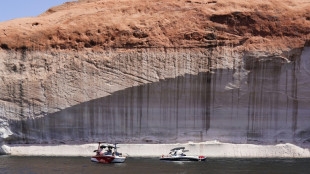
US announces steep water cuts for three states amid Colorado River crisis
-
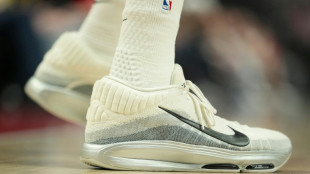 Wembanyama to get signature shoe in Nike contract extension: reports
-
EU grapples with migrant crisis in Spain's N. Africa enclave
-
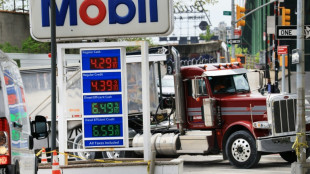 Oil giants report blowout profits on war, warn high gas prices could persist
-
Hungary to shut nuclear plant as heatwave hits central Europe
-
 Google launches new satellite image AI tool, alarming researchers
-
Strengthening El Nino 'adding fuel to a planet already on fire': UN chief
-
 Eddie Howe resigns as Newcastle boss to 'recharge'
-
Tech-fuelled rally fizzles as oil prices rise

-
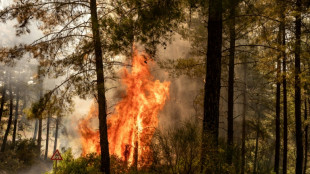 High winds hamper firefighting efforts in western Turkey
-
Chelsea's Mudryk cleared to play after doping ban appeal

-
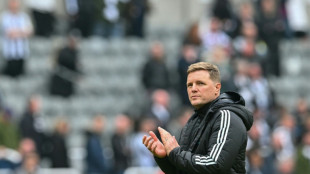 Howe resigns as Newcastle boss
-
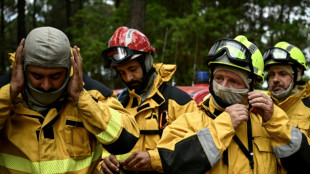
A side of oysters for France's flat-out firefighters
-
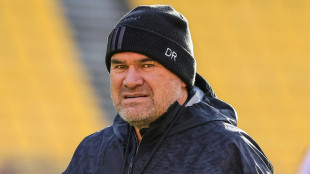 Full-scale tour will benefit All Blacks, says coach Rennie
-
England cricket chief Key refuses to rule out Stokes return
-
 US Fed dissenters call for rate hikes over sustained inflation
-
New blazes in Greece as strong winds hamper firefighting
-
 Trump and far-right seize on Spanish migration crisis
-
Springboks star Feinberg-Mngomezulu back for Argentina Test

-
 Hamas agrees to disarm under Trump plan
-
Shops closed, businesses quiet as Spain's Ceuta faces migrant surge
-
 French, Italian winegrowers face earliest ever harvest
-
Chelsea fined £10mn, handed suspended transfer ban for breaching agent rules
-
 Alarm over climate-linked low level of German waterways
-
Residents defend Spain’s ancient 'El Abuelo' tree from flames
-
 UK court rejects challenge against new Chinese embassy in London
-
Forever chemicals and pesticides: what to know

-
 New York sues online prediction markets giant Kalshi
-
Spaniard Santi Denia takes over as Czech Republic coach

-
 Commerzbank agrees to talks with UniCredit after two-year standoff
-
EU races to contain new migrant crisis as thousands cross into Spain's N. Africa enclave
-
 A rumour, a rush: chaos at Morocco border with Spain's Ceuta
-
Profits surge at US oil giant amid Iran war supply shock
-
 Fornaro Legal Releases Guidance to Help Businesses Maintain Clear Ownership Records During Growth
-
Bodies of four climbers found near Pakistan avalanche site: police
-
 Hamas agrees to disarm: what are the challenges ahead?
-
UK court dismisses challenge against new Chinese embassy in London
Buchenwald camp survivor recounts liberation, 80 years on
Jacques Moalic, a 102-year-old former Agence France-Presse journalist, remembers vividly the liberation of Buchenwald concentration camp by American troops 80 years ago.
In an interview with AFP, where he worked for 40 years after World War II, the Buchenwald survivor spoke of his last months in captivity and the arrival of American troops on April 11, 1945.
He recounted his ordeal once again, speaking ahead of the 80th anniversary of the camp's liberation. Around 56,000 Jews, Roma and Soviet prisoners died there between 1937 and 1945.
In 1943, Moalic, then a young Resistance fighter, was arrested and eventually forced to board a train.
He tried to flee, jumping from the train, but was caught.
In December 1943, he was brought to Buchenwald, which stood on a hill near the German town of Weimar.
He was placed in Block 34. In the hell that was Buchenwald, prisoners pinned their hopes on Allied forces, who landed on the beaches of Normandy on June 6, 1944.
- Transfer to Ohrdruf -
The liberation of Paris in August 1944 boosted their spirits.
"In the camps, people regained their courage," Moalic, former head of general news at AFP, said in his Paris apartment.
"They said to themselves, we will be free by Christmas. I didn't really believe it. I was right."
When the Allied troops had not arrived by the end of the year, many began to lose hope.
In January 1945, Moalic was moved to the Ohrdruf death camp.
"In January, on the 8th I believe, there was an unexpected gathering," he said. "The SS officer passed between the rows noting down the numbers. Eight hundred to 900 of us were to leave for a camp nobody knew about."
He was advised to try to get himself taken off the list if he wanted to live.
"But I was on it, and there was no escaping. We ended up in Ohrdruf."
The prisoners there were forced to dig underground tunnels.
"Guys worked day and night digging into the mountain," Moalic said.
He thought he would die.
"I said to myself: being woken up at four or five in the morning, going home at 10 at night, I'll last a fortnight. For the first time, I thought that maybe I wouldn't come back."
Instead, he was recruited as an electrician. The job saved his life.
"I slept in former Wehrmacht (German military) accommodations," he said. Other prisoners were exposed to temperatures of minus 15 degrees Celsius. Many died.
- Death march -
"Of course, we had known for some time that Russians and the Allies were advancing. But there's a big difference between 'they're advancing' and 'they're here'!" he said.
"One day at roll call, we heard a sound we had never heard before -- artillery, cannon," he said. They realised the Allies were within striking distance.
"We looked at each other and there was an extraordinary silence."
In 1945, Easter fell on April 1. They did not work that day. Then they were told they were being evacuated.
They were ordered to march, in columns of 1,000 people. They did not know their final destination.
They marched through mountainous countryside.
"It drizzled," he said. "We marched like that for three or four days."
Ohrdruf had been worse than Buchenwald, and the prisoners were exhausted.
Anyone who fell along the way was shot.
Many were killed during the death march, said Moalic.
"Some of the guys were already half dead when they started out," he said.
"We arrived at Weimar train station and then we started climbing towards Buchenwald."
It was a trek of around six or seven kilometres, he said.
"There were 72 corpses."
- Liberation -
When the prisoners arrived back at Buchenwald, it was dark.
"There were 3,000 to 4,000 of us on the roll call square," he said.
One man recognised him and took him back to Block 34. "I was covered in lice."
The Americans were getting closer.
"On April 11, there was a lot of excitement in the camp," Moalic said.
The prisoners did not know whether they would be liberated or massacred.
"The SS began to empty the camp, block by block, and each group was sent to Weimar station, where filthy wagons were awaiting."
The remaining prisoners were preparing for a possible fight.
"Then all of a sudden, an American unit arrived," he said.
"The SS did not engage in combat. They preferred to get the hell out of there," he said.
"A few minutes later, we were outside."
When Moalic finally returned to Paris, he was questioned by authorities at the iconic Lutetia hotel, which was turned into a welcome centre for concentration camp survivors.
He looked so haggard women gave up their seats for him in the metro.
"I still remember a pale spring sun," he wrote in an account published in 1985.
"Wednesday April 11, 1945 was a beautiful day for the inmates of Buchenwald concentration camp, the first beautiful day since July 1937, when Heinrich Himmler inaugurated and named it."
M.O.Allen--AT