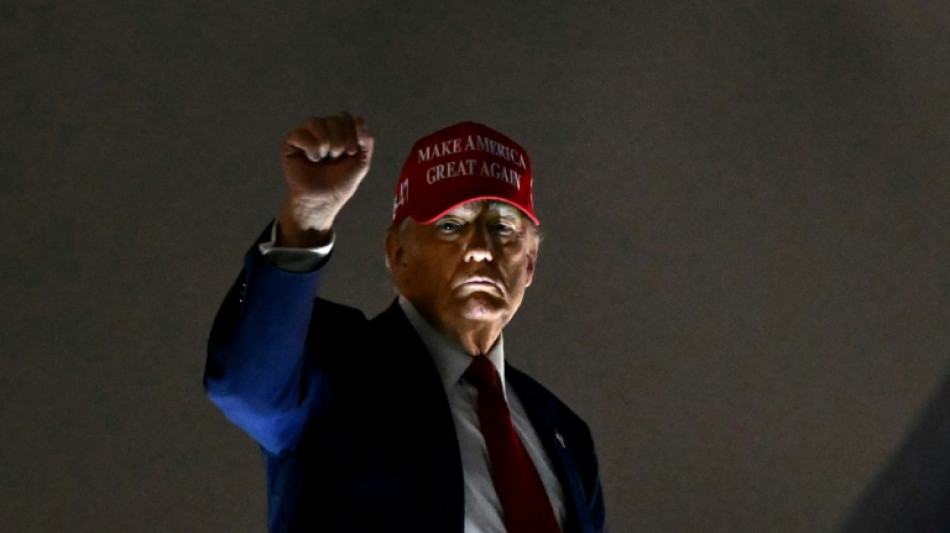
'Hang tough, it won't be easy': Trump defiant on tariffs / Photo: Mandel NGAN - AFP/File

 FIFA scraps private investment plan after backlash: Infantino
 South Africa's WAFCON hopes hang in the balance after dramatic draw
 Hunter Bell cruises to Commonwealth gold, Pathirage stuns javelin stars
 Amazon surges as US stocks shrug off bond yield worries
 Google rolls back new satellite image AI tool after backlash

 Ryu leads in bid for third straight major at women's British Open

 Fire-hit France region 'coming up for air' as main blaze calms
 Wembanyama to get signature shoe in Nike contract extension: reports
 Oil giants report blowout profits on war, warn high gas prices could persist

 Google launches new satellite image AI tool, alarming researchers

 Eddie Howe resigns as Newcastle boss to 'recharge'
 High winds hamper firefighting efforts in western Turkey

 Howe resigns as Newcastle boss

 Full-scale tour will benefit All Blacks, says coach Rennie

 US Fed dissenters call for rate hikes over sustained inflation

 Trump and far-right seize on Spanish migration crisis

 Hamas agrees to disarm under Trump plan
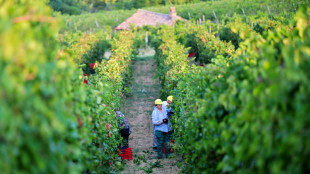 French, Italian winegrowers face earliest ever harvest

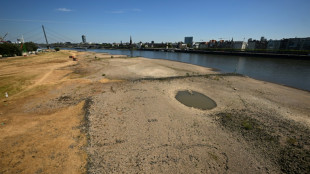 Alarm over climate-linked low level of German waterways

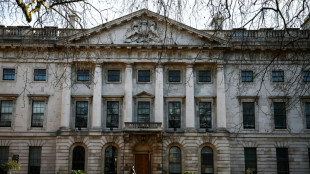 UK court rejects challenge against new Chinese embassy in London

 New York sues online prediction markets giant Kalshi

 Commerzbank agrees to talks with UniCredit after two-year standoff
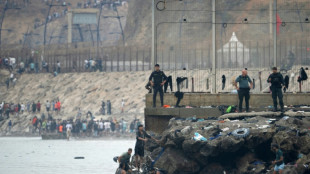
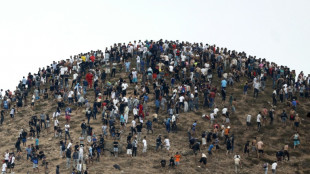 A rumour, a rush: chaos at Morocco border with Spain's Ceuta
 Fornaro Legal Releases Guidance to Help Businesses Maintain Clear Ownership Records During Growth

 Hamas agrees to disarm: what are the challenges ahead?
US President Donald Trump on Saturday doubled down on the sweeping tariffs he unleashed on countries around the world, warning Americans of pain ahead, but promising historic investment and prosperity.
The comments came as Trump's widest-ranging tariffs took effect in a move that could trigger retaliation and escalating trade tensions that could upset the global economy.
"We have been the dumb and helpless 'whipping post,' but not any longer. We are bringing back jobs and businesses like never before," Trump wrote on his Truth Social platform.
"This is an economic revolution, and we will win," he added. "Hang tough, it won't be easy, but the end result will be historic."
A 10 percent "baseline" tariff came into place just after midnight, hitting most US imports except goods from Mexico and Canada as Trump invoked emergency economic powers to address perceived problems with the country's trade deficits.
The trade gaps, said the White House, were driven by an "absence of reciprocity" in relationships and other policies like "exorbitant value-added taxes."
Come April 9, around 60 trading partners -- including the European Union, Japan and China -- are set to face even higher rates tailored to each economy.
Already, Trump's sharp 34-percent tariff on Chinese goods, set to kick in next week, triggered Beijing's announcement of its own 34-percent tariff on US products from April 10.
Beijing also said it would sue the United States at the World Trade Organization (WTO) and restrict the export of rare earth elements used in high-end medical and electronics technology.
"China has been hit much harder than the USA, not even close," Trump said in his post. "They, and many other nations, have treated us unsustainably badly."
But other major trading partners held back as they digested the unfolding international standoff amid fears of a recession.
- Markets collapse -
Wall Street went into free fall Friday, following similar collapses in Asia and Europe.
Economists have also warned that the tariffs could dampen growth and fuel inflation.
Trump's latest tariffs have notable exclusions, however.
They do not stack onto recently imposed 25-percent tariffs hitting imports of steel, aluminum and automobiles.
Also temporarily spared are copper, pharmaceuticals, semiconductors and lumber, alongside "certain critical minerals" and energy products, the White House said.
But Trump has ordered investigations into copper and lumber, which could lead to further duties soon.
He has threatened to hit other industries like pharmaceuticals and semiconductors as well, meaning any reprieve might be limited.
Canada and Mexico are unaffected by the latest move as they already face separate duties of up to 25 percent on goods entering the United States outside a North America trade agreement.
- Retaliation risk -
While Trump's staggered deadlines allow space for countries to negotiate, "if they can't get a reprieve, they are likely to retaliate, as China already has," Oxford Economics warned this week.
EU trade chief Maros Sefcovic said the bloc, which faces a 20-percent tariff, will act in "a calm, carefully phased, unified way" and allow time for talks.
But he said it "won't stand idly by."
France and Germany have said the EU could respond by imposing a tax on US technology companies.
Japan's prime minister called for a "calm-headed" approach after Trump unveiled 24-percent tariffs on Japanese-made goods.
Meanwhile, Trump said he held a "very productive" call with Vietnam's top leader, with imports from the Southeast Asian manufacturing hub facing extraordinary 46-percent US duties.
Since returning to the presidency, Trump has hit imports from Canada and Mexico with tariffs over illegal immigration and fentanyl smuggling, and imposed an additional 20-percent rate on goods from China.
Come April 9, the added levy on Chinese products this year will reach 54 percent.
Trump's 25-percent auto tariffs also took effect this week, and Jeep-owner Stellantis has paused production at some Canadian and Mexican assembly plants.
Trump's new global levies mark "the most sweeping tariff hike since the Smoot-Hawley Tariff Act, the 1930 law best remembered for triggering a global trade war and deepening the Great Depression," said the Center for Strategic and International Studies (CSIS).
Oxford Economics estimates the action will push the average effective US tariff rate to 24 percent, "higher even than those seen in the 1930s."
A.Clark--AT