US soybeans, energy: Who is hit by China's tariff retaliation? / Photo: Johannes EISELE - AFP/File

 FIFA scraps private investment plan after backlash: Infantino

 South Africa's WAFCON hopes hang in the balance after dramatic draw

 Hunter Bell cruises to Commonwealth gold, Pathirage stuns javelin stars

 Amazon surges as US stocks shrug off bond yield worries

 Google rolls back new satellite image AI tool after backlash

 Ryu leads in bid for third straight major at women's British Open

 Fire-hit France region 'coming up for air' as main blaze calms

 Wembanyama to get signature shoe in Nike contract extension: reports
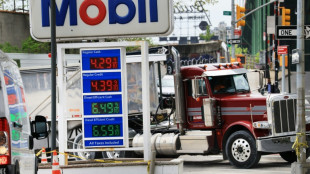
 Oil giants report blowout profits on war, warn high gas prices could persist

 Google launches new satellite image AI tool, alarming researchers

 Eddie Howe resigns as Newcastle boss to 'recharge'

 High winds hamper firefighting efforts in western Turkey

 Howe resigns as Newcastle boss

 Full-scale tour will benefit All Blacks, says coach Rennie

 US Fed dissenters call for rate hikes over sustained inflation

 Trump and far-right seize on Spanish migration crisis

 Hamas agrees to disarm under Trump plan

 French, Italian winegrowers face earliest ever harvest

 Alarm over climate-linked low level of German waterways

 UK court rejects challenge against new Chinese embassy in London

 New York sues online prediction markets giant Kalshi

 Commerzbank agrees to talks with UniCredit after two-year standoff

 A rumour, a rush: chaos at Morocco border with Spain's Ceuta
 Fornaro Legal Releases Guidance to Help Businesses Maintain Clear Ownership Records During Growth

 Hamas agrees to disarm: what are the challenges ahead?

US agricultural exports, fuels and manufactured goods are set to take a hit from China's blanket retaliation against President Donald Trump's sharp tariffs, with both sets of measures due to take effect next week.
After Trump announced a 34-percent new tariff on imports of Chinese goods -- taking the added rate imposed this year to 54 percent -- Beijing said it would slap an equivalent across-the-board tariff on US goods, among other countermeasures.
China used to target specific industries in a "mirror response" to US export restrictions, said Emily Benson of consulting firm Minerva Technology Policy Advisors.
But its broader plan unveiled Friday marks a "pretty significant warning shot" to the Trump administration to hold off further measures, she told AFP.
What is the state of US-China trade, and what US sectors stand to be impacted?
- US exports -
The United States exported $144.6 billion in goods to China in 2024, much less than the $439.7 billion it imported, Commerce Department data shows.
Among its exports, key sectors include electrical and electronic equipment and various fuels, alongside oilseed and grains.
But China likely has more confidence to retaliate this time compared with Trump's first presidency, when he engaged in a tit-for-tat tariff war with Beijing.
"While the US is still obviously a very important market, fewer firms are now existentially dependent on US suppliers," said Lynn Song, ING chief economist for Greater China.
She added that Beijing has also made efforts towards technological self-sufficiency.
- Agricultural goods -
"US farmers will bear a heavy burden," said Asia Society Policy Institute vice president Wendy Cutler.
Their agricultural exports to China could "become too expensive to be competitive" with Beijing's added tariffs, she told AFP.
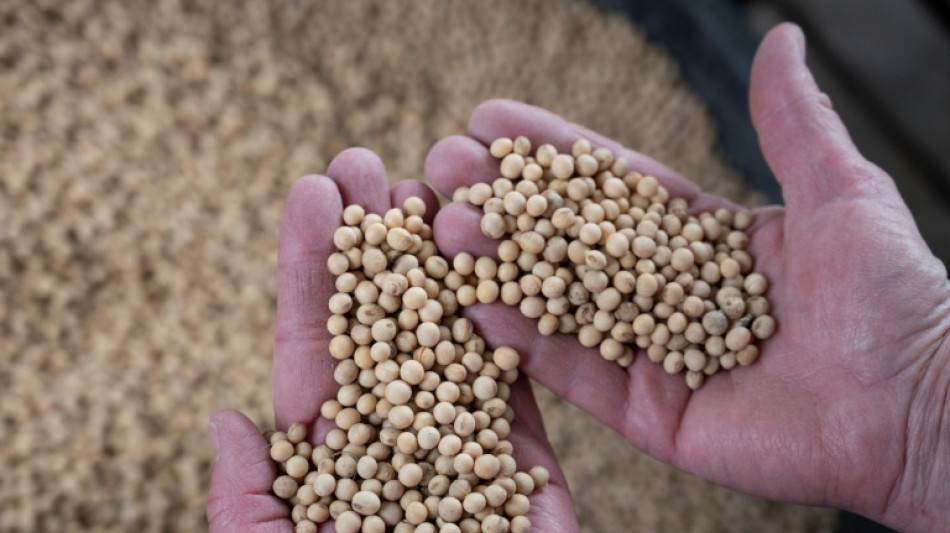
Soybeans, oilseeds and certain grains were a key US export to China, amounting to $13.4 billion last year, US trade data showed.
"China bought 52 percent of our (soybean) exports in 2024," said American Soybean Association chief economist Scott Gerlt.
Given the size of its purchases, China cannot easily be replaced, he told AFP.
Soybean prices plunged on Friday's news.
- Fuels, machinery -
China also imported $14.7 billion of various fuels and oils from the United States last year.
Tariffs could impact the oil and gas industry in states like Texas, which alongside Louisiana saw such exports to China surge in 2023, said a US-China Business Council report.
And the US exported some $15.3 billion in electrical machinery to China last year, official trade data showed.
But semiconductor shipments have faltered on expanding US export controls on advanced tech.
- Chips impact -
Besides tariffs, China has restricted exports of rare earth elements and taken action against US firms -- including drone companies and those in the defense and aerospace sectors.
"China controls about 69 percent of rare earth element mining. They also control about 90 percent of refining," said Benson of Minerva Technology Policy Advisors.
"That's going to probably be a chokepoint moving forward," she added. This could affect semiconductor manufacturing, magnets, optics and lasers.
"Some of these are targeted, of course, at chips," she said.
With Washington and Beijing turning to a growing range of tools in their conflict, Benson warned that the US "is relatively exposed to these Chinese controls" without an industrial policy response providing "a major cash infusion to scale up domestic production."
R.Lee--AT