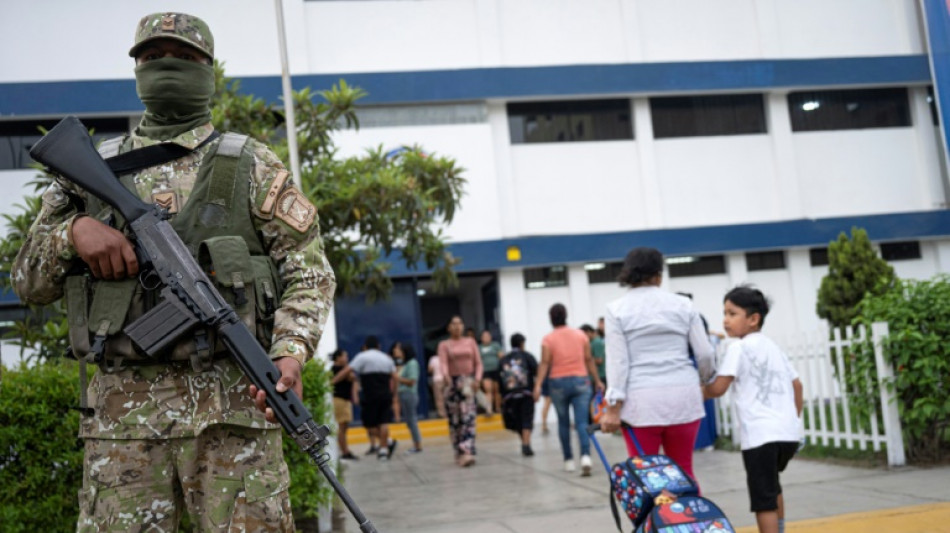
Peruvian schoolkids living in fear of extortion gangs / Photo: ERNESTO BENAVIDES - AFP

 FIFA scraps private investment plan after backlash: Infantino

 South Africa's WAFCON hopes hang in the balance after dramatic draw

 Hunter Bell cruises to Commonwealth gold, Pathirage stuns javelin stars

 Amazon surges as US stocks shrug off bond yield worries

 Google rolls back new satellite image AI tool after backlash

 Ryu leads in bid for third straight major at women's British Open
 Fire-hit France region 'coming up for air' as main blaze calms

 Wembanyama to get signature shoe in Nike contract extension: reports
 Oil giants report blowout profits on war, warn high gas prices could persist

 Google launches new satellite image AI tool, alarming researchers

 Eddie Howe resigns as Newcastle boss to 'recharge'

 High winds hamper firefighting efforts in western Turkey

 Howe resigns as Newcastle boss
 Full-scale tour will benefit All Blacks, says coach Rennie

 US Fed dissenters call for rate hikes over sustained inflation
 Trump and far-right seize on Spanish migration crisis

 Hamas agrees to disarm under Trump plan
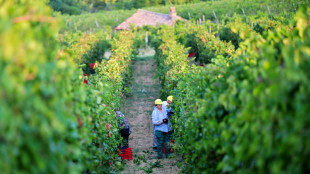 French, Italian winegrowers face earliest ever harvest

 Alarm over climate-linked low level of German waterways
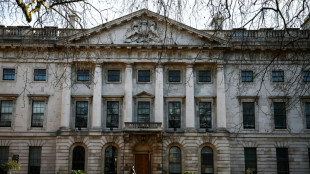 UK court rejects challenge against new Chinese embassy in London
 New York sues online prediction markets giant Kalshi

 Commerzbank agrees to talks with UniCredit after two-year standoff
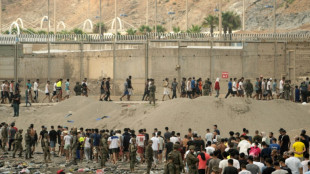
 A rumour, a rush: chaos at Morocco border with Spain's Ceuta

 Fornaro Legal Releases Guidance to Help Businesses Maintain Clear Ownership Records During Growth

 Hamas agrees to disarm: what are the challenges ahead?
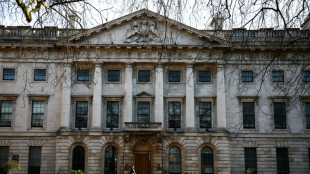
First they came for shop owners and bus drivers, ordering them to pay protection money on pain of death.
Now the extortion gangs terrorising Peru have set their sights on fee-paying schools, threatening to kill staff or parents "inside or outside" the classroom unless they fork out tens of thousands of dollars.
Fearing for pupils' safety, hundreds of private schools have shut their doors and moved classes online in recent months, highlighting the worsening security crisis in the gang-plagued South American country.
The southern hemisphere's new school year began in March but for pupils of San Vicente primary and secondary school in northern Lima it only really started this week.
Classes had barely begun last month when a gang attacked the school with explosives for refusing to pay $27,000 in protection money.
No-one was injured in the attack, which damaged the entrance door, but the school's 1,200 students were immediately ordered to stay home for a month.
When they returned this week, children pulling brightly-colored bags on wheels and anxious parents gripping their hands were greeted by a sobering sight: five soldiers in fatigues with assault rifles and face masks standing guard at the entrance.
- 'Like a pandemic, with weapons' -
Extortion is rife across Latin America but has grown to colossal proportions in Peru, where local gangs and transnational outfits like Venezuela's Tren de Aragua are accused of holding entire towns to ransom.
Million-dollar profits make the shakedown business more lucrative than drug or human trafficking, according to intelligence sources.
President Dina Boluarte in March declared a month-long state of emergency in Lima, sending soldiers into the streets to help keep the peace after a wave of killings linked to extortion -- including that of a cumbia music star Paul Flores.
Schools are increasingly targets for crime syndicates, which see rich pickings in establishments like San Vicente that charges $1,485 in annual tuition fees.
Giannina Miranda, president of the Freedom to Educate Collective, an association of private schools, told AFP 325 establishments across the country had been forced to suspend classroom learning indefinitely.
In all, 500 private schools have been affected by racketeering, she said.
"It's like a pandemic, but with weapons," the 40-year-old father of a boy that attends San Vicente school told AFP, speaking on condition of anonymity.
The man said he lived in fear of "the most precious thing, our children" getting hurt.
- Kill 'inside or outside' school -
Before the attack, San Vicente's management had received a WhatsApp message from unknown persons demanding 100,000 Peruvian soles (around $27,000) to not target the school.
After the attack the school received a new threat by video.
"I ALREADY BLEW UP YOUR SCHOOL AND YOU HAVE STILL HAVE NOT GIVEN ME A SOLUTION," read a message written on a white page, which was surrounded by bullets, rifles and pistols.
It ended with a threat to kill a security guard, teacher or parent "inside or outside the school."
A 70-year-old woman dropping off her grandchild at San Vicente told AFP that faced with "so much fear and tension," many families were considering keeping their children at home.
The 30-year-old mother of a six-year-old boy who attends another private school in northern Lima, Pitagoras, that has also suspended classes over racketeering, told AFP she struggled to answer her son when he asked whether "something very bad is happening."
Wearing sunglasses and a face mask to conceal her identity, she said: "I have to teach my son that when he goes back to school if he hears a shot or if he hears an explosion, he has to throw himself under his desk for protection."
- President under pressure -
According to Peruvian police, the number of complaints filed for racketeering fell 13 percent year-on-year in 2024, to 19,443.
But authorities admitted that many victims don't report threats or attacks to the police, out of fear for their lives.
In the first three months of the year, 459 homicides were recorded in urban areas in Peru -- the highest figure in two decades.
The mother of another student at Pitagoras compared the climate of terror to that instilled by a brutal left-wing insurgency in Peru in the 1980s and 1990s.
The situation has battered Boluarte's already shaky approval ratings.
A recent poll showed 93 percent of Peruvians unhappy with her leadership.
N.Walker--AT