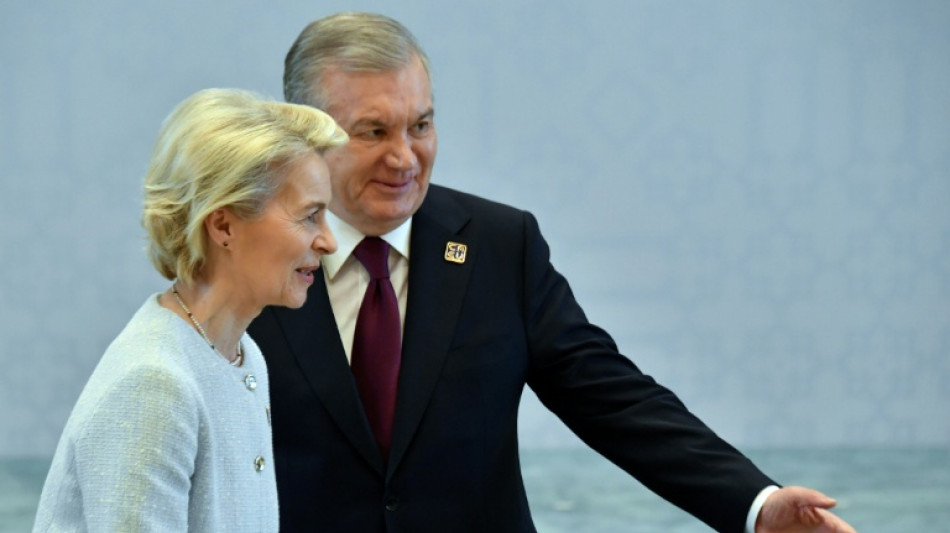
EU hails 'new era' in relations with Central Asia / Photo: Vyacheslav OSELEDKO - AFP

 Hunter Bell cruises to Commonwealth gold, Pathirage stuns javelin stars
 Amazon surges as US stocks shrug off bond yield worries
 Google rolls back new satellite image AI tool after backlash
 Ryu leads in bid for third straight major at women's British Open
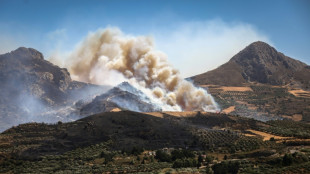
 Fire-hit France region 'coming up for air' as main blaze calms
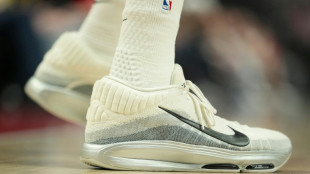 Wembanyama to get signature shoe in Nike contract extension: reports
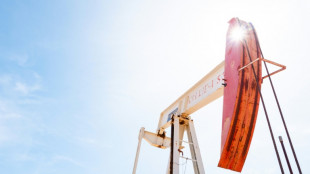
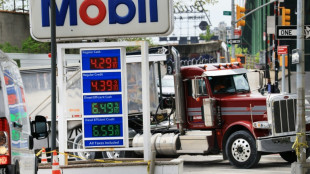 Oil giants report blowout profits on war, warn high gas prices could persist
 Google launches new satellite image AI tool, alarming researchers
 Eddie Howe resigns as Newcastle boss to 'recharge'
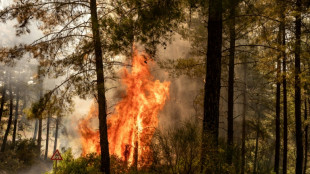 High winds hamper firefighting efforts in western Turkey
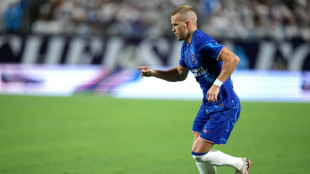
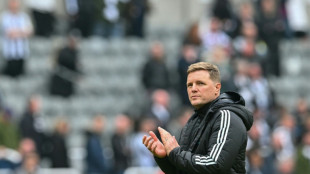 Howe resigns as Newcastle boss
 Full-scale tour will benefit All Blacks, says coach Rennie
 US Fed dissenters call for rate hikes over sustained inflation
 Trump and far-right seize on Spanish migration crisis
 Hamas agrees to disarm under Trump plan
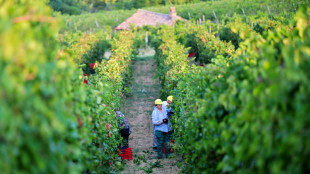 French, Italian winegrowers face earliest ever harvest

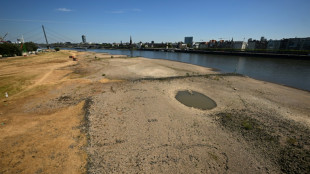 Alarm over climate-linked low level of German waterways
 UK court rejects challenge against new Chinese embassy in London
 New York sues online prediction markets giant Kalshi
 Commerzbank agrees to talks with UniCredit after two-year standoff
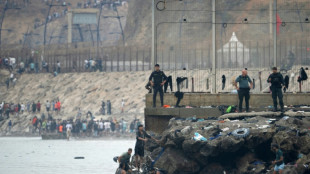
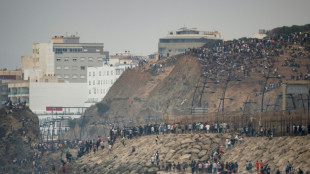
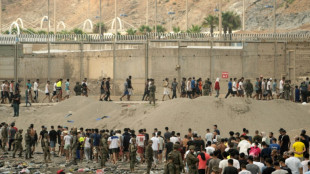
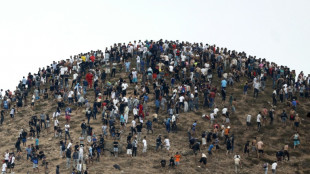 A rumour, a rush: chaos at Morocco border with Spain's Ceuta
 Fornaro Legal Releases Guidance to Help Businesses Maintain Clear Ownership Records During Growth
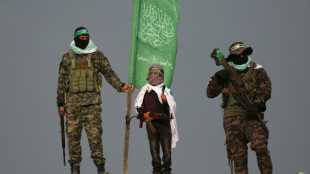
 Hamas agrees to disarm: what are the challenges ahead?
 Turkey fights to last major blaze inland from Bodrum
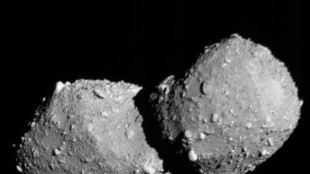 Japan probe made closest-ever asteroid flyby: space agency

The EU proclaimed a "new era" in ties with Central Asia on Friday at a major summit in Uzbekistan, as Brussels presses its influence in the region in the face of Russian and Chinese competition.
Russia's invasion of Ukraine has accelerated the region's drift from Moscow's orbit, with major powers to both the west and east sensing an opening.
The presidents of the five Central Asian countries -- Kazakhstan, Kyrgyzstan, Tajikistan, Turkmenistan and Uzbekistan -- welcomed the EU's top leaders to the summit in the ancient Silk Road city of Samarkand.
Central Asia is rich in natural resources, on the front lines of climate change and a key security player trying to contain extremism, sharing borders with Afghanistan, Iran, China and Russia.
"This is the start of a new era in our ancient friendship," EU chief Ursula von der Leyen told Central Asian leaders in Samarkand, for centuries a key hub in east-west connections, trade and commerce.
The European Commission chief and Antonio Costa -- the head of the European Council -- were in Uzbekistan as US President Donald Trump's tariff offensive sparked global market shock.
"We are at another turning point. New global barriers arise, investments are being redirected, powers around the world are carving up new spheres of influence," von der Leyen said.
"Reliable partners have never been so important. We want to explore new avenues," she said, calling for a "strategic partnership" with the region.
Central Asia is interested in Europe's advanced industrial technology -- which Russia and China struggle to provide -- while Brussels eyes the region's precious resources.
- 'Honey pot' -
These resources are a "honey pot for global players", von der Leyen said.
The landlocked region has an abundance of uranium, cobalt, copper and other essential materials.
Alongside Russia's historic leadership in the region, Turkey, China, the United States and even the likes of South Korea and Japan are interested in the resources.
"Europe's offer is different," von der Leyen pledged, promising to help develop local industries.
She also said Brussels wanted to help Central Asia become a "clean energy power house".
She announced that Europe's satellites could bring internet to remote areas, where it is scarce.
"It would give direct access to high-speed internet without your neighbours acting as gatekeepers," she said, in an apparent reference to Russia, which tightly controls access to information.
- Climate change -
Central Asia has been hit by climate change at a dramatic rate, with massive glaciers melting, a critical shortage of water and farming badly affected.
Von der Leyen said Central Asia and Europe were warming "twice as fast as the rest of the world".
"Europe wants to work alongside you in adapting to a changing climate," she added.
Uzbek President Shavkat Mirziyoyev said that warming ties between the five regional countries in recent years had made the summit possible.
"Nobody would be able to even imagine that in the near future we could stand together to represent the region in talks with European leaders," he said.
Mirziyoyev came to power in Uzbekistan after the death of dictator Islam Karimov in 2016.
He has opened up the country after years of closed borders, but rights groups have said the region has a worsening record on human rights.
Despite pleas from NGOs, human rights were not expected to feature heavily in the talks, an EU official told AFP on condition of anonymity.
"We're not going there to preach, but we are going to make our concerns known, to work with them, to have a dialogue," the official said.
- Sanctions -
Von der Leyen said that "Russia has long shown it cannot be a reliable partner anymore".
But Russia and China's influence will be difficult to dislodge.
Beijing is pouring cash into ambitious infrastructure projects, while Russia supplies arms and energy, with long-standing cultural and linguistic reach across the former Soviet states.
The war in Ukraine and sanctions against Russia will also be on the table at the talks, the EU official said.
Central Asia has emerged as one of several hubs through which sanctioned Western goods are re-exported to Russia.
Brussels would like the region to crack down on the flow, as it pushes to keep up the pressure on Moscow while Trump oversees a rapprochement with the Kremlin.
Central Asian countries have shown "willingness" to act and "some progress" but "we would like to see a lot more from our partners", the EU official said.
L.Adams--AT