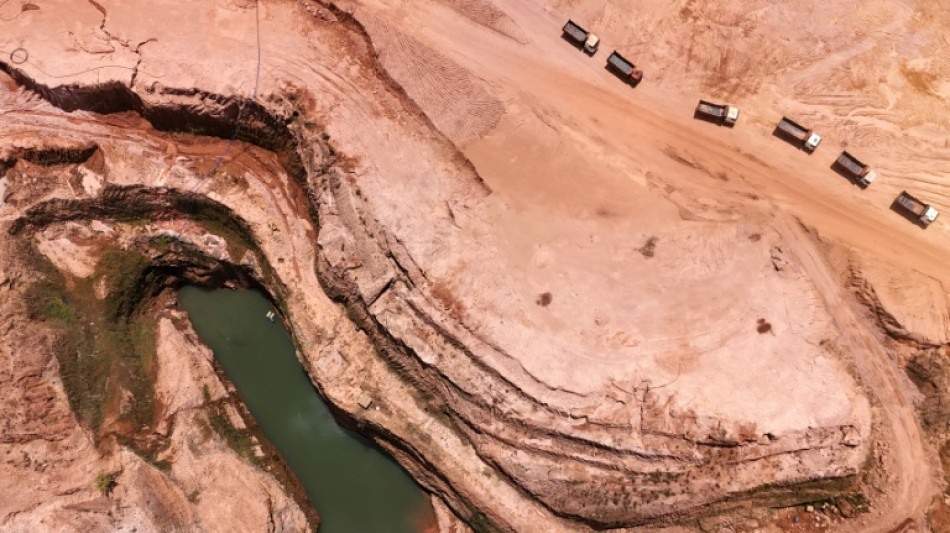
Paraguay gold rush leaves tea producers bitter / Photo: Daniel DUARTE - AFP

 Hunter Bell cruises to Commonwealth gold, Pathirage stuns javelin stars

 Amazon surges as US stocks shrug off bond yield worries

 Google rolls back new satellite image AI tool after backlash

 Ryu leads in bid for third straight major at women's British Open

 Fire-hit France region 'coming up for air' as main blaze calms
 Wembanyama to get signature shoe in Nike contract extension: reports

 Oil giants report blowout profits on war, warn high gas prices could persist
 Google launches new satellite image AI tool, alarming researchers

 Eddie Howe resigns as Newcastle boss to 'recharge'
 High winds hamper firefighting efforts in western Turkey

 Howe resigns as Newcastle boss

 Full-scale tour will benefit All Blacks, says coach Rennie

 US Fed dissenters call for rate hikes over sustained inflation
 Trump and far-right seize on Spanish migration crisis

 Hamas agrees to disarm under Trump plan

 French, Italian winegrowers face earliest ever harvest

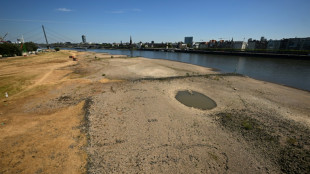 Alarm over climate-linked low level of German waterways

 UK court rejects challenge against new Chinese embassy in London

 New York sues online prediction markets giant Kalshi

 Commerzbank agrees to talks with UniCredit after two-year standoff

 A rumour, a rush: chaos at Morocco border with Spain's Ceuta

 Fornaro Legal Releases Guidance to Help Businesses Maintain Clear Ownership Records During Growth
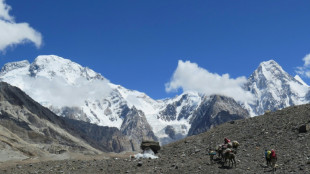
 Hamas agrees to disarm: what are the challenges ahead?

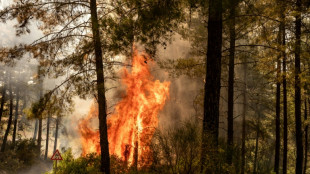 Turkey fights to last major blaze inland from Bodrum

 Japan probe made closest-ever asteroid flyby: space agency

In a small town in Paraguay, a showdown is brewing between traditional producers of yerba mate, a bitter herbal tea popular across South America, and miners of a shinier treasure: gold.
A rush for the precious metal is pitting mate growers and Indigenous groups against the expanding operations of small-scale miners who, until recently, were their neighbors, not nemeses.
"They (the miners) have destroyed everything... the canals, springs, swamps," said Vidal Britez, president of the Yerba Mate Producers' Association of the town of Paso Yobai, about 210 kilometers (130 miles) east of Paraguay's capital Asuncion.
"You can see the pollution from the dead fish. The water has changed color," the 56-year-old told AFP.
Yerba mate, a green infusion sipped from a gourd with a metal straw, is deeply rooted in Paraguay, where the Guarani people have cultivated the tree that produces the leaves for centuries, including in Paso Yobai.
But when an Ecuadoran miner discovered gold nuggets in a stream there in the 1990s, the town's fortunes changed. One in six of its 30,000 inhabitants now lives off mining and related activities, with angry mate growers saying they are being squeezed out.
They also complain of environmental damage from the mercury used to extract gold, and the arsenic released in the process.
The place "is the cradle of yerba mate," Britez said indignantly, showing AFP mate leaves covered in mining dust that he says are being spurned by buyers.
Tensions boiled over last month, with armed mate farmers and miners working for the Paraguayan subsidiary of a Canadian company nearly coming to blows.
No injuries were reported in the standoff.
But since then, small groups of mate farmers have been camping out around Paso Yobai to prevent miners digging more quarries or pits.
- Path to a better life -
In just a few years, Paso Yobai has been transformed from a quiet, bucolic settlement into a frenetic anthill of activity with lines of trucks hauling sand to pools where the gold is processed.
The farmers claim there are more than 300 excavations around the town -- most of them illegal.
Each dig can yield about a kilogram (2.2 pounds) of gold in a month or two, and for some, the town's long-hidden treasure has proved to be a boon.
Paso Yobai's 2,000-odd small-scale miners earn about $20 per day -- roughly equal to the country's minimum monthly wage.
"Many families managed to improve their homes, managed to get their children to study at universities," miner Ruben Villalba told AFP.
The mate farmers, by contrast, barely break even most of the time.
- 'No complaint' -
In 2024, Paraguay exported 600 kg of gold extracted mainly in Paso Yobai, generating $260,000 in royalties for the government, according to Deputy Minister of Mines and Energy Mauricio Bejarano.
In an interview with AFP, he boasted that "profitability is guaranteed" as Paraguay seeks to expand its fledgling gold-mining sector.
As for environmental concerns, he said that "as far as I know, there has been no complaint."
The UN Environment Programme has observed in a report that Paraguay has not conducted a national inventory of mercury pollution.
Two Paraguayan universities are researching the issue but have yet to present their findings.
Ruben Irala Galeano, an agricultural engineer and researcher on the project, told AFP initial findings have pointed to "alarming" mercury levels and to "an ecological crime being committed in Paso Yobai."
His concerns are shared by Nery Cardozo Benitez -- a Mbya Guarani leader -- who told AFP the community could see the effects of the mining for themselves.
"The chemicals they use are very potent. They evaporate into the air and contaminate our animals," the chief said.
Mariano Benitez, a fellow Indigenous leader from a nearby settlement, said the contamination was making it difficult to survive.
"The fish are dying. We don't have drinking water," he said.
J.Gomez--AT