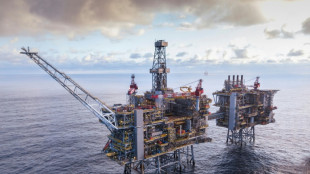
Greece to spend big on 'historic' military shake up / Photo: Theophile Bloudanis - X04108/AFP

 Amazon surges as US stocks shrug off bond yield worries
 Google rolls back new satellite image AI tool after backlash
 Ryu leads in bid for third straight major at women's British Open

 Fire-hit France region 'coming up for air' as main blaze calms
 Wembanyama to get signature shoe in Nike contract extension: reports
 Oil giants report blowout profits on war, warn high gas prices could persist
 Google launches new satellite image AI tool, alarming researchers

 Eddie Howe resigns as Newcastle boss to 'recharge'
 High winds hamper firefighting efforts in western Turkey
 Howe resigns as Newcastle boss
 Full-scale tour will benefit All Blacks, says coach Rennie

 US Fed dissenters call for rate hikes over sustained inflation
 Trump and far-right seize on Spanish migration crisis
 Hamas agrees to disarm under Trump plan
 French, Italian winegrowers face earliest ever harvest
 Alarm over climate-linked low level of German waterways

 UK court rejects challenge against new Chinese embassy in London

 New York sues online prediction markets giant Kalshi

 Commerzbank agrees to talks with UniCredit after two-year standoff
 A rumour, a rush: chaos at Morocco border with Spain's Ceuta
 Fornaro Legal Releases Guidance to Help Businesses Maintain Clear Ownership Records During Growth

 Hamas agrees to disarm: what are the challenges ahead?
 Turkey fights to last major blaze inland from Bodrum

 Japan probe made closest-ever asteroid flyby: space agency

 Wildberries: 'Russia's Amazon' targeted by Ukraine
NATO member Greece is set to unveil a massive modernisation of its armed forces on Wednesday, following the lead of several of its European allies.
Prime Minister Kyriakos Mitsotakis is expected to present the timeline to parliament, headlined with an eye-catching new anti-aircraft defence set-up called "Achilles's Shield".
The Mediterranean country already dedicates more than 3.0 percent of its GDP on defence -- owing to decades of tension with neighbouring Turkey.
It now plans to invest approximately 26 billion euros ($28 billion) on new weapons systems by 2036, according to ministerial sources.
The Greek government has called it "the most significant reform ever undertaken in the history of the Greek state in terms of national defence."
"Our country is protecting itself, arming itself, and strengthening itself," government spokesman Pavlos Marinakis said last week.
Alongside Poland, Estonia and Latvia, Greece is one of the few NATO member states that allocates more than 3.0 percent of output to defence.
And this year the nation of 10.5 million has doubled its military budget to 6.13 billion euros ($6.6 billion).
"Historically, Greece has served and will continue to serve as an outpost for Europe, which is currently seeking to reorganise its defence in a difficult international setting," said Maria Gavouneli, a professor of international law at the University of Athens.
- 'Achilles's Shield' -
A key part of the shake-up is an upgrade to its anti-missile and anti-aircraft systems called "Achilles's Shield", according to a source familiar with the matter.
Greek media reports suggest Athens is in negotiations with Israel to acquire the shield, which also includes enhancing anti-drone systems.
France, Italy and Norway have been also cited as possible suppliers of the new weapons, which include unmanned vessels (USVs), drones and radars.
Greece has sought to strengthen its position on the EU's Eastern Mediterranean border, close to the conflict zones of the Middle East.
A dutiful buyer of European military equipment, especially from France and Germany, Greece has always justified its arms spending by pointing to territorial disputes and threats from historic rival Turkey.
- 'Necessary' overhaul -
"This reorganisation was necessary for Greece because during the economic crisis of the last decade and the freeze on public spending, the country fell behind in terms of modernising (its arsenal)," said Gavouneli, who is also the director general of the Hellenic Foundation for European and Foreign Policy think-tank.
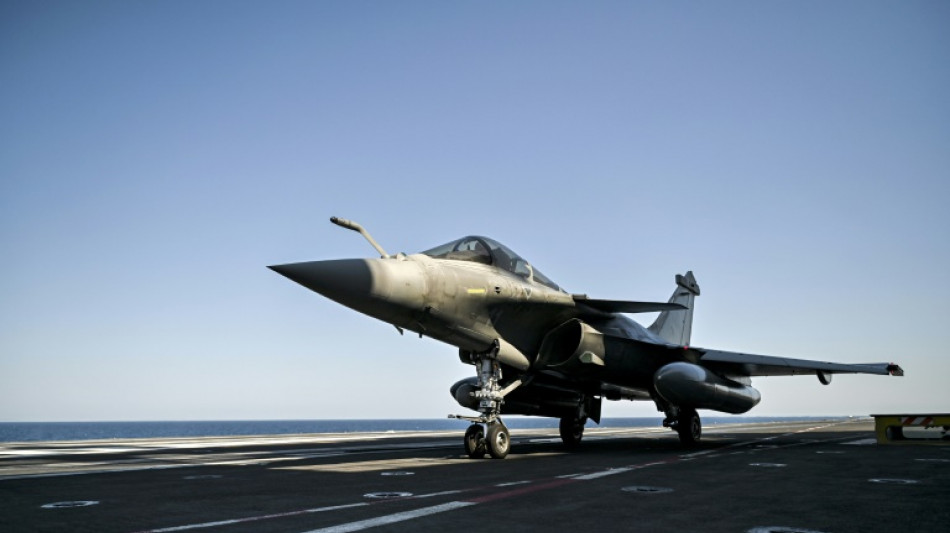
Greece has signed a military cooperation agreement with France, ordering 24 Rafale fighter jets and three Belharra-class defence and intervention frigates (FDI) for a total of more than 5.5 billion euros.
A fourth frigate will be built in Greek shipyards, offering added value to strengthen the Greek defence industry.
Athens has also signed a deal for the acquisition of 20 US-made F-35 fighter jets.
Last November, Defence Minister Nikos Dendias said Greece would order four different drone systems and overhaul its armed forces by merging military units.
Athens must cope with a "different reality" and modernise its forces quickly to meet the challenges of the 21st century and those in its relationship with Ankara, Dendias said at the time.
France, Germany, and Poland have lately announced plans to bolster their militaries at a time of faltering confidence in the US military umbrella. European Commission President Ursula von der Leyen has stressed that the EU must significantly increase its arms spending in the face of the threat from Russia.
L.Adams--AT