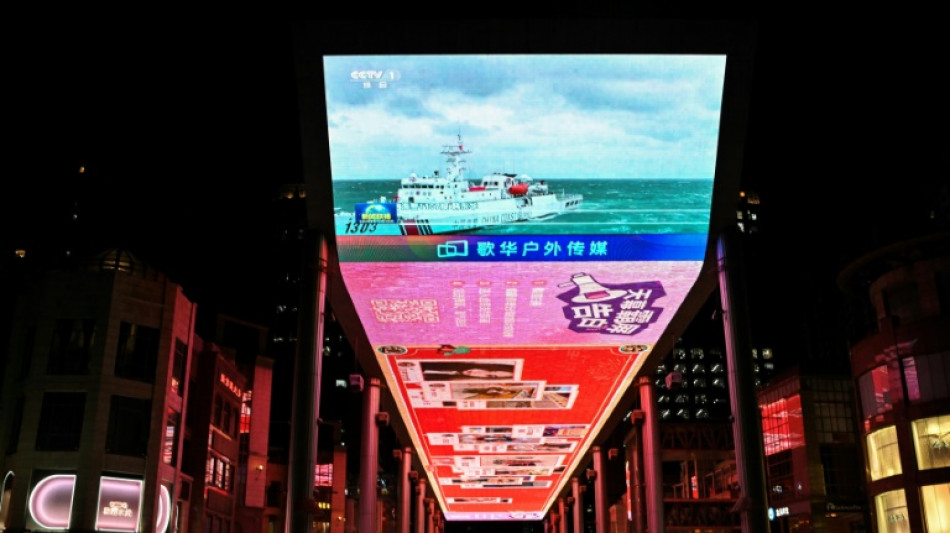
China practises hitting key ports, energy sites in Taiwan drills / Photo: ADEK BERRY - AFP

 Amazon surges as US stocks shrug off bond yield worries
 Google rolls back new satellite image AI tool after backlash

 Ryu leads in bid for third straight major at women's British Open
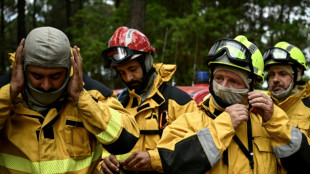
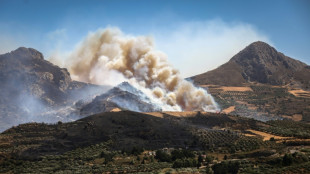
 Fire-hit France region 'coming up for air' as main blaze calms
 Wembanyama to get signature shoe in Nike contract extension: reports
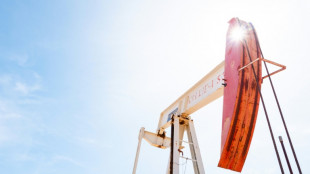
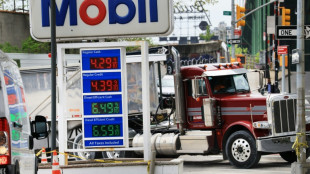
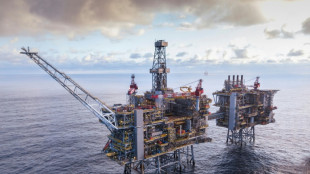
 Oil giants report blowout profits on war, warn high gas prices could persist
 Google launches new satellite image AI tool, alarming researchers
 Eddie Howe resigns as Newcastle boss to 'recharge'
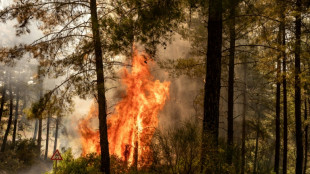 High winds hamper firefighting efforts in western Turkey

 Howe resigns as Newcastle boss
 Full-scale tour will benefit All Blacks, says coach Rennie

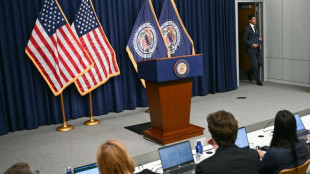 US Fed dissenters call for rate hikes over sustained inflation
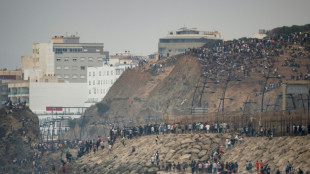 Trump and far-right seize on Spanish migration crisis

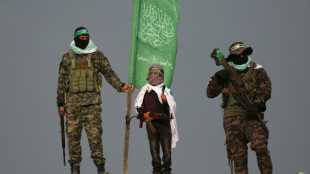 Hamas agrees to disarm under Trump plan
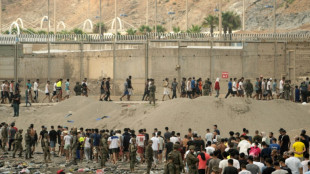
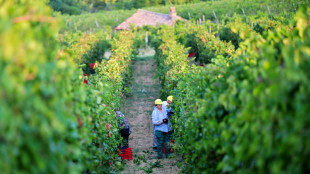 French, Italian winegrowers face earliest ever harvest

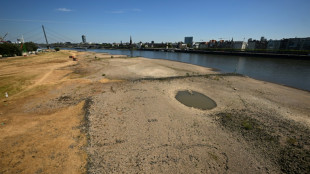 Alarm over climate-linked low level of German waterways
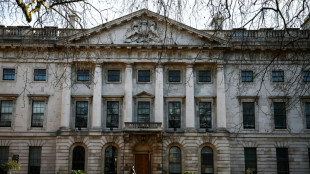 UK court rejects challenge against new Chinese embassy in London
 New York sues online prediction markets giant Kalshi

 Commerzbank agrees to talks with UniCredit after two-year standoff
 A rumour, a rush: chaos at Morocco border with Spain's Ceuta
 Fornaro Legal Releases Guidance to Help Businesses Maintain Clear Ownership Records During Growth
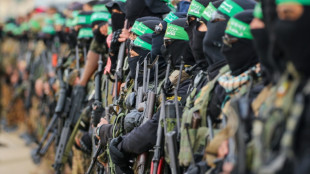 Hamas agrees to disarm: what are the challenges ahead?
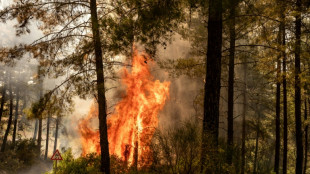 Turkey fights to last major blaze inland from Bodrum
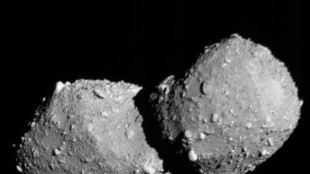 Japan probe made closest-ever asteroid flyby: space agency

 Wildberries: 'Russia's Amazon' targeted by Ukraine
China's military said it practised hitting key ports and energy sites during "live-fire" drills Wednesday as part of exercises aimed at Taiwan, the democratic island it claims as its own.
The surprise manoeuvres were criticised by Washington as "intimidation tactics" and come after Taiwan President Lai Ching-te called China a "foreign hostile force".
Named "Strait Thunder-2025A", the drills are located in the middle and southern parts of the strait, the military said, which is a vital artery for global shipping.
The military said it held "long-range live-fire drills" and practised hitting "simulated targets of key ports and energy facilities" during the exercises.
Wednesday's exercises aim to "test the troops' capabilities" in areas such as "blockade and control, and precision strikes on key targets", said Senior Colonel Shi Yi, spokesman of the Chinese military's Eastern Theater Command.
Taiwan's defence ministry confirmed China's military drills were ongoing but did not elaborate.
Taiwan is a potential flashpoint between China and the United States, which is the island's most important security partner.
The US State Department said Beijing's "aggressive" military activities and rhetoric towards Taiwan "only serve to exacerbate tensions and put the region's security and the world's prosperity at risk".
Chinese leaders vigorously oppose Washington's support for Taiwan and detest Lai, who they call a "separatist".
Drills in the strait come a day after China sent its army, navy, air and rocket forces to surround Taiwan for exercises Beijing said were aimed at practising for "precision strikes" and a blockade of the island.
That prompted Taipei to dispatch its own air and maritime forces as part of a "Rapid Response Exercise".
Taiwan's defence ministry said Tuesday China had deployed 21 warships around the island, including the Shandong aircraft carrier group, along with 71 aircraft and four coast guard vessels.
That was the highest number of warships detected during a single day in nearly a year, and the most aircraft since October 2024.
- 'Robust' deterrence -
Beijing has increased the deployment of fighter jets and naval vessels around Taiwan in recent years to press its claim of sovereignty, which Taipei rejects.
Tensions between Taipei and Beijing have escalated since Lai took office in May 2024 and adopted tougher rhetoric than his predecessor Tsai Ing-wen in defending the island's sovereignty.
While Taiwan sees itself as a sovereign country, only 11 mostly Pacific and Caribbean countries and the Vatican recognise its claim to statehood.
Last month, Lai called China a "foreign hostile force" and proposed measures to combat growing Chinese espionage and infiltration, angering Beijing.
US Defense Secretary Pete Hegseth vowed "robust, ready and credible deterrence" in the strait during a visit to the region last week.
Taipei analyst Wen-Ti Sung said China was using "stress test after stress test" to gauge the strength of US President Donald Trump's support for Taiwan and other allies in the region.
The United States is legally bound to provide arms to Taiwan, but Washington has long maintained "strategic ambiguity" when it comes to whether it would deploy its military to defend the island from a Chinese attack.
China has carried out several large-scale exercises around the island in recent years, often described as rehearsals for a blockade and seizure of the territory.
Analysts have speculated that China was more likely to attempt a blockade of Taiwan than launch an all-out invasion, which was riskier and would require a huge military deployment.
The dispute between China and Taiwan dates back to 1949 when Chiang Kai-shek's Kuomintang nationalist forces fled to Taiwan after losing the Chinese civil war with Mao Zedong's communist fighters.
While Taiwan has never declared formal independence, Lai and Tsai, who both belong to the Democratic Progressive Party, share the position that Taiwan is "already independent".
burs-amj/rsc
M.King--AT